

Table of Contents
- What Makes Colombian Coffee Premium
- Understanding Colombian Supremo vs Excelso Beans
- Roast Levels and Flavor Profiles
- How to Brew Colombian Coffee at Home
- Freshness, Sourcing, and Storage
- Single Origin vs. Blended Options
- Choosing Your Colombian Beans
- Frequently Asked Questions
Last Updated: September 23, 2026
What Makes Colombian Coffee Premium
Premium Colombian whole beans stand out because of the country's unique combination of altitude, volcanic soil, and climate. These natural advantages create coffee with bright acidity, balanced body, and complex flavor profiles that specialty roasters prize.
Most premium beans grow at 1,200 to 1,800 meters elevation, where higher altitude slows maturation and concentrates sugars, developing nuanced flavors that lower-altitude beans lack.
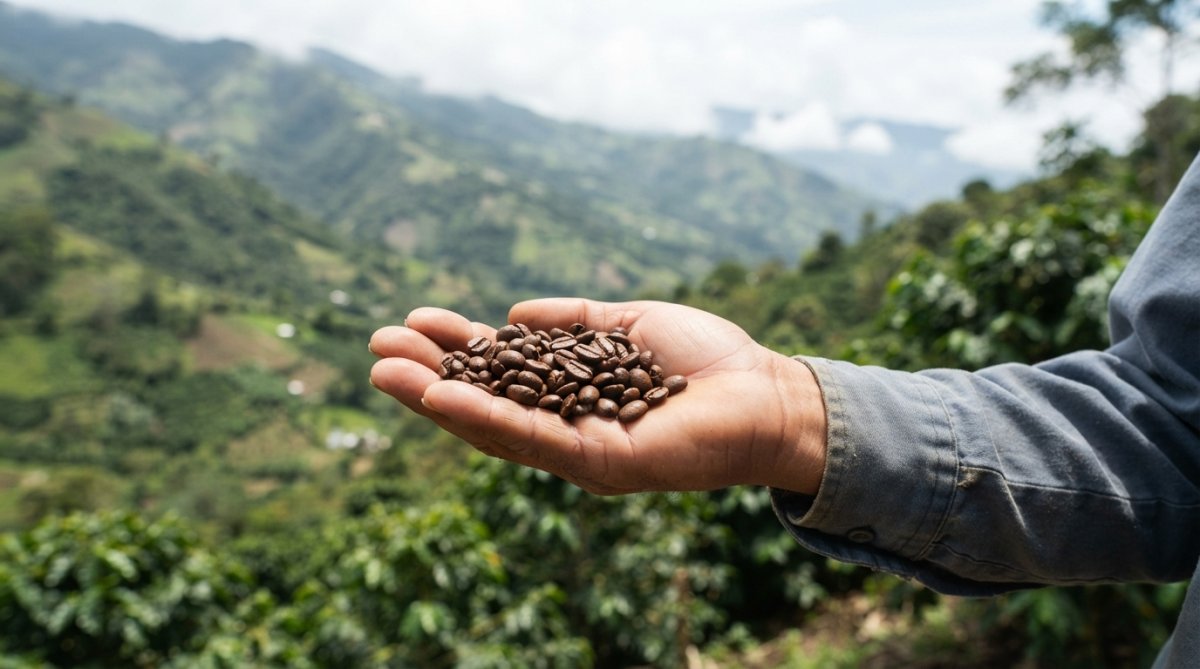
Colombian farmers also benefit from volcanic soil rich in minerals. This terroir contributes to the coffee's signature smoothness and the subtle sweetness that makes it approachable enough to drink black without bitterness. When you buy premium colombian whole beans, you're investing in geography as much as farming skill.
Premium Colombian coffee offers traceability: identified regions, specific cooperatives, and roast dates. This transparency allows roasters like Tinto Coffee Roasters to guarantee flavor and freshness.

Understanding Colombian Supremo vs Excelso Beans
Supremo and Excelso are bean grades based on size, not flavor quality. Both can be premium; the difference is physical dimension.
Supremo beans are 7.75mm or larger; Excelso are 6.75-7.75mm. Both can come from the same farm and harvest.
Larger Supremo beans extract slightly slower, producing balanced cups in drip and pour-over. Smaller Excelso beans extract faster and can improve espresso extraction.
Neither grade is objectively better. A well-sourced Excelso from a high-altitude farm often outperforms a mediocre Supremo from lower elevation. When shopping for premium colombian whole beans, focus on origin details and roast date before fixating on the grade.
Roast Levels and Flavor Profiles
Colombian coffee adapts well to different roast levels, but medium roasts showcase the origin best. A medium roast preserves the bean's origin character while adding subtle roasted notes. However, the roast level you choose directly affects how you should brew, and most buyers don't adjust their technique accordingly.
Light Roasts: Bright Acidity and Floral Notes
Light roasts highlight the bright acidity and fruity notes Colombian beans naturally possess. You'll taste berry, citrus, and floral undertones. Light roasts are popular with specialty coffee enthusiasts who want to taste the coffee's specific geography.
For light roasts, use a fine grind and water at 195-198°F. Brew pour-over for 3-3.5 minutes. Espresso requires consistent tamping and 25-30 second pulls at 1-2 bars higher pressure than medium roasts.
Medium Roasts: The Balance Point
Medium roasts balance origin flavor with roasted chocolate and caramel notes. This is where most Colombian coffee shines. The washed processing that many Colombian farmers use produces clean, sweet flavors that a medium roast amplifies without overwhelming.
For medium roasts, use standard grind and 200-203°F water. Drip: 1-2 tbsp per 6 oz, brew 4-5 minutes. Pour-over: bloom 30 seconds, total 3-4 minutes. French press: coarse grind, steep 4 minutes, press slowly.
Medium roasts are the entry point for most home brewers because they're forgiving in regular drip machines and pour-over setups while still expressing Colombian terroir.
Dark Roasts: Body and Richness
Dark roasts bring out heavier cocoa and bold body. You lose some of the origin's brightness, but you gain richness and a fuller mouthfeel.
For dark roasts, use coarse grind and 200-205°F water. Espresso: 20-25 second pulls at lower pressure. French press: coarse grind, steep 4-5 minutes for full body.
Grind Size and Roast Interaction
Light roasts are denser and need finer grinding; dark roasts are porous and need coarser grinding. Using the same grind for all roast levels produces weak, sour light roasts or bitter, ashy dark roasts.
When you buy premium colombian whole beans, check what roast level the roaster recommends for their specific lot. Reputable roasters provide brewing guidance that accounts for roast level. Adjust your grind size and water temperature based on the roast, not just your machine. This single adjustment transforms how Colombian coffee tastes in your cup.
How to Brew Colombian Coffee at Home
The best brewing method for Colombian coffee depends on your equipment and how much time you have. Colombian beans work across all common methods because of their balanced body and clean flavor.
Drip machines are forgiving: use standard grind, 1-2 tbsp per 6 oz, and 195-205°F water.
Pour-over offers control: bloom 30 seconds, then brew 3-4 minutes total, highlighting Colombian balance and clarity.
French press brings out body: use coarse grind, steep 4 minutes, press slowly. Colombian beans' natural sweetness complements the heavier mouthfeel.
Cold brew: use 1:4 grounds-to-water ratio, steep 12-24 hours, strain. Reduces acidity, making bright Colombian beans taste smoother.
Freshness, Sourcing, and Storage
Peak flavor occurs 5-30 days after roasting. After 60 days, coffee is drinkable but noticeably flatter.
The Roast Date Window
When you buy premium colombian whole beans, check the roast date on the bag. Reputable roasters print this prominently because freshness is a selling point. Avoid bags with no roast date or vague language like "roasted recently."
Brew between days 5-30 for excellent results. After 30 days, aromatic compounds oxidize; after 60 days, flavor noticeably flattens.
For bulk purchases, buy no more than you'll use in 60 days. A half-pound bag for weekly brewing, or a full pound if you brew daily, keeps beans within their optimal window.
Whole beans stay fresher longer than ground coffee, but they're vulnerable to four factors: oxygen, light, heat, and moisture. Each accelerates staling.
Oxygen exposure accelerates oxidation. Use airtight, opaque containers. Transfer beans from one-way valve bags to airtight storage after opening.
Light degrades oils and accelerates oxidation. Store in opaque containers or dark cabinets.
Heat accelerates breakdown. Store at 60-70°F. Avoid temperature fluctuations, which create condensation.
Moisture causes mold. Keep beans away from sinks and humid areas. In humid climates, use food-grade silica gel packets, replacing every 2-3 weeks if humidity exceeds 60%.
Storage Locations Ranked
- Cool, dark pantry (60-70°F, low humidity), Ideal. Beans stay fresh for 60+ days.
- Kitchen cabinet away from heat sources, Good. Slightly warmer than a pantry but acceptable if the cabinet doesn't get direct sunlight.
- Refrigerator (in an airtight container), Acceptable if you minimize temperature fluctuation. Open the container only when you need beans. The cold slows oxidation, but condensation from repeated opening can introduce moisture.
- Freezer (in an airtight, vacuum-sealed container), Works for long-term storage (3+ months) but is overkill for beans you'll use within 60 days. Freezing halts oxidation but introduces condensation risk every time you thaw.
- Counter, near a window, or above the stove, Avoid. Heat and light accelerate staling.
Grinding and Freshness
Ground coffee peaks within 15 minutes of grinding. Use pre-ground coffee within 5 days in airtight, cool storage.
If you don't have a grinder, ask the roaster to grind to your specification at purchase. Most roasters grind at no extra charge. Request a grind size appropriate to your brewing method (coarse for French press, medium for drip, fine for espresso).
Sourcing Transparency
Single Origin vs. Blended Options
Single origin coffee comes from one country, region, or farm, letting you taste how that geography expresses itself.
Choosing Your Colombian Beans
Start by identifying what you actually want from coffee. Are you chasing complexity and brightness, or do you want smooth, straightforward flavor? Do you have 10 minutes to brew, or 2 minutes? Your answers guide which beans and roast level to choose.
Frequently Asked Questions
What makes Colombian coffee considered premium?
Colombian premium whole beans stand out because of their altitude, volcanic soil, and washed processing. Beans grown at 1,200 to 1,800 meters above sea level develop complex flavors with bright acidity and balanced body. Specialty grading (Supremo and Excelso) ensures consistency. Direct-trade sourcing and small-batch roasting preserve the bean's natural characteristics, delivering smooth flavor and rich aroma from roast day to brew day.
What is the difference between Colombian Supremo and Excelso beans?
Supremo beans are larger (7.75mm or bigger) and command premium prices due to their size and perceived quality consistency. Excelso beans are smaller (6.5 to 7.75mm) but still specialty-grade. Both are washed and sustainably sourced. The size difference affects brew consistency slightly, but flavor depends more on altitude, processing, and roast profile. Excelso offers excellent value for everyday drinking without sacrificing tasting notes or body.
How should I store premium whole bean coffee to keep it fresh?
Store whole beans in an airtight container away from light, heat, and moisture. Keep them at room temperature. Use beans within 60 days of the roast date for optimal flavor. Whole beans stay fresher longer than ground coffee because they have less surface area exposed to oxygen. Check the roast date on your bag before buying, roast-to-order coffee like Tinto's ensures maximum freshness and aroma.
Can I use premium Colombian whole beans in a regular drip coffee maker?
Yes. Premium Colombian beans taste excellent in a standard drip machine. Use a medium grind, 1-2 tablespoons per 6 ounces of water, and brew at 195-205°F. The smooth flavor profile and balanced finish of Colombian arabica are designed to shine in everyday brewing. You don't need expensive equipment to enjoy quality beans, the difference between roast-to-order specialty coffee and grocery store options is noticeable in any brewing method.