

Table of Contents
- Why Coffee Drinkers Search for Alternatives
- Coffee Alternatives That Taste Like Coffee
- Single-Serve Coffee Pods: Convenience and Freshness
- Whole Bean Coffee Subscription vs. Retail Options
- Smooth Coffee to Drink Black: Finding Your Match
- How to Choose the Right Coffee Alternative for You
- Frequently Asked Questions
Last Updated: October 17, 2026
Why Coffee Drinkers Search for Alternatives
Coffee lovers often find themselves at a crossroads: you want a new brand, a smoother cup that doesn't upset your stomach, or coffee alternatives that deliver the same ritual without breaking the bank.
At Tinto Coffee Roasters, we've built our mission around the idea that finding your perfect coffee shouldn't be complicated. Whether you're exploring coffee alternatives for the first time or comparing premium options, the goal is a brew that fits your life, palate, and values.

The reality is that not every coffee alternative works the same way. Some taste nothing like coffee. Others deliver the caffeine kick but lack the depth and complexity you crave. The best coffee alternatives balance three things: authentic coffee-like flavor, quality ingredients, and a brewing experience that feels intentional rather than rushed.
This guide compares coffee alternatives that actually taste like coffee, explores single-serve convenience without sacrificing freshness, and shows you how to choose based on what matters most to you.
Coffee Alternatives That Taste Like Coffee
The biggest mistake people make when searching for coffee alternatives is expecting them to taste identical to traditional coffee. They won't. But the closest ones share a mechanism: they are roasted.
Here is how the real alternatives stack up on the three things that matter most: roasted flavor, caffeine level, and how you prepare them.
| Alternative | Roasted coffee-like flavor | Caffeine | Typical prep | Best for |
|---|---|---|---|---|
| Chicory root | High, deep, woody, bitter | None | Steep ground root or brew in a drip machine | People who want the closest caffeine-free stand-in |
| Dandelion root | Medium-high, earthy, slightly sweet | None | Roast and steep, or simmer on the stove | Caffeine-free drinkers who want a gentler bitterness |
| Roasted barley or grain blends | Medium, toasty, bready | None | Steep like tea or brew in a French press | A mild, low-acid cup |
| Mushroom coffee blends | Medium, depends on the coffee base | Low to moderate | Stir powder into hot water | Focus without a full caffeine dose |
| Matcha | Low, grassy, not roasted | Moderate | Whisk powder into hot water | Steady energy, no jitters |
| Yerba mate | Low, herbal, earthy | Moderate to high | Steep loose leaf in a gourd or French press | A lighter caffeine lift than coffee |
| Decaf coffee | High, it is coffee | Very low | Any coffee method | The closest flavor match with minimal caffeine |
Chicory root is the closest drop-in replacement for coffee's roasted flavor. Roasted and ground, it has been used as a coffee extender for generations.
Dandelion root behaves similarly but lands softer: earthy and a little sweet, with less of chicory's sharp bitterness. It is usually sold as loose root or tea bags and steeped rather than machine-brewed.
Mushroom coffee blends combine a coffee base with powdered functional mushrooms such as lion's mane or chanterelle.
Matcha is finely milled green tea whisked into hot water. It is not roasted and does not taste like coffee, but it delivers a moderate caffeine dose with a smoother energy curve for many drinkers.
Yerba mate is a South American herbal infusion with moderate-to-high caffeine and an earthy, slightly smoky taste.
Decaf coffee deserves its own line because it is the only alternative that actually tastes like coffee. Swiss Water Process and other methods remove most caffeine while leaving roasted flavor intact.
A note on what these alternatives are not: none replicate coffee's full aroma and mouthfeel, and most brew thinner unless you adjust the dose upward. Treat them as their own drinks rather than failures to be coffee.
Single-Serve Coffee Pods: Convenience and Freshness
Single-serve coffee pods solve a real problem: excellent coffee without the cleanup or commitment of a full pot. The historical trade-off has been quality, pods have a reputation for mediocre coffee in the name of convenience.
That's changing. Premium pods now deliver extraction quality that rivals traditional brewing when engineered properly. The key is oxygen sealing and portion control: the right amount of coffee, ground to the right consistency, sealed to preserve freshness, extracts remarkably consistently.
Tinto Coffee Roasters' "The Sophia" Colombian Pods deliver single-origin beans roasted specifically for pod brewing. They're oxygen-sealed to lock in freshness from roast day to brew day, and they're engineered for full, even extraction. At $24.99 per box, they cost more than mass-market pods, but you're paying for beans that were actually selected for quality, not just packaged for convenience.

The real advantage of premium pods isn't just the coffee, it's the ritual simplified. You still get the moment of intentionality and the hot cup in your hands, just in under a minute instead of five.
Whole Bean Coffee Subscription vs. Retail Options
Whole bean coffee gives you maximum control over freshness and brewing method. The question is whether to buy retail or subscribe.
Retail whole bean coffee from grocery stores or specialty shops is convenient and immediate, but you don't know how long those beans sat on the shelf. Roast dates are often absent or vague, and freshness degrades significantly after four weeks.
A whole bean coffee subscription solves the freshness problem by delivering roasted-to-order coffee to your door. Tinto Coffee Roasters roasts every bag within 48 hours of your order, then ships immediately, typically 5-10 days old on arrival, versus retail coffee that might be 6-12 weeks old.
The trade-off is predictability. A subscription commits you to regular deliveries, which works beautifully if you drink coffee consistently but less well if consumption varies wildly month to month. Some subscriptions let you skip months or adjust frequency.
Pricing typically ranges from $20-30 per pound for specialty whole bean coffee, retail or subscription. Tinto Coffee Roasters' Tinto Coffee Bag runs $24.99, ground or whole bean, roasted to order. Per-cup cost is higher than mass-market coffee but lower than specialty shops, with significantly fresher product than retail.
| Option | Freshness | Convenience | Cost | Best For |
|---|---|---|---|---|
| Retail whole bean | Variable (weeks old) | Immediate purchase | $15-25/lb | Occasional buyers, impulse purchases |
| Subscription whole bean | Excellent (days old) | Scheduled delivery | $20-30/lb | Regular drinkers, consistency seekers |
| Single-serve pods | Good (sealed fresh) | Fastest brewing | $24.99/box | Busy mornings, minimal cleanup |
Smooth Coffee to Drink Black: Finding Your Match
Not all coffee tastes good black. Some beans are too acidic, too bitter, or too thin-bodied without milk or sweetener. Finding smooth coffee to drink black requires understanding what creates smoothness.
Origin matters. Colombian coffee tends toward smooth, balanced profiles with lower acidity; Brazilian brings body and chocolate notes; Ethiopian can be bright and floral. Single-origin coffees let you dial in exactly what you want, while blends smooth out harsh edges by combining origins strategically.
Roast level affects smoothness too. Medium roasts offer the best balance for black coffee drinkers, dark enough to lose the sharp acidity of light roasts, not so dark as to develop bitter, burnt edges. The sweet spot is usually right in the middle.
Processing method influences flavor too. Washed coffees tend toward clarity and brightness. Natural-processed coffees bring more body and fruit notes. For smooth black coffee, washed coffees from higher altitudes usually deliver the cleanest, most balanced cup.
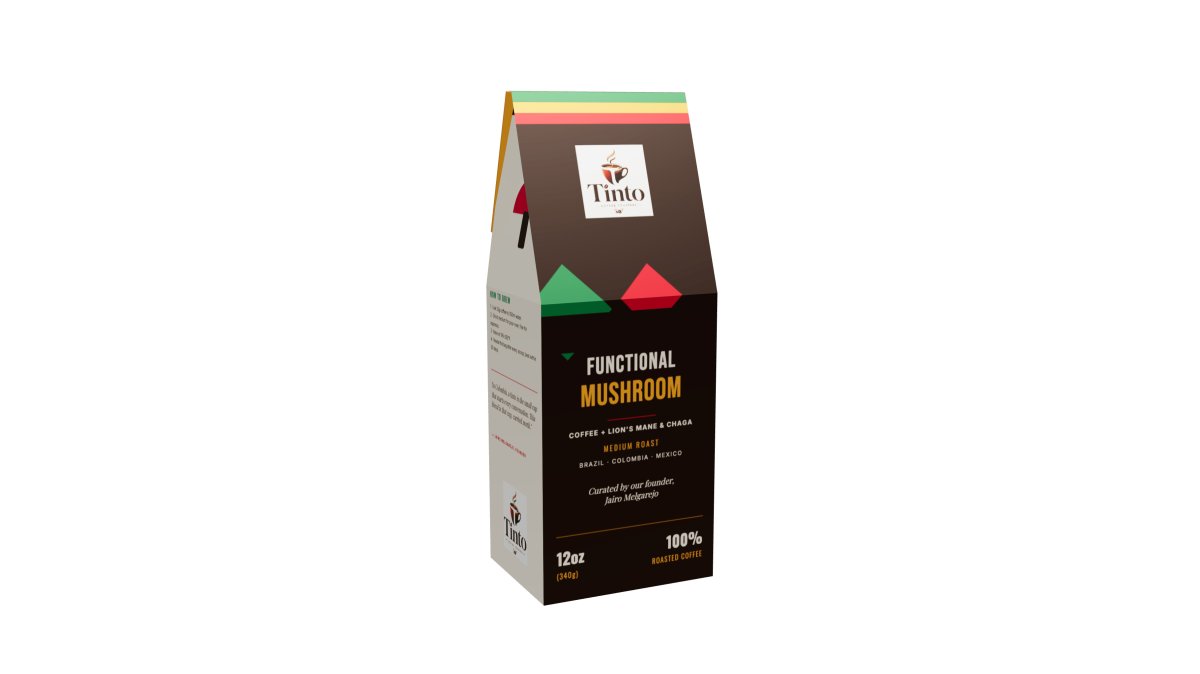
Tinto Coffee Roasters' Functional Mushroom blend combines Brazilian and Colombian beans specifically for everyday smoothness. The Brazilian component brings chocolate and body. The Colombian contribution adds brightness and balance. The result is a medium roast that works beautifully black. At $29.99 for a 12 oz box, it's priced as a premium everyday coffee, not a special occasion splurge.

How to Choose the Right Coffee Alternative for You
The fastest way to narrow the field is to start with the variable that changes your day: caffeine. Most people searching for a coffee alternative are really trying to change their caffeine intake, stomach comfort, or routine, and those goals point to different products. Sort your options into three tiers before comparing anything else.
Tier 1, Caffeine-free. Choose this tier if you want an evening cup, are cutting caffeine entirely, or are sensitive to it. Your options are chicory root, dandelion root, roasted barley and grain blends, and most herbal coffee-style blends. Expect roasted, earthy, sometimes bitter flavors and little to no caffeine.
Tier 2, Low to moderate caffeine. Choose this tier if you want some lift without the jitters. Mushroom coffee blends, matcha, and yerba mate sit here.
Tier 3, Full caffeine, different format. Choose this tier if caffeine is not the problem and you simply want a better cup. This is where whole bean coffee, ground coffee, and single-serve pods live. You are not replacing caffeine; you are upgrading the source.
Once you know your tier, evaluate every candidate on five criteria:
- Flavor match. Does it actually taste roasted, or does it taste like tea? Roasted roots and grains score highest; matcha and yerba mate score lowest on coffee-likeness.
- Ingredients and additives. Check for added sugar, creamers, and flavorings, especially in instant mixes and mushroom blends. A short ingredient list is easier to evaluate.
- Caffeine per serving. Compare the stated milligrams per cup, not just "low caffeine" marketing language. If the label does not state it, treat the product as unknown.
- Preparation time and equipment. Steeping loose root takes longer than stirring a powder into hot water. Match your choice to the minutes you actually have in the morning.
- Cost per serving. Divide the package price by the number of servings to compare fairly across formats, a $25 bag of whole bean coffee and a $25 box of pods can land at very different per-cup costs depending on yield.
A simple decision path: if you want caffeine-free, start with chicory blended with roasted barley. If you want low caffeine, try a mushroom blend and read the milligram count. If you want full caffeine with better flavor, choose fresh whole bean or a premium pod. If your real goal is coffee flavor with minimal caffeine, choose decaf.
Frequently Asked Questions
What is the best coffee alternative that still tastes like coffee?
The best coffee alternatives that taste like coffee are premium roasted blends from direct-trade sources. Look for single-origin or multi-origin beans roasted to a medium roast, which preserves the natural coffee-like flavor without bitterness. Tinto Coffee Roasters' Tinto Coffee Bag ($24.99) and Functional Mushroom blend ($29.99) both deliver authentic coffee taste through careful sourcing and roasting. Avoid overly dark roasts, which taste burnt rather than like coffee.
Are single-serve coffee pods as good as freshly ground coffee?
Single-serve pods match freshly ground coffee when they use whole beans roasted to order and sealed immediately after roasting. The key is oxygen-sealing and rapid shipping, the pod itself doesn't affect quality. Tinto's 'The Sophia' Colombian Pods ($24.99) are engineered for full, even extraction and oxygen-sealed for peak freshness. Pods excel for convenience and consistency, though whole bean gives you more control over grind size and brewing method.
What should I look for when choosing a coffee subscription or whole bean option?
Prioritize roast date, not just origin. Coffee peaks 2-14 days after roasting and declines after 30 days. Choose roast-to-order services that ship within 2-3 days of roasting. Verify direct-trade or cooperative sourcing so you know farmers are paid fairly.
Can you get smooth coffee that tastes good without milk?
Yes. Smooth, black-drinkable coffee comes from high-altitude beans processed carefully and roasted to medium. Tinto's Functional Mushroom blend (medium roast, $29.99) combines Brazilian and Colombian beans specifically for smoothness and low acidity, designed to drink black without any additions.