

Table of Contents
- Why Proper Storage Matters for Colombian Coffee Beans
- The Enemies of Coffee Freshness: Light, Heat, Oxygen, and Moisture
- Best Coffee Storage Containers for Maximum Freshness
- How Long Does Roasted Coffee Stay Fresh?
- Should You Freeze Colombian Coffee Beans?
- Step-by-Step Guide to Storing Colombian Coffee Beans
- Common Storage Mistakes to Avoid
- How to Know When Your Colombian Coffee Beans Are Stale
- Frequently Asked Questions
Last Updated: September 27, 2026
Why Proper Storage Matters for Colombian Coffee Beans
Colombian coffee is special. It's smooth, balanced, and built for drinking black without bitterness. But that quality fades fast without proper storage of store colombian coffee beans. The moment beans leave the roaster, they start losing flavor, aroma, and freshness. Your job is to slow that process down.
At Tinto Coffee Roasters, we roast to order within 48 hours because we know freshness matters. But roasting fresh is only half the equation. How you store those beans determines whether you're drinking premium coffee or a flat shadow of what it could be. The difference between a bag stored right and one stored wrong is the difference between a cup worth savoring and one you choke down out of habit.
Store colombian coffee beans grown at altitude have delicate flavor notes that disappear quickly. Citrus, chocolate, and subtle sweetness evaporate if light, heat, oxygen, or moisture get to them. Store them poorly and you're throwing away the quality you paid for.
The Enemies of Coffee Freshness: Light, Heat, Oxygen, and Moisture
Four things destroy coffee. Know them, and you'll protect your beans.
Light breaks down the oils and compounds that give coffee its flavor. Direct sunlight is the worst offender, but even ambient light in a bright kitchen gradually damages beans. This is why dark, opaque containers matter more than you'd think.
Heat accelerates degradation. Warm kitchens, spots near appliances, and sunny windowsills are coffee graveyards. Room temperature (around 68-70°F) is ideal. Every 10 degrees warmer cuts freshness in half.
Oxygen causes oxidation, the same process that turns cut apples brown. Roasted coffee beans are especially vulnerable because the roasting process already opened their cellular structure. Once oxygen gets in, flavor compounds break down fast. This is why airtight containers with one-way valves exist, they let carbon dioxide escape without letting oxygen in.
Moisture invites mold and accelerates staling. Humid kitchens, open containers, and proximity to water sources are problems. Even a few percentage points of humidity can shorten shelf life significantly.
The best storage strategy addresses all four. You need a light-protected, airtight container kept in a cool, dry place. That's it. Simple, but non-negotiable.
Best Coffee Storage Containers for Maximum Freshness
Not all containers are created equal. Three types work best.
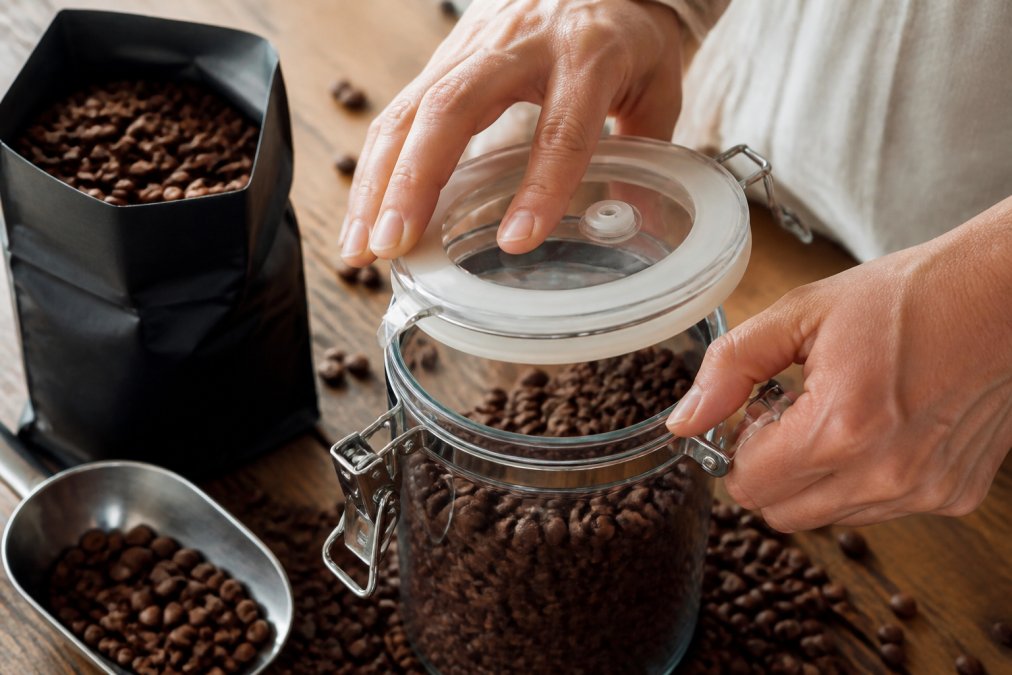
Airtight Containers with One-Way Valves
These are the gold standard. A one-way valve lets carbon dioxide (which beans naturally release after roasting) escape without letting oxygen back in. This is called degassing, and it's essential for the first 2-3 weeks after roasting.
Look for containers with:
- Rubber gaskets that seal completely
- A one-way valve on the lid
- Opaque material (dark glass or ceramic)
- A size that matches your usage (a half-full container lets air occupy space)
One-way valve containers work because they solve the core problem: beans release gas, but you need to keep oxygen out. This is the only container type that does both simultaneously.
Opaque Canisters and Light-Protected Options
If you prefer something simpler, opaque canisters with tight-sealing lids work. They won't manage degassing as elegantly, but they block light and moisture effectively.
Ceramic, dark glass, or stainless steel canisters all work. The key is opacity and an airtight seal. Skip anything transparent. Skip anything with a loose lid.
Some people use vacuum-sealed bags, which remove oxygen entirely. These work for long-term storage but are less convenient for daily use since you can't reseal them after opening.
How Long Does Roasted Coffee Stay Fresh?
Freshness depends on storage method and how you define "fresh."
Peak freshness: 1-2 weeks after roasting. This is when Colombian beans taste their absolute best. The flavors are bright, the aroma is intense, and the body is full. If you can, use beans within this window.

Good freshness: 2-4 weeks. Beans still taste excellent, though some subtle notes fade. Most people won't notice a major difference, but a trained palate will.
Acceptable freshness: 1-3 months with proper airtight storage. Flavor flattens and aroma dims, but the coffee is still drinkable. This is where long-term storage matters.
Stale: Beyond 3 months. The coffee tastes flat, lacks aroma, and often tastes slightly sour or dull. Not worth drinking.
The roast date on your bag is crucial. If you don't see one, ask the roaster. Beans without a date could be months old already. Tinto Coffee Roasters prints the roast date on every bag because we know you want to track freshness from day one.
Should You Freeze Colombian Coffee Beans?
This is the question that divides coffee enthusiasts.
Short answer: Freezing works, but it's not ideal for regular use. It extends shelf life dramatically, up to 6 months in a freezer, but introduces risks that proper room-temperature storage avoids.
Why freezing works: Cold slows chemical reactions that degrade flavor. Frozen beans stay fresher longer than room-temperature beans. If you're stockpiling and won't use beans for months, freezing is a legitimate option.
Why it's complicated: Freezing introduces moisture risk.
Step-by-Step Guide to Storing Colombian Coffee Beans
Storage depends on how long you plan to keep beans. Here's how to do it right.
For Short-Term Storage (1-2 Weeks)
This is the sweet spot. Your beans are fresh, and storage is simple.
-
Keep beans in their original bag if it has a one-way valve. Roasters like Tinto Coffee Roasters seal bags specifically to protect freshness during this window.
-
Store in a cool, dark place. A pantry, cabinet, or drawer works. Avoid countertops near windows, ovens, or direct sunlight.
-
Keep the bag sealed between uses. Roll down the top or use a clip. Minimize air exposure.
-
Check the roast date. Confirm you're within 2 weeks of roasting. This is when Colombian beans taste their best.
For Long-Term Preservation (1-3 Months)
If you buy larger quantities or want to extend freshness, upgrade your storage.
-
Transfer to an airtight container with a one-way valve. Use an opaque ceramic, glass, or stainless steel container. Fill it most of the way to minimize air space.
-
Keep the container sealed. Open it only when you need beans. Every opening exposes beans to oxygen and moisture.
-
Store in a cool, dark place. Room temperature is perfect. Avoid kitchens near heat sources or humid areas like bathrooms.
-
Use whole beans, not ground. Ground coffee has more surface area exposed to oxygen and stales much faster. Grind immediately before brewing.
-
Label the container with the roast date. Track freshness. Use older beans first.
For Extended Stockpiling (3+ Months)
If you're buying in bulk or preparing for long-term supply, freezing becomes an option.
-
Divide beans into smaller portions. Use airtight freezer bags or small vacuum-sealed containers. Smaller portions mean you thaw only what you need.
-
Remove as much air as possible. Squeeze out air from freezer bags. Use a vacuum sealer if you have one. Less oxygen = better preservation.
-
Label each portion with the roast date. You'll want to know how old they are.
-
Freeze at 0°F or below. Standard freezer temperature works fine.
-
Thaw at room temperature before opening. This prevents condensation. Never open a cold container, moisture will form immediately.
-
Use thawed beans within 1-2 weeks. Once thawed, beans degrade faster. Don't refreeze.
Common Storage Mistakes to Avoid
Small errors compound. Here's what not to do.
Storing in transparent containers. You can see the beans, but light constantly damages them. Even in a dark cabinet, every time you open the door, light hits the beans. Use opaque containers.
How to Know When Your Colombian Coffee Beans Are Stale
Stale beans taste flat. But there are visual and sensory signs you can catch before brewing.
Frequently Asked Questions
Is it okay to store coffee beans in a Ziploc bag?
Ziploc bags are not ideal for long-term storage of Colombian coffee beans. While they provide some protection from air exposure, they lack the airtight seal of purpose-built coffee containers with rubber gaskets and one-way valves. Ziploc bags also allow light to penetrate, which degrades flavor and aroma. For freshness beyond one week, invest in an opaque, airtight container designed specifically for coffee storage to prevent oxidation and moisture absorption.
How can I keep Colombian coffee beans fresh for the longest time?
Store Colombian coffee beans in an airtight container with a one-way valve in a cool, dark place away from heat and humidity. Check the roast date on your Tinto Coffee Bag and consume within 4 weeks for optimal flavor. Minimize air exposure by using smaller containers if you have a large supply, and avoid opening the container repeatedly.
Does light and heat affect the flavor profile of Colombian coffee?
Yes, light and heat significantly degrade the flavor profile of Colombian coffee. Light exposure accelerates oxidation and breaks down the delicate compounds that create the smooth, nuanced taste Colombian beans are known for. Heat speeds up oil degradation and causes the loss of aromatic compounds. Store your beans in an opaque, light-protected canister in a cool location away from direct sunlight, stoves, and warm appliances. This preserves the bean density and complex flavor notes that make Colombian coffee special.
What is the 15-15-15 rule for coffee storage?
The 15-15-15 rule is a practical guideline for optimal coffee storage: For Colombian coffee, prioritize using beans within 2-4 weeks of roasting and storing in humidity-controlled, airtight containers to maintain the authentic flavor profile.