

Table of Contents
- What Defines Fresh Roasted Coffee Beans in 2026
- How to Tell If Coffee Beans Are Fresh
- Roast-to-Order Coffee Benefits for Everyday Drinkers
- How to Store Coffee Beans Fresh After Delivery
-
Best Fresh Roasted Coffee Beans Delivery Options Compared
- Tinto Coffee Bag: Whole Bean or Ground, Sealed at Peak Freshness
- Tinto Tube: 54g of Ground Coffee Built for Travel and the Office
- "The Sophia" Colombian Pods: Single-Serve Without the Stale Trade-Off
- Dos Orígenes and Functional Mushroom: Medium Roast With Depth
- Flavored Bags: French Vanilla, Hazelnut, and Caramel
- How to Choose a Coffee Subscription or Delivery Cadence
- Frequently Asked Questions
Last Updated: September 24, 2026
What Defines Fresh Roasted Coffee Beans in 2026
Fresh roasted coffee beans are roasted and shipped within days, not months, of the roast date. That gap decides how much aroma, sweetness, and complexity reaches your cup.
Roast Date vs. Ship Date: Why the Gap Matters
Roast date tells you when the beans met heat; ship date tells you when they left the roaster. Those dates can sit days or weeks apart, and the gap is where freshness dies.
How to Tell If Coffee Beans Are Fresh
Fresh coffee beans smell sweet and complex, feel dense and slightly oily, and bloom vigorously when hot water hits them. Stale beans smell flat or papery and barely react.
- Aroma: Fresh beans release a sweet, layered smell. Stale beans smell like cardboard or dry hay.
- Bloom: Pour hot water over fresh grounds and they swell and bubble. Stale grounds barely move.
- Crema: On espresso, fresh beans produce a thicker, darker crema that holds together.
- Sound: Fresh beans crack softly when you bite one. Stale beans feel soft and dull.
- Density: Fresh beans feel heavier in the hand for their size.
Degassing, Crema, and the Signs of Stale Beans
Degassing is the release of carbon dioxide trapped during roasting, why fresh coffee blooms dramatically and why the same beans taste different on day three versus day twenty. Roasters time packaging around this window: seal too early and the bag inflates or bursts; seal too late and peak aroma is gone.
Roast-to-Order Coffee Benefits for Everyday Drinkers
Roast-to-order coffee delivers more of what you paid for: aroma, sweetness, and flavor complexity that hasn't had weeks to fade.
- Flavor preservation: Beans reach you days after roasting instead of months.
- Better black coffee: A smooth, well-developed roast doesn't need cream to cover defects.
- Consistent results: Small-batch roasting keeps each batch close to the last.
- Less waste: You drink coffee at its peak instead of racing a stale bag to the finish.
How to Store Coffee Beans Fresh After Delivery
Store coffee beans in an airtight, opaque container at room temperature, away from light, heat, and moisture. Skip the fridge and freezer for daily-use beans, and never store them next to the coffee maker's warming plate.
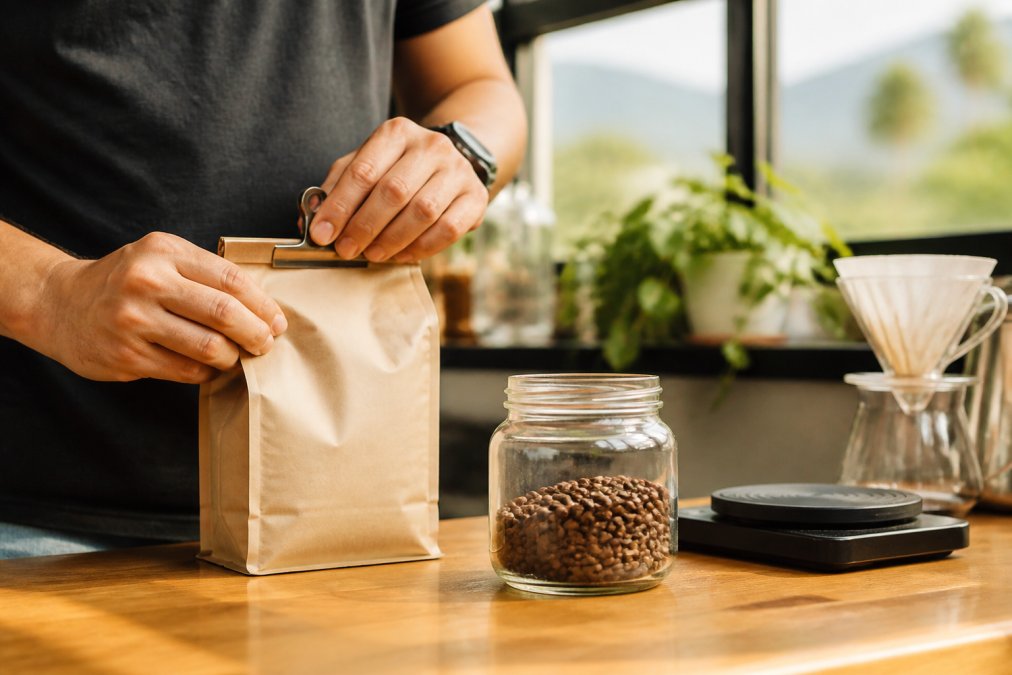
The Degassing Window: Why Day 1 Beans Aren't Always Best
Beans leave the roaster still releasing carbon dioxide. Degassing runs hardest in the first 24 to 72 hours, then tapers over a week or two. Darker roasts degas faster because the bean structure is more porous; lighter roasts hold CO2 longer.
If your espresso tastes sharp and gassy on day two, don't blame the beans. Seal the bag, wait three more days, and pull another shot. The difference is usually obvious.
One-Way Valves and Nitrogen Flushing: What's Actually Happening Inside the Bag
A one-way degassing valve is a small disc that lets CO2 push out while blocking outside air from pushing in. Without it, a sealed bag of fresh beans would inflate and rupture, or the roaster would wait days before sealing, sacrificing peak aroma.
Freezer, Fridge, or Counter: A Practical Decision
The counter suits beans you'll finish in two to three weeks. The fridge is wrong in almost every case, moisture condenses on cold beans and accelerates staling. The freezer works, but only under specific conditions:
- Freeze whole bean, never ground. Ground coffee has far more surface area and picks up freezer odors faster.
- Freeze in small portions you'll use within a week of thawing, not one giant bag you reopen repeatedly.
- Seal airtight before freezing. A valve bag alone isn't enough; add a vacuum seal or a heavy zip-top with the air pressed out.
- Thaw fully before grinding. Grinding frozen beans produces inconsistent particle size and can damage burrs.
The Habits That Actually Move the Needle
A few habits protect freshness better than any gadget:
- Keep beans in the original valve-sealed bag or a dark airtight canister
- Store the container in a cool cupboard, not above the stove
- Buy in quantities you'll finish within a few weeks
- Grind right before brewing, since ground coffee stales far faster
- Squeeze air out of the bag before resealing it
- Label the roast date on any container you transfer beans into
Grind size matters too. Whole bean holds freshness longest; ground coffee stales faster because more surface area means faster oxidation. Rule of thumb: whole bean holds peak flavor two to four weeks after the roast date, while pre-ground is usually past its best within seven to ten days of opening.
The single biggest storage upgrade is buying whole bean and grinding fresh. It preserves aroma longer than any container can, and it costs nothing extra beyond a grinder. The second biggest is matching your brew method to the degassing window, rest espresso longer, brew drip sooner.
Best Fresh Roasted Coffee Beans Delivery Options Compared
The best fresh roasted coffee beans delivery option depends on how you brew and where you drink. Tinto Coffee Roasters roasts to order within 48 hours and ships in several formats, so you can match the bag to your routine.
| Product | Format | Price | Best For |
|---|---|---|---|
| Tinto Coffee Bag | Whole bean or ground | $24.99 | Everyday home brewing |
| Tinto Tube | 54g ground, portable | $24.99 | Travel and office |
| "The Sophia" Pods | Single-serve pods | $24.99 | Pod machine users |
| Dos Orígenes | Ground pods, 11g each | $19.99 | Medium roast depth |
| Functional Mushroom | Ground, 12 oz box | $29.99 | Mushroom coffee fans |
| Flavored Bags | Ground or whole bean | $24.99 | Flavored coffee drinkers |
Tinto Coffee Bag: Whole Bean or Ground, Sealed at Peak Freshness
The Tinto Coffee Bag is the workhorse: premium small-batch Colombian arabica, filled to order in whole bean or ground, sealed from roast day to brew day.

Tinto Tube: 54g of Ground Coffee Built for Travel and the Office
The Tinto Tube packs 54g of freshly ground specialty arabica into an airtight portable tube, good for roughly 4-5 cups.
"The Sophia" Colombian Pods: Single-Serve Without the Stale Trade-Off
"The Sophia" pods bring single-origin Colombian beans grown at altitude into a single-serve format, oxygen-sealed for freshness and built for full, even extraction.
Dos Orígenes and Functional Mushroom: Medium Roast With Depth
Dos Orígenes blends Brazilian body with Mexican brightness, then adds Lion's Mane and Chaga extracts for a medium roast with unexpected depth. It comes as 11g single-serve pods at $19.99.
Flavored Bags: French Vanilla, Hazelnut, and Caramel
The flavored line covers French Vanilla, Hazelnut, and Caramel, each built on medium roast specialty grade arabica and hand-flavored with natural oils while the beans are still warm.
How to Choose a Coffee Subscription or Delivery Cadence
Match your delivery cadence to how fast you actually drink coffee, not how fast you wish you did. A bag that arrives faster than you finish it is just stale coffee with extra steps.
- Weekly: Heavy households, offices, or anyone pulling multiple espresso shots a day. Rarely right for a single drinker.
- Every two weeks: Two to three cups a day. The most common sweet spot for home subscribers.
- Monthly: One cup a day or less. Workable, but you'll likely finish the bag past its peak unless you freeze half.
- Flexible / on-demand: Best if your routine changes by season, travel, or work schedule.
The Cost-Per-Cup Question Most Buyers Skip
Subscription pricing looks simple until you divide it by cups. Neither is wrong: pods buy convenience and portion control, whole bean buys volume and control over strength. Run the division before you commit.
What to Look For in Subscription Management
Look for subscription management that lets you pause, skip, or change cadence without a phone call. Features worth checking:
- Skip or pause without penalty. You shouldn't lose a shipment slot or pay a fee for skipping a month.
- Cadence changes in one step. If moving from monthly to biweekly requires an email to support, that's a warning sign.
- Swap between products. A roaster with multiple formats should let you rotate, bag one month, pods the next, without canceling and restarting.
- Clear roast-date transparency. If the roaster won't tell you when beans are roasted relative to shipping, the cadence flexibility matters less.
- Cancel without friction. No retention calls, no hidden windows.
Troubleshooting: When Your Cadence Is Wrong
Most subscribers spot a wrong cadence through one of three symptoms:
- Beans pile up. Two unopened bags on the counter means move to a longer interval or a smaller format.
- You run out before the next shipment. You're rationing the last scoop. Shorten the interval or add a second bag per shipment.
- The last week of every bag tastes flat. You're finishing past peak. Drop to a smaller bag, freeze half on arrival, or shorten the cadence so a fresh bag lands before the old one fades.
Order one bag before committing to a recurring plan. You'll learn your true consumption rate in a couple of weeks, and you'll avoid the pile of unfinished beans that plagues most first-time subscribers. Track the roast date on the bag and note the day the flavor drops off, that's your real cadence.
Frequently Asked Questions
What is the difference between roast-to-order and store-bought coffee?
Store-bought bags typically sit in a warehouse and on a shelf for weeks or months before you open them, so oxidation has already flattened the aroma. Roast-to-order coffee is roasted after you order and shipped within days, which means peak flavor compounds are still intact when it arrives. With fresh roasted coffee, you get fuller aroma, brighter acidity, and more defined tasting notes than a bag that has been sitting since last season.
How long do fresh roasted coffee beans stay fresh after delivery?
Whole bean coffee holds its best flavor for roughly two to four weeks after the roast date if stored in an airtight container away from light, heat, and moisture. Ground coffee loses aroma faster, often within one to two weeks, because more surface area is exposed to oxygen. If you order roast-to-order beans, plan to brew through the bag within a month. Freezing whole beans in a sealed container can extend that window to about two months.
What should I look for in a coffee subscription service?
Check the roast date on the bag, not just the ship date, since the gap between them tells you how fresh the beans really are. Look for subscription frequency options that match how much you drink, a freshness guarantee, and clear sourcing details like origin, altitude, and processing method. Flexible delivery cadence matters too, because a bag that arrives faster than you can brew it will go stale on your counter.
How do I know if my coffee beans are fresh or already stale?
Start with the roast date printed on the bag. Fresh whole beans feel dense and smell sweet or fruity when you open the bag, and they release visible gas, called degassing, for the first several days after roasting. Stale beans smell flat or papery, look dry and dull, and produce a thin, fast-dissolving crema in espresso. If your cup tastes hollow or cardboard-like, the beans have likely oxidized past their window.
Do single-serve pods stay fresh compared to whole bean coffee?
Pods can stay fresh because each serving is sealed individually against oxygen, which slows oxidation. The trade-off is that most pods are pre-ground, so they start with less aroma than whole bean coffee. Look for pods that are oxygen-sealed and made with specialty beans, like single-origin Colombian options. That combination gives you convenience without a stale, bitter cup.