

Table of Contents
- Why Black Coffee Turns Bitter: The Over-Extraction Problem
- Over-Extracted Coffee Symptoms to Look For
- The Brewing Variables That Cause Bitterness
- How to Make Coffee Less Bitter: 7 Fixes to Try
- Troubleshooting Bitterness by Brewing Method
- Best Coffee Beans for Drip Machines (and Bean Freshness)
- Conclusion
- Frequently Asked Questions
Last Updated: September 13, 2026
Why Black Coffee Turns Bitter: The Over-Extraction Problem
If you keep asking why is my black coffee bitter no matter how carefully you brew it, you're not imagining things. Bitterness in black coffee almost always traces back to one root cause: over-extraction. At Tinto Coffee Roasters, we hear this constantly from customers who assume they simply don't like black coffee, when the real issue is how it's brewed.

Over-extraction is pulling too many soluble compounds out of coffee grounds during brewing, including the harsh, bitter ones that should stay behind. When water, heat, and time work together for too long, the pleasant flavors get buried under bitterness.
Most guides treat bitterness as a bean problem when it's usually a brewing variable problem. Fix the variables, and the same beans that tasted harsh will suddenly taste sweet.
What Is Over-Extraction?
Over-extraction happens when brewing variables pull more from the grounds than the ideal flavor window allows. Roughly 18-22% of a bean's soluble material is what you want in your cup; push past that range and you extract tannins and other harsh compounds that create a bitter aftertaste (sca.coffee).
The good news: over-extraction is entirely fixable. Below, we'll cover what causes it, how to spot the symptoms, and seven concrete fixes.
Over-Extracted Coffee Symptoms to Look For
Recognizing over-extracted coffee is the first step toward fixing it. The symptoms show up in taste, aroma, and mouthfeel.
Taste, Aroma, and Mouthfeel Clues
The most obvious sign is a sharp, lingering bitterness on the back of your tongue that doesn't fade. A well-extracted black coffee finishes clean; over-extracted coffee leaves a dry, almost chalky sensation.
Watch for these specific symptoms:
- Bitter aftertaste that intensifies as the coffee cools
- Harsh, astringent mouthfeel similar to over-steeped tea
- Muted acidity where bright notes should be
- Flat aroma that lacks the sweetness you'd expect from fresh grounds
- Sediment or muddiness in the cup, especially with French press
If two or more of these show up in the same cup, you're almost certainly over-extracting.
The Brewing Variables That Cause Bitterness
Bitterness rarely comes from a single mistake. It's usually two or three brewing variables working against each other, and understanding why each one pushes extraction past the sweet spot separates a decent cup from a great one.
The Extraction Curve: Why Order Matters
Coffee grounds give up soluble material in a predictable sequence: first the fruity and acidic compounds, then the sugars and caramelized flavors that give body, and last the tannins, caffeine, and chlorogenic acid lactones that read as bitter and astringent.
Stop extraction during the first two phases and you get a balanced cup; keep pulling and the pleasant flavors get buried. That's why bitterness is almost always a timing problem dressed up as a taste problem.
Grind Size: The Biggest Lever You Control
Grind size determines how much surface area the water can reach. Finer grounds expose more surface area, so water dissolves soluble material faster, you blow through the sweet phases and land in the bitter phase before you can stop it. Coarser grounds slow the process and widen your window to hit the sweet spot.
A burr grinder produces consistent particle sizes, so every ground extracts at roughly the same rate. A blade grinder creates a mix of dust and chunks: the dust over-extracts and turns bitter while the chunks under-extract and taste sour. That unevenness is why blade-ground coffee so often tastes both bitter and weak at the same time.
Water Temperature: The Accelerator
Water temperature controls how fast extraction happens. Water near boiling strips harsh compounds quickly, leaving you bitter before you've pulled the sweetness; water that's too cool leaves a sour, underdeveloped cup because the sugars never dissolve.
The sweet spot for most brewing methods sits between 195°F and 205°F, just below boiling (sca.coffee). A simple check: if your kettle boils and you pour immediately, you're likely above 205°F. Let it sit for 30 to 45 seconds after the boil before you pour.
Contact Time: The Clock
Contact time is how long water touches the grounds, the longer the contact, the more it extracts. A French press steeped past four minutes turns bitter even with perfect grind and temperature, because the water keeps pulling tannins after the sugars are gone (peer-reviewed research). Drip and pour-over are more forgiving since the water drains away, but a clogged filter can stretch contact time just as badly.
Brewing Ratio: The Concentration Variable
Your brewing ratio determines how much water meets how much coffee. Too little coffee relative to water means the water pulls more aggressively from each ground. Start around 1 gram of coffee to 15-17 grams of water, adjusted to taste. Ratio affects strength more than extraction, a weak-but-bitter cup usually means the grind is too fine, not the ratio.
Agitation and the Bloom
Agitation is the variable most home brewers ignore. Stirring or swirling the slurry speeds up extraction the same way finer grind does. A gentle stir during the bloom releases trapped carbon dioxide, but aggressive stirring later pushes you toward bitterness.
The bloom is that first pour of hot water that lets the grounds degas, fresh beans release CO2 and the bed puffs up. Skip it and that gas releases during the main pour, creating channels where water bypasses the grounds unevenly, so some sips taste bitter and others sour.
How the Variables Interact
The trap is adjusting one variable in isolation: drop your temperature but keep a fine grind and you'll still over-extract; coarsen your grind but extend the brew time and you're back where you started. Change one variable at a time, taste, and log what you did, bitterness is almost always the sum of these variables, not any single one.
How to Make Coffee Less Bitter: 7 Fixes to Try
Learning how to make coffee less bitter comes down to adjusting one variable at a time until the cup balances out. Don't change everything at once, or you won't know what worked.
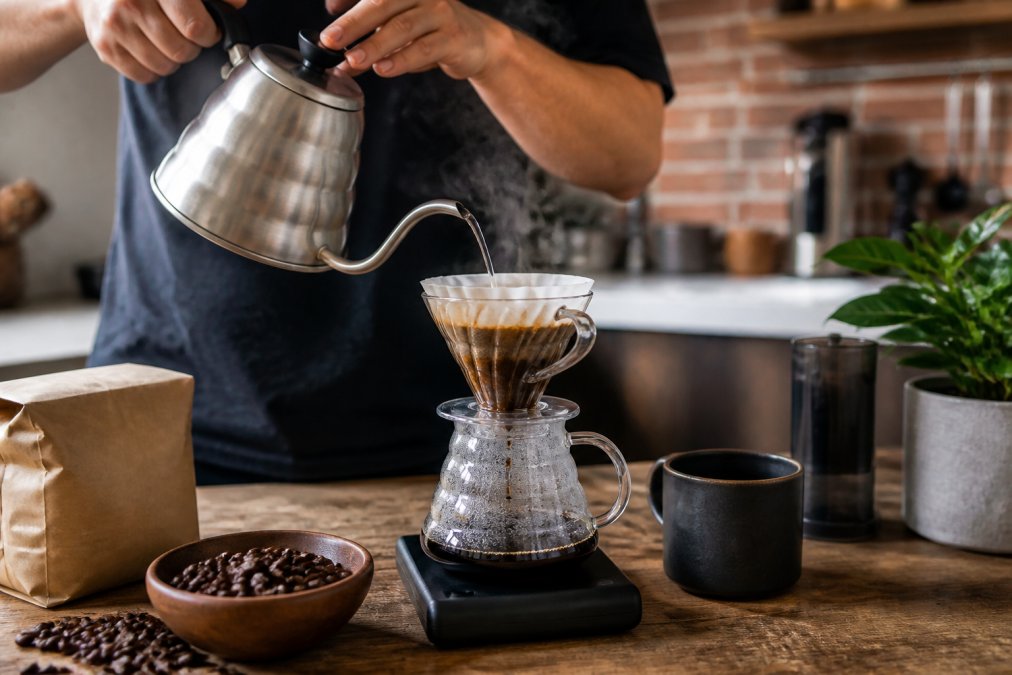
Work through these fixes in order, testing one per brew:
- Coarsen your grind by one setting on your grinder. This is the fastest fix for bitterness.
- Lower your water temperature to around 195°F if you've been brewing near boiling.
- Shorten your contact time by 15-30 seconds, especially for French press and drip.
- Increase your coffee dose slightly so the water extracts less aggressively per ground.
- Reduce agitation by stirring less and pouring more gently.
- Use fresher beans. Stale coffee extracts unpredictably and often turns bitter fast.
- Upgrade your water. Filtered water with balanced minerals produces a noticeably cleaner cup.
Most people see a real difference after fix one or two. If bitterness persists after all seven, the problem is likely the beans themselves.

Troubleshooting Bitterness by Brewing Method
Different brewing methods fail in different ways, and the fix that works for a pour-over won't necessarily help your espresso. Matching the solution to your equipment saves a lot of trial and error, and the table below goes deeper than the generic "coarsen your grind" advice you'll find elsewhere.
Drip, Pour-Over, French Press, and Espresso
| Brewing Method | Likely Cause of Bitterness | First Fix to Try | Why It Works |
|---|---|---|---|
| Drip machine | Water too hot, grind too fine | Coarsen grind, check machine temp | Many drip machines run 205-210°F; coarsening slows extraction to match the heat |
| Pour-over | Pour too fast, uneven saturation | Slow the pour, pre-wet all grounds | Even saturation prevents channels that over-extract some grounds and under-extract others |
| French press | Steep time too long, grind too fine | Cut steep to 4 minutes, coarsen grind | Metal filter lets fines keep extracting after the plunge; shorter steep stops the clock |
| Espresso | Over-extraction from fine grind or long shot | Grind coarser, shorten shot time | Espresso's 9 bars of pressure accelerates extraction; small grind changes have outsized effects |
Drip machines are the most common source of bitter coffee at home because many run hotter than the ideal range with no temperature control. A "bold" setting usually just slows the drip, extending contact time and making bitterness worse.
Pour-over bitterness usually comes from pouring too quickly, which channels water through the grounds unevenly. A gooseneck kettle and a slow, spiral pour fix most of it. If it still tastes bitter, your grind is likely too fine, target a medium-fine grind that drains in 2:30 to 3:30.
French press bitterness is almost always a steep-time problem. The metal mesh filter lets fine particles keep extracting after you plunge, so even a perfect 4-minute steep turns bitter if you leave the plunger down and walk away. Plunge and pour immediately.
Espresso bitterness points to grind and shot timing, the two variables that matter most on a machine. A shot that runs longer than 30 seconds or yields more than 2 ounces from a double basket is usually over-extracted.
The Water Chemistry Angle Most Guides Skip
Here's the variable almost no bitterness guide addresses: your water's mineral content. Water isn't just a solvent, it's an active ingredient, and its dissolved minerals change how efficiently it pulls compounds out of the grounds.
Hard water (high in calcium and magnesium) extracts more aggressively, so you can over-extract even with a perfect grind and temperature. Soft water (or reverse-osmosis water) extracts weakly, usually causing sourness, but it can also create a hollow, harsh bitterness because the lack of buffering minerals lets acidic and bitter compounds dominate.
The practical fix: use filtered water that still contains some mineral content. Reverse-osmosis water is essentially blank, so blend it with tap water or add a mineral packet. If your tap water is very hard, a carbon filter won't remove the minerals, you need a softening filter or bottled water with a balanced mineral profile.
A quick diagnostic: if your coffee tastes bitter and sour at the same time, you have uneven extraction, not simple over-extraction. That usually means your grind consistency is the real issue, or your water is pulling compounds unevenly across the bed.
Best Coffee Beans for Drip Machines (and Bean Freshness)
The best coffee beans for drip machines are medium roasts with a consistent grind and a recent roast date, ideally within two to three weeks of roasting. Freshness matters more than origin for most home brewers, because stale beans extract unpredictably and turn bitter faster.
Roast profile plays a role too. Dark roast beans develop more compounds that read as bitter, so they taste harsher when over-extracted. Light roast beans retain more acidity and brightness, giving you more room to brew without tipping into bitterness. Medium roasts forgive small mistakes.
Coffee bean freshness is the variable most people overlook. Beans start losing flavor within days of roasting, and the oils that carry sweetness go stale first. Roast-to-order coffee makes a genuine difference: beans shipped within 48 hours of roasting arrive with their flavor profile intact, giving you a wider margin for error in your drip machine.
For drip brewing specifically, look for beans graded for consistency. Uneven bean size means uneven extraction, and uneven extraction means bitterness no matter how carefully you brew. Tinto Coffee Roasters' Dos Orígenes is a medium roast built for exactly this: a round, low-acid finish that stays smooth in a standard drip machine, with the body to hold up to milk if you ever want it.
Conclusion
If you've wondered why is my black coffee bitter, know that it's a solvable problem, and it almost never means giving up on drinking it black. Coarsen your grind, watch your water temperature, and start with fresh beans, and the harsh edge disappears.
That's exactly what Tinto Coffee Roasters is built for. Our beans are roasted to order within 48 hours, sourced in small batches, and graded for the flavor consistency that makes black coffee taste the way it should: smooth, sweet, and simple enough to enjoy every morning. If you've been blaming yourself for bitter coffee, let us send you beans that make the fix easy.
Shop Now and taste what roast-to-order coffee does for your daily cup.
Frequently Asked Questions
How do I get rid of bitterness in black coffee?
Adjust one variable at a time. Start by coarsening your grind, since a finer grind speeds extraction and pulls out harsh compounds. If that doesn't help, lower your water temperature to around 195°F, shorten your contact time, or increase your coffee-to-water ratio. A burr grinder gives you more control than a blade grinder. Freshly roasted beans also help, because stale coffee often tastes flat and bitter no matter how you brew it.
Should black coffee taste bitter?
Some bitterness is normal and part of coffee's flavor profile, but it shouldn't dominate the cup. Well-brewed black coffee should taste balanced, with sweetness and acidity alongside a mild, pleasant bitterness. If every sip feels harsh or leaves a bitter aftertaste, that's a sign of over-extraction, not a characteristic of good black coffee. Adjust your brewing variables to bring the cup back into balance.
Does the roast level affect coffee bitterness?
Yes. Dark roast beans spend more time in the roaster, which develops darker, more bitter flavors and reduces the bright acidity found in light roasts. If you prefer a smoother cup, try a medium or light roast. A medium roast like Tinto's Dos Orígenes balances cocoa and toasted nut notes with a round, low-acid finish, making it easier to drink black without an overwhelming bitter edge.
Will Tinto Coffee Roasters beans taste good in my regular drip machine?
Yes. Tinto beans are roasted to order within 48 hours and graded for quality and flavor consistency, so they work well in a standard drip machine. For drip, use a medium grind, a ratio of about 1:16 coffee to water, and water just off the boil. If your coffee still tastes bitter, coarsen the grind slightly or check that your machine reaches the right brewing temperature. Fresh beans make a noticeable difference in any setup.