

Table of Contents
- What Roast to Order Coffee Actually Means
- Roast to Order vs. Store-Bought Coffee: The Real Difference
- The Coffee Degassing Period: Why Fresh Beans Need Rest
- How to Store Coffee Beans Fresh After the Roast Date
- Brewing Adjustments for Freshly Roasted Beans
- Is Roast to Order Coffee Worth the Higher Price?
- Conclusion: Make the Switch to Roast to Order Coffee
- Frequently Asked Questions
Last Updated: September 7, 2026
Roast to order coffee is coffee that is roasted only after you place your order, rather than sitting in a warehouse or on a shelf for weeks or months. At Tinto Coffee Roasters, we roast every order within 48 hours, which means the beans you receive are at their absolute peak of flavor and aroma. Most commercial coffee you find in grocery stores was roasted weeks or even months before it reaches your cup, and that delay costs you the vibrant, complex flavors that specialty coffee is known for. Below, we'll walk through what this process actually means for your daily cup and why the roast date matters more than most coffee drinkers realize.
What Roast to Order Coffee Actually Means
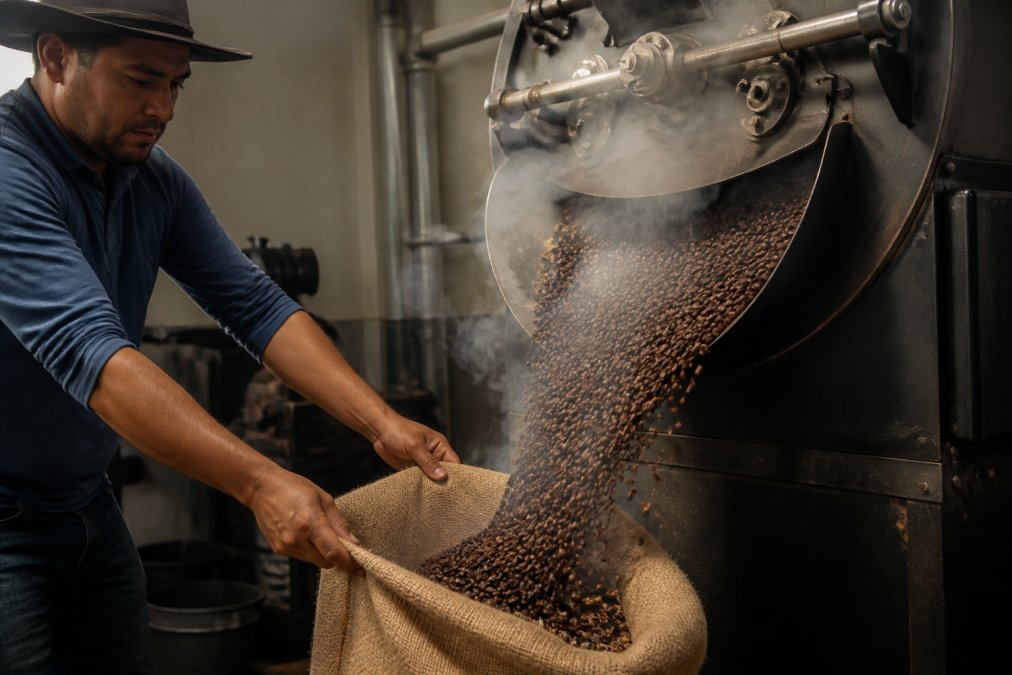
Roast to order coffee is a production model where green coffee beans are held in their raw, unroasted state until a customer places an order, at which point the roaster roasts, packages, and ships them immediately. This stands in direct contrast to mass-market coffee, which is roasted in enormous batches and distributed through a supply chain that can take months to reach store shelves. The difference is simple: time. Every day that passes between roasting and brewing allows volatile aromatic compounds to escape and oxidation to dull the flavors you paid for.
The craft roasting process itself is where the magic happens. Small-batch roasting allows the roaster to develop a specific roast profile for each origin, bringing out the natural sweetness, acidity, and body of the beans. When you buy roast to order coffee, you are getting beans that were roasted with intention, not just processed for volume. Specialty coffee roasters grade their beans for quality and flavor consistency.
Roast to Order vs. Store-Bought Coffee: The Real Difference
The gap between roast to order and store-bought coffee comes down to one factor: the roast date. Walk into any grocery store and pick up a bag of whole bean coffee, and you will struggle to find a roast date printed anywhere on the packaging. Most commercial coffee uses a "best by" date instead, which tells you almost nothing about when the beans were actually roasted. That bag might have been roasted six months ago, and by the time you brew it, the delicate flavor notes have long since faded into a flat, bitter cup.

But why does the roast date matter so much? The answer lies in the chemistry of coffee staling. After roasting, coffee beans undergo a series of chemical reactions that either enhance or degrade flavor. The most significant is oxidation: oxygen reacts with the oils and aromatic compounds in the beans, producing stale, cardboard-like flavors. The rate of oxidation accelerates once the bean's cellular structure is compromised, either by grinding or by the natural degradation of the bean over time (peer-reviewed research). Additionally, volatile organic compounds, including those responsible for floral, fruity, and chocolatey notes, evaporate continuously.
Commercial coffee, which is often roasted weeks or months before it reaches the shelf, has already lost a significant portion of these compounds. The roast date is your only reliable indicator of how much flavor remains. Specialty roasters like ours print the roast date on every bag, allowing you to make an informed choice. In contrast, most mass-market brands use a "best by" date, which is a conservative estimate of when the coffee will still be drinkable, not when it will taste its best. The difference can be stark: a bag roasted three weeks ago will have a noticeably brighter, sweeter, and more complex cup than a bag roasted six months ago, even if both are within their "best by" window.
The practical takeaway: always check the roast date before buying. If a bag doesn't have one, assume it's stale. If it does, aim for beans roasted within the last two to four weeks. That's the window when the coffee is at its peak, and it's exactly what roast to order ensures.
The Coffee Degassing Period: Why Fresh Beans Need Rest
Here is the counterintuitive part about roast to order coffee: the freshest beans are not always the best beans to brew immediately. The coffee degassing period refers to the release of carbon dioxide that happens after roasting, and brewing beans that are too fresh can result in an uneven extraction and a muted, flat cup. Most specialty coffee professionals recommend letting freshly roasted beans rest for three to seven days after the roast date before brewing, allowing the beans to stabilize and the flavors to fully develop.
Many coffee drinkers make the mistake of assuming that "fresher is always better" and brew their beans the day they arrive. In practice, this means the bloom phase of your pour-over or drip brew will be more dramatic, but the cup itself may lack the sweetness and clarity that emerges after a few days of rest. The ideal window for most roasts falls between day four and day fourteen after roasting, which is exactly the period when roast to order coffee shines. By the time your beans arrive at your door, they are entering their prime drinking window rather than exiting it.
How to Store Coffee Beans Fresh After the Roast Date
Storing your beans properly is just as important as the roasting process itself, because poor storage can undo all the work that went into roasting to order. The enemies of fresh coffee are oxygen, light, heat, and moisture, and your storage method should protect against all four. An airtight container stored in a cool, dark cabinet is the standard recommendation, and you should avoid the refrigerator or freezer unless you are storing beans for more than a few weeks, as temperature fluctuations cause condensation that degrades quality (the NIH).
Whole bean coffee stays fresh significantly longer than pre-ground coffee, because grinding exposes vastly more surface area to oxidation. If you can grind at home, you will notice a dramatic improvement in flavor, and the shelf life of your beans extends considerably. For those who prefer convenience, many roast to order roasters offer grinding options, but you should order smaller quantities more frequently to ensure you are always brewing within the peak flavor window. A coffee subscription is an excellent way to maintain a steady supply of fresh beans without the risk of a bag going stale in your pantry.
| Storage Method | Shelf Life | Best For |
|---|---|---|
| Airtight container, cool dark cabinet | 2-4 weeks | Daily brewing at home |
| Whole bean, unopened bag | 3-4 weeks | Occasional brewing |
| Freezer (whole bean only) | 2-3 months | Bulk storage |
| Pre-ground, opened bag | 1 week | Maximum convenience |
Brewing Adjustments for Freshly Roasted Beans
Roast to order coffee behaves differently in your brewer than stale commercial coffee, and you may need to adjust your technique to get the best results. Fresh beans are denser and release more carbon dioxide, which means you may need to adjust your grind size slightly coarser to avoid over-extraction during the bloom phase. The grind size affects how quickly water passes through the coffee, and freshly roasted beans tend to slow the flow as they degas, so a small adjustment can make a noticeable difference in your cup.
The brewing method you use matters less than you might think. A regular drip machine works perfectly fine with fresh beans, and the flavor improvement over stale coffee will be dramatic regardless of your equipment. The key adjustments are simple: let the coffee bloom for thirty seconds before fully saturating the grounds, use water just off the boil around 200 degrees Fahrenheit, and be willing to experiment with your grind size. Many home brewers find that fresh beans require a slightly longer rest period and a slightly coarser grind than they were used to with commercial coffee.
Is Roast to Order Coffee Worth the Higher Price?
The honest answer is yes, but only if you actually care about what is in your cup. Roast to order coffee typically costs more per pound than mass-market options, and that price difference reflects real costs: small-batch sourcing, direct trade relationships with farmers, and the labor of craft roasting itself. But let's break down the numbers and the value proposition more concretely.
The Cost Breakdown
A typical 12-ounce bag of specialty roast to order coffee retails for $18 to $25, while a comparable 12-ounce bag of mass-market whole bean coffee might cost $8 to $12. That's a premium of roughly 50% to 100%. What are you paying for? First, green coffee beans: specialty-grade beans, often sourced through direct trade or fair trade programs, cost $3 to $6 per pound, compared to $1 to $2 for commodity-grade beans. Second, labor: craft roasters typically pay their roasters a living wage and often have higher overhead per pound because they roast in small batches. Third, packaging and shipping: roast to order requires individual fulfillment, which is more expensive than palletizing large batches for distribution.
The Value Proposition
But the higher price buys more than just a story. It buys measurable quality. Specialty coffee is graded by the Specialty Coffee Association (SCA) on a 100-point scale; only beans scoring 80 or above qualify as specialty (sca.coffee). These beans are grown at higher altitudes, harvested selectively, and processed with care, resulting in a cup that is sweeter, more complex, and free of the defects common in commodity coffee. When you brew a $20 bag of roast to order coffee, you are getting a product that, ounce for ounce, delivers more flavor and fewer off-notes than a $10 bag of stale commercial coffee. For those who drink coffee black, the difference is night and day.
The Sustainability Angle
Roast to order also has a sustainability advantage that most consumers overlook. Mass-market coffee is roasted in enormous batches and then shipped to warehouses, where it may sit for months before reaching a store shelf. This model generates significant waste: unsold coffee that passes its peak flavor is often discarded, and the energy required to roast and transport large quantities is substantial. In contrast, roast to order roasters only roast what has been ordered, eliminating overproduction and reducing the carbon footprint associated with storage and waste. Additionally, many craft roasters use compostable or recyclable packaging, further reducing environmental impact. When you buy roast to order, you are not just paying for a better cup, you are supporting a more sustainable supply chain.
The Bottom Line
Is it worth it? If you drink coffee with milk and sugar and don't notice the difference, the premium may not be justified. But if you appreciate the nuanced flavors of specialty coffee, the cost per cup is still modest: at $20 per 12-ounce bag, and using about 2 tablespoons (10 grams) per cup, you get roughly 34 cups, or about $0.59 per cup. That's less than a dollar for a cup that rivals what you'd pay $4 to $6 for at a specialty café. The value proposition is clear for anyone who values quality and sustainability.
Conclusion: Make the Switch to Roast to Order Coffee
Making the switch to roast to order coffee requires a small adjustment in how you think about buying coffee, but the payoff is a daily cup that actually tastes like the beans were meant to taste. Stop buying coffee based on the bag design or the brand name, and start checking the roast date, buying in smaller quantities, and brewing within the peak flavor window. The specialty coffee industry has spent years convincing drinkers that freshness matters, and the science backs it up.
At Tinto Coffee Roasters, we make this easy by roasting every order within 48 hours and shipping it directly to your door. Whether you prefer whole bean or ground coffee for your morning ritual, a portable tube for coffee on the move, or single-serve pods for busy mornings, every option is filled to order with freshly roasted specialty Colombian arabica. Get started with Tinto Coffee Roasters and taste what coffee is supposed to be.


Frequently Asked Questions
How long does roast-to-order coffee stay fresh?
Roast-to-order coffee hits its peak flavor between 4 and 14 days after the roast date, once the coffee degassing period settles. After about 4 weeks, oxidation starts to flatten the flavor notes noticeably. To get the full benefit, buy smaller bags more often and finish them within 2 to 3 weeks of roasting. Check the roast date on the bag, not just the best-by date, and buy only what you will brew in that window.
Does roast-to-order coffee taste better than mass-produced coffee?
Yes, because flavor is locked in at the roastery. Mass-produced coffee can sit in warehouses and on shelves for months before you buy it, so the aromatic oils that carry flavor notes have already oxidized. Roast-to-order coffee is roasted within 48 hours of shipping, which means the beans reach you during their peak flavor window. The difference is clearest when you drink it black: the cup tastes sweeter, brighter, and more complex.
What is the degassing process in fresh coffee?
After roasting, coffee beans release carbon dioxide gas for up to two weeks. This is called the degassing period. If you brew beans too early, the gas pushes water away from the grounds, causing uneven extraction and a flat, sour cup. Most roasters recommend waiting at least 3 to 5 days after the roast date before brewing. During degassing, store beans in a one-way valve bag so the gas escapes without letting oxygen in.
Is roast-to-order coffee more expensive than regular coffee?
Roast-to-order coffee costs more per pound because you are paying for small-batch production, higher-grade beans, and faster shipping. A bag like the Tinto Coffee Bag at $19.99 reflects the cost of specialty Colombian arabica and roasting within 48 hours of your order. The trade-off is a noticeably better cup: brighter acidity, clearer flavor notes, and none of the stale taste that comes from months of shelf storage.