

Last Updated: October 26, 2026
Quick Summary
The best brewing method black coffee depends on your priorities: drip machines offer consistency and volume, pour-over gives you control for clarity, and French press produces bold, full-bodied coffee. Success comes down to three fundamentals: matching your grind size to the method, maintaining water temperature between 195 and 205 degrees Fahrenheit, and getting brew time right.
- Drip coffee makers are used by 54% of home brewers and work best with medium grind coffee at 1 to 2 tablespoons per 6 ounces of water.
- Pour-over brewing takes 3 to 4 minutes total and requires a bloom step of about 30 seconds to release CO2 from the beans.
- French press uses coarse grind at 1 tablespoon per 4 ounces of water and must steep for exactly 4 minutes to avoid bitterness.
- Coffee roasted within the last two weeks tastes noticeably better than older stock.
- A burr grinder produces uniform particles and gives you control over grind size for your brewing method.
Table of Contents
- Why Brewing Method Matters for Black Coffee
- Coffee Grind Size for Brewing: Getting the Foundation Right
- Drip Coffee Brewing: Simple, Consistent, Reliable
- Pour-Over Coffee Recipe: Control Every Variable
- French Press Coffee Ratio: Full-Bodied and Rich
- Other Methods Worth Trying: AeroPress, Moka Pot, and Cold Brew
- How to Make Black Coffee That Tastes Smooth, Not Bitter
- Start Brewing Your Perfect Cup Today
- Frequently Asked Questions
Why Brewing Method Matters for Black Coffee
The best brewing method black coffee isn't about fancy equipment or complicated steps. It's about extracting the right flavors without bitterness or sourness. According to the National Coffee Association, 85% of Americans drink coffee at home, and 69% make it daily. But most people never optimize their brewing method to match their beans or taste preferences.
The difference between a smooth, rich cup and a harsh, over-extracted one often comes down to three things: grind size, water temperature, and brew time. Get those right, and even basic equipment produces exceptional coffee.
Black coffee demands precision because there's nowhere to hide. No milk, no sugar, no flavoring masks mistakes. The brewing method black coffee you choose determines whether your coffee tastes bold and clean or bitter and flat. This guide walks you through the most reliable methods, shows you how to troubleshoot common problems, and helps you find the approach that works for your routine.
Coffee Grind Size for Brewing: Getting the Foundation Right
Grind size is the foundation of every brewing method. It controls how fast water extracts flavor from the beans. A finer grind exposes more surface area, so water pulls flavor faster. A coarser grind slows extraction. Get this wrong, and no other technique saves your cup.
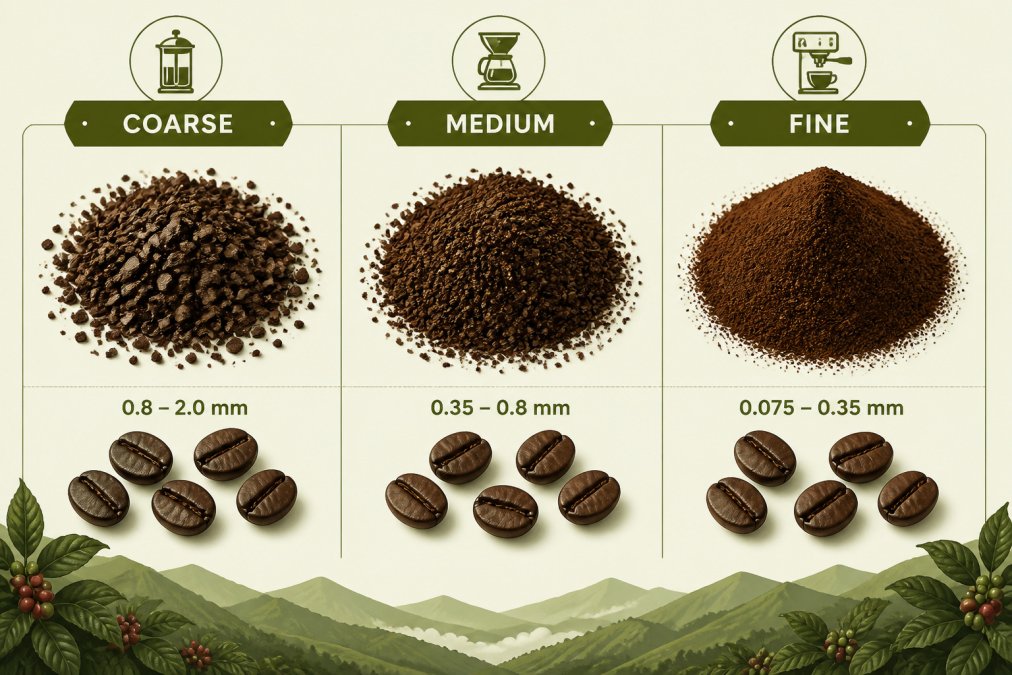
According to Drive Research, drip coffee makers are used by 54% of home brewers, and most use a standard medium grind. That's not coincidence, it's the safest middle ground. But different methods need different sizes:
- Coarse grind: French press, cold brew, cowboy coffee (large particles, slow extraction)
- Medium grind: Drip machines, pour-over, AeroPress (balanced extraction in 3-5 minutes)
- Fine grind: Espresso, moka pot (small particles, rapid extraction under pressure)
The mistake most people make is buying pre-ground coffee and assuming it fits their method. It rarely does. Pre-ground coffee is typically medium, which works for drip but not for French press (where it over-extracts) or espresso (where it under-extracts).
For black coffee, consistency matters more than perfection. A burr grinder, either blade or burr style, gives you control. Blade grinders are cheaper but produce uneven sizes. Burr grinders cost more but deliver uniform particles. If you're serious about black coffee, a burr grinder is worth the investment.
Drip Coffee Brewing: Simple, Consistent, Reliable
Drip coffee brewing is the most popular method in America for good reason. It's forgiving, repeatable, and requires minimal skill. You add water, add grounds, press a button, and walk away. The machine handles temperature and timing.
The standard ratio is 1 to 2 tablespoons of ground coffee per 6 ounces of water. Find the best water to coffee ratio for black coffee to dial in your brewing method. Start at 1 tablespoon if you like it mild, move to 1.5 if you want balance, and go to 2 if you prefer bold. Water temperature should sit between 195 and 205 degrees Fahrenheit, hot enough to extract but not so hot it burns the beans.
Why drip works for black coffee:
- Consistent results with minimal fuss
- Brews large quantities at once
- Forgiving of minor mistakes in grind or ratio
- Equipment is affordable and widely available
- Cleanup is simple
The downside is that drip machines often brew cooler than ideal, especially as they age. If your coffee tastes weak or sour, check whether your machine reaches 200 degrees. Many don't. Also, paper filters remove oils that carry flavor, so some people find drip coffee thinner than other methods.
For the best results, use fresh, medium-ground coffee and brew within 30 minutes of grinding. Tinto Coffee Bag is available ground or whole bean, and its listing includes a standard grind for drip and auto-brew.

Pour-Over Coffee Recipe: Control Every Variable
Pour-over puts you in charge. You control water temperature, pour speed, and timing. This method produces clean, bright coffee because paper or metal filters trap oils. For black coffee drinkers who want clarity and flavor definition, pour-over is unbeatable.
The basic recipe:
- Use medium grind coffee, about 1 to 1.5 tablespoons per 6 ounces of water
- Heat water to 195 to 205 degrees Fahrenheit
- Place filter in dripper and rinse with hot water to remove paper taste
- Add grounds and pour just enough water to wet them (about 30 seconds, called the bloom)
- Slowly pour the rest of water in circles, taking 3 to 4 minutes total
- Stop pouring when water drips through
The bloom step matters. It releases CO2 trapped in the beans and prepares them for extraction. Skip it, and your cup tastes flat or sour.
Pour-over requires more attention than drip, but the payoff is consistency and control. Once you dial in your pour technique, every cup tastes the same. Many coffee enthusiasts prefer this method because it connects you to the brewing process.
The trade-off is time and cleanup. You're actively pouring for several minutes, and you need to wash the dripper after each use. For busy mornings, this isn't ideal. But if you have 10 minutes and want exceptional coffee, pour-over delivers.
French Press Coffee Ratio: Full-Bodied and Rich
French press produces the richest, most full-bodied black coffee you can make at home. Unlike drip or pour-over, French press uses immersion brewing, the grounds steep directly in hot water. No paper filter means all the oils and fine particles stay in your cup, creating texture and depth.
The French press ratio is simple: use coarse grind coffee at 1 tablespoon per 4 ounces of water. For a standard 34-ounce French press, that's about 8 to 9 tablespoons of coffee.
Step-by-step:
- Heat water to 195 to 205 degrees Fahrenheit
- Add coarse grounds to the empty press
- Pour hot water over grounds, filling halfway, and stir gently
- Wait 30 seconds, then fill the rest of the way
- Place the lid on top (don't plunge yet)
- Steep for exactly 4 minutes
- Press the plunger down slowly over 30 seconds
- Pour immediately into your cup
Timing is critical. Under 4 minutes and the coffee tastes weak. Over 4 minutes and it becomes bitter from over-extraction. If your French press coffee tastes harsh, you're likely steeping too long or using too fine a grind.
French press is ideal for black coffee lovers who want bold flavor. The downside is sediment, fine particles settle at the bottom of your cup. Some people enjoy this; others don't. Also, French press requires more cleanup than drip or pour-over.
Other Methods Worth Trying: AeroPress, Moka Pot, and Cold Brew
Beyond the classics, three other methods deserve attention for black coffee.
AeroPress is a hybrid that combines immersion and pressure. It's portable, durable, and produces smooth coffee in under 2 minutes. Use medium grind at about 15 grams of coffee to 250 milliliters of water. Press gently for 30 to 60 seconds. AeroPress is beginner-friendly and forgiving, hard to brew a bad cup. The Tinto Tube, our portable ground coffee, is pre-ground to the standard grind that works perfectly in an AeroPress.
Moka pot brews strong, espresso-like coffee without an espresso machine. It uses pressure from steam to force water through grounds. Use fine grind and fill the bottom chamber with water, add finely ground coffee to the basket, and screw on the top chamber. Heat on medium until you hear a hissing sound, then remove from heat. Moka pots produce concentrated coffee that's intense and bold. They're affordable and require no electricity, making them great for travel.
Cold brew is the slowest method but produces the smoothest coffee. Use coarse grind at a 1:4 ratio of coffee to water. Steep in cold water for 12 to 24 hours in the refrigerator. Strain through a fine filter and dilute with water or milk to taste. Cold brew is less acidic than hot-brewed coffee, so it's gentler on the stomach. The downside is planning ahead, you can't make it on demand.
How to Make Black Coffee That Tastes Smooth, Not Bitter
Bitter black coffee usually means over-extraction. Learn why your black coffee is bitter and how to fix it step by step with simple brewing adjustments. The water pulled too much flavor and tannins from the grounds. The fix depends on your brewing method.
If you use drip: Your coffee is likely over-extracted because the machine brewed too long or the grind was too fine. Try using a coarser grind or shortening brew time if your machine allows it.
If you use pour-over: Slow down your pour. Fast pouring under-extracts; slow pouring over-extracts. Aim for 3 to 4 minutes total. Also check your water temperature, if it's above 210 degrees, it burns the coffee.
If you use French press: You're probably steeping too long. Reduce from 4 minutes to 3.5 minutes and see if that helps. Also, use a coarser grind to slow extraction.
If your coffee tastes sour instead of bitter: That's under-extraction. The water didn't pull enough flavor. Use a finer grind, hotter water, or longer brew time.
Quality beans matter too. Tinto Coffee Roasters roasts to order within 48 hours.
Start Brewing Your Perfect Cup Today
The best brewing method for black coffee is the one you'll use consistently. If you hate cleanup, drip or pour-over saves time. If you want bold flavor, French press delivers. If you need speed, AeroPress wins. If you're busy, cold brew brews while you sleep.
Start with your current method and dial in the three fundamentals: grind size, water temperature, and brew time. Small adjustments often solve bitterness, sourness, or weakness. Once you've mastered one method, try another to expand your skills.
The foundation of great black coffee is fresh, quality beans. Shop our premium coffee collection to find the roast and origin that matches your brewing method.

| Brewing Method | Grind Size | Water Temp | Brew Time | Best For |
|---|---|---|---|---|
| Drip | Medium | 195-205°F | 5-10 min | Consistency, volume |
| Pour-Over | Medium | 195-205°F | 3-4 min | Clarity, control |
| French Press | Coarse | 195-205°F | 4 min | Bold flavor, texture |
| AeroPress | Medium | 195-205°F | 1-2 min | Speed, smoothness |
| Moka Pot | Fine | N/A (steam) | 5-10 min | Intensity, travel |
| Cold Brew | Coarse | Room temp | 12-24 hrs | Low acidity, smooth |
The data shows drip and pour-over dominate home brewing, but research on brewing methods confirms that method choice has measurable impact on flavor extraction. According to coffee extraction studies, the consistency of your grind and the precision of your water temperature matter more than the equipment itself. Even a basic drip machine produces excellent black coffee when you control those variables.
Fresh beans make the difference. studies on coffee freshness show that coffee roasted within the last two weeks tastes noticeably better than older stock. Tinto Coffee Roasters roasts small batches to order, so your coffee never sits on a shelf. Every bag is sealed at peak freshness and ships within days of roasting.
Frequently Asked Questions
What is the best brewing method for black coffee?
The best brewing method depends on your priorities. Choose based on whether you value speed (drip), precision (pour-over), or full body (French press).
How do I choose the right coffee grind size for brewing?
For drip or auto-brew, the Tinto Coffee Bag brew guide recommends Standard grind, using 1-2 tbsp per 6 oz of water.
How do I make black coffee taste less bitter?
For drip or auto-brew, the Tinto Coffee Bag brew guide recommends Standard grind, using 1-2 tbsp per 6 oz of water, and brewing at 195-205°F.
What coffee-to-water ratio should I use?
For drip or auto-brew, the Tinto Coffee Bag brew guide recommends 1-2 tbsp per 6 oz of water.
