

Table of Contents
- Why Roast Level Drives Flavor and Aroma
- Specialty Coffee Roast Levels and Flavor: Light, Medium, Dark
- Coffee Degassing After Roasting: Why Freshness Needs a Rest
- How to Store Roasted Coffee Beans for Peak Aroma
- Coffee Grind Size and Flavor Extraction: The Overlooked Variable
- Matching Roast Profiles to Brewing Methods
- Frequently Asked Questions
Last Updated: October 8, 2026
Why Roast Level Drives Flavor and Aroma
Roast level is the single biggest lever you control over how specialty coffee roasting tastes in the cup. Green coffee beans carry potential; heat decides what you actually taste. The same Colombian lot roasted light, medium, or dark produces three genuinely different drinks, and that is why we treat roast development as the core craft at Tinto Coffee Roasters.
Specialty coffee roasting is the controlled application of heat to green coffee beans to develop flavor and aroma compounds while preserving the character of the origin. Everything else, bean selection, grind, brew method, matters, but roast level sets the ceiling.
What most guides get wrong is treating roast level as a simple darkness scale. It is not. It is a development decision: how much heat, for how long, and how far past first crack you push the batch. Push too little and the coffee tastes grassy and underdeveloped. Push too far and you taste the roast, not the bean.
For a deeper look at how roasting transforms green coffee, the Specialty Coffee Association's roasting resources are a solid starting point.
Specialty Coffee Roast Levels and Flavor: Light, Medium, Dark
Roast level is a shorthand for how far development progressed past first crack, but the flavor in the cup is really set by four measurable controls: charge temperature, airflow, turning point, and development time ratio (DTR). Two roasters can both call a batch "medium" and produce completely different cups if their DTRs differ by five percentage points. That is why the roast-level labels below are starting points, not destinations.
A practical framework most specialty roasters use:
- Charge temperature sets the initial energy in the drum. Higher charges (around 400-420°F for a typical 1 lb batch on a drum roaster) push faster to first crack; lower charges give more room to stretch development.
- Turning point is the low point in bean temperature after charge, usually 60-90 seconds in. A turning point that is too high or too low signals the batch is running hot or stalling early.
- Airflow controls how much moisture and smoke leave the drum. Too little airflow and the roast tastes baked or smoky; too much and you lose aromatic volatiles before they develop.
- Development time ratio is the share of total roast time spent after first crack. A common target range is 20-25% for filter roasts and 25-30% for espresso, though the right number depends on the bean.
| Roast Level | Typical DTR | Flavor Character | Acidity | Body | Best For |
|---|---|---|---|---|---|
| Light | 15-20% | Fruity, floral, citrus | High | Light | Pour-over, filter |
| Medium | 20-25% | Caramel, chocolate, balanced | Medium | Medium | Drip, espresso |
| Dark | 25-35% | Bold, smoky, low-acid | Low | Full | French press, cold brew |
Light Roast: Bright, Fruity, and Acidic
Light roast stops shortly after first crack, preserving the volatile compounds that carry fruity and floral notes. Expect citrus, blueberry, and bright acidity. The trade-off: underdeveloped light roasts taste sour and grassy rather than clean. If a light roast tastes like green hay or raw peanut, the DTR was likely under 15% or the batch stalled before first crack.
Medium Roast: Balanced Sweetness and Body
Medium roast develops through the Maillard reaction, where sugars and amino acids combine into caramel and chocolate notes. This is the sweet spot for most drinkers, and it is where our Dos Orígenes medium roast lives, with cocoa and toasted nut leading and a clean finish. A well-executed medium roast typically shows 13-16% weight loss from green to roasted; significantly less suggests underdevelopment, significantly more suggests the roast is drifting dark.

Dark Roast: Bold, Smoky, and Low-Acid
Dark roast pushes well past first crack, burning off much of the acidity and building body through caramelization. Smoky, bittersweet, low-acid. The drawback is that heavy roasting masks origin character, so you taste the process more than the bean. If you want to keep some origin character in a dark profile, pull the batch at the first sign of second crack rather than letting it roll.
For a deeper look at how roasting transforms green coffee, the Specialty Coffee Association's roasting resources are a solid starting point.
Coffee Degassing After Roasting: Why Freshness Needs a Rest
Coffee degassing after roasting is the release of carbon dioxide trapped inside the bean during the roast. It is why coffee roasted yesterday tastes flat and foamy rather than sweet, and why a short rest matters more than most people expect.
During roasting, beans build up internal gas pressure. After the roast, that CO2 escapes slowly over days. Brew too soon and the gas disrupts water contact with the grounds, producing uneven extraction and a hollow cup. Rest whole beans for a few days after the roast date before brewing, and let them sit longer for espresso, where trapped gas causes gushing and unstable shots.
How to Store Roasted Coffee Beans for Peak Aroma
The best way to store roasted coffee beans is in an airtight, opaque container at room temperature, away from light, heat, and moisture. Oxygen, light, and warmth all accelerate the loss of volatile aromatics, which is exactly what you paid for.
A few rules that actually matter:
- Keep beans whole until brew day; grinding exposes far more surface area to oxygen
- Skip the fridge and freezer for daily-use beans; condensation and odors do damage
- Buy in quantities you will finish within a few weeks, not months
- Reseal the bag tightly after every use, pressing out excess air
This is the practical argument for roast-to-order coffee. Beans sealed close to their roast date and shipped quickly reach you with more of their aroma intact than bags that have sat on a shelf. Our Tinto Coffee Bag is filled to order and sealed for freshness from roast day to brew day.
Coffee Grind Size and Flavor Extraction: The Overlooked Variable
Coffee grind size and flavor extraction are directly linked: finer grinds extract faster, coarser grinds extract slower. Get the grind wrong and even a perfect roast tastes thin or bitter.
Extraction pulls soluble compounds from the grounds. Too fine, and you over-extract, pulling out harsh, bitter compounds. Too coarse, and you under-extract, leaving the cup sour and weak. Match grind to brew method: coarse for French press and cold brew, standard for drip and pour-over, fine for espresso. If your cup tastes bitter, grind coarser. If it tastes sour or thin, grind finer. That single adjustment fixes most home brewing problems.
Matching Roast Profiles to Brewing Methods
Pairing roast level with the right brew method is where flavor and aroma finally come together in the cup. A bright light roast shines in a pour-over; a heavy dark roast suits a French press.
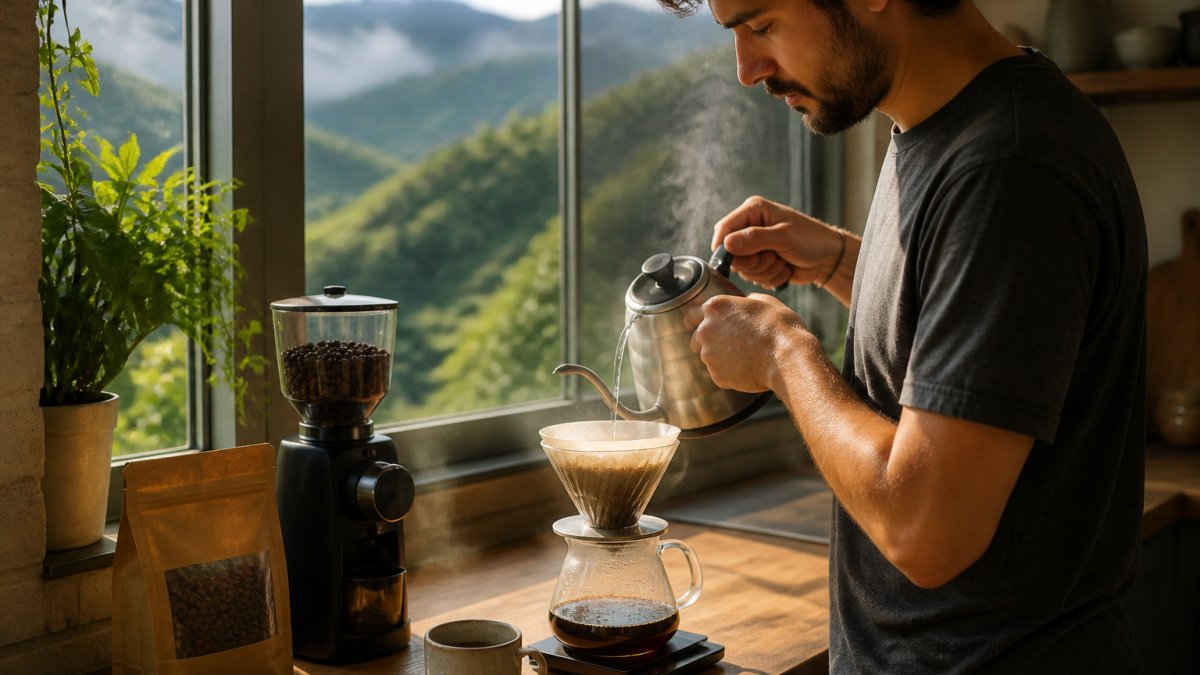
The logic is simple. Delicate, acidic light roasts benefit from methods that highlight clarity, like pour-over. Medium roasts are flexible and work in almost anything, including a standard drip machine. Dark roasts hold up to immersion brewing, where their body and low acidity come through without turning bitter.
You do not need expensive equipment to taste the difference. A regular drip machine, brewed at 195-205°F with a standard grind, will show the character of a good medium roast clearly. The National Coffee Association's brewing guidance covers the basics of water temperature and ratio if you want to dial in further.
For easy reference, here is how we would match them:
| Roast | Brew Method | Why It Works |
|---|---|---|
| Light | Pour-over | Preserves clarity and acidity |
| Medium | Drip or espresso | Balanced sweetness extracts evenly |
| Dark | French press or cold brew | Body and low acidity shine |
Our Blonde blend, a sweet Central American and African combination, is built for sweet espresso, while "The Sophia" Colombian Pods bring a smooth, even extraction to single-serve machines in under a minute.

Frequently Asked Questions
How do you get the most flavor out of specialty coffee beans?
Start with freshly roasted beans from a small-batch roaster like Tinto Coffee Roasters, which roasts to order within 48 hours. Let them rest 3 to 7 days after the roast date to release CO2, then store them in an airtight container away from light and heat. Match your grind size to your brewer, use water between 195 and 205°F, and drink within two to three weeks of opening. These steps protect the volatile compounds that carry aroma and flavor.
Which roast level brings out the most aroma in coffee?
Light and medium roasts generally retain more of the volatile aromatic compounds that create fruity, floral, and citrus notes. Dark roasts develop deeper caramel and smoky aromas from the Maillard reaction, but many delicate compounds break down at higher temperatures. If you want the widest range of aromatics, try a light or medium roast such as Tinto's Blonde blend or Dos Orígenes medium roast. Personal preference still decides what smells best to you.
Does a darker roast have more flavor than a lighter roast?
Not more flavor, just different flavor. Dark roasts taste bolder and more bitter because roasting longer reduces acidity and sugars while building smoky, chocolatey notes. Light roasts keep more of the bean's original acidity, fruity notes, and floral aromas. Neither is stronger in caffeine either; caffeine changes little with roast level. The best choice depends on whether you prefer bright and clean or rich and deep in the cup.
How long should coffee rest after roasting before brewing?
Most specialty coffees taste best 3 to 7 days after the roast date. During that window, beans release carbon dioxide, a process called degassing. Brew too soon and the gas disrupts water contact, causing uneven extraction and a flat or foamy cup. For espresso, some roasters suggest waiting 7 to 10 days. Tinto Coffee Roasters ships roast-to-order beans, so you can track the roast date and brew at peak flavor.
How should roasted coffee beans be stored to keep them fresh?
Keep beans in an opaque, airtight container at room temperature, away from sunlight, heat, and moisture. Do not store them in the fridge; condensation and odors will ruin the flavor. The freezer works only if you seal beans in a vacuum bag and use them without repeated thawing. Buy only what you will drink in two to three weeks. Whole bean coffee stays fresh longer than ground because less surface area is exposed to oxygen.
What brewing method best preserves a coffee's flavor and aroma?
Pour-over and French press preserve aroma well because they use paper or metal filters that let oils and aromatic compounds pass into the cup. Pour-over highlights clarity and bright notes, while French press keeps more body and oils. Drip machines work fine if the water stays between 195 and 205°F. For convenience, single-serve pods like Tinto's Sophia pods are oxygen-sealed and deliver consistent extraction. Match the method to the roast and grind for the best result.
Getting the most flavor and aroma from specialty coffee roasting comes down to a few decisions: pick a roast level that matches your taste, rest the beans after roasting, store them well, and grind to suit your brewer. Tinto Coffee Roasters roasts to order within 48 hours, sources small-batch Colombian beans graded for quality and flavor consistency, and seals every bag for freshness. Shop Now and let us bring that everyday cup to your door.