

Table of Contents
- How Light Exposure Damages Roasted Coffee Beans
- Light, Heat, Oxygen, and Moisture: How They Work Together
- The Best Way to Store Roasted Coffee Beans
- Choosing the Right Coffee Bean Storage Container
- How Long Do Coffee Beans Stay Fresh After Roasting
- Roast Level, Origin, and How Light Affects Different Beans
- A Simple Test: Light-Exposed vs. Protected Beans
- Frequently Asked Questions
Last Updated: October 18, 2026
How Light Exposure Damages Roasted Coffee Beans
Understanding does light exposure affect coffee bean flavor is essential, as light exposure is one of the most underestimated threats to coffee freshness. When roasted beans sit in direct sunlight or bright indoor light, they begin losing flavor compounds almost immediately. The damage happens silently, your beans look fine, but their taste profile is degrading day by day.
At Tinto Coffee Roasters, we've seen firsthand how light exposure affects the quality of specialty coffee. Roasted beans are vulnerable because the roasting process has already transformed the bean's structure. What remains is a porous surface packed with aromatic oils and flavor compounds.
UV Light and Flavor Degradation
UV light accelerates oxidation inside the bean. The ultraviolet wavelengths are short and energetic, they have enough power to break chemical bonds in the compounds responsible for coffee's aroma and taste. This isn't theory. It's basic chemistry.
The damage compounds over time. A week in direct sunlight causes noticeable flavor loss. Two weeks and the coffee tastes noticeably flat. The delicate flavors that make a light roast bright or a medium roast balanced start to disappear. What remains is a muted, one-dimensional cup.
Different light sources matter. Window glass blocks some UV, but not all. Clear plastic containers offer almost no protection. Opaque containers are essential because they block both visible and ultraviolet light completely.
The Role of Oxidation When Beans Are Exposed
Oxidation is the real culprit behind light-damaged coffee. When light hits the bean, it energizes molecules inside. These excited molecules react with oxygen in the air, a process called oxidation.
Think of it like rust forming on metal. The process accelerates when conditions are right. Light provides the energy. Oxygen is always present. Together, they break down the coffee's flavor compounds into tasteless byproducts.
The beans also absorb moisture from humid air when exposed to light in open containers. Moisture plus light plus oxygen creates the perfect storm for flavor loss. The beans become brittle. The oils dry out. The taste becomes thin and bitter.
Light, Heat, Oxygen, and Moisture: How They Work Together
Light doesn't act alone. It works with three other enemies: heat, oxygen, and moisture. Understanding how these four factors interact explains why proper storage is non-negotiable.
Heat accelerates every chemical reaction inside the bean. Light provides the energy to start oxidation. Oxygen fuels the breakdown of flavor compounds. Moisture promotes mold and staleness.
A bean stored in a clear container on a sunny shelf faces all four threats at once. The sun provides heat and light. Oxygen is freely available.
The good news: controlling these factors is simple. Remove light and you slow oxidation dramatically. Reduce oxygen exposure and you preserve aromatic compounds. Keep beans dry and cool, and they stay fresh much longer.
The Best Way to Store Roasted Coffee Beans
Proper storage is the difference between coffee that tastes amazing for weeks and coffee that tastes mediocre after a few days. The best storage method combines three elements: darkness, airtight sealing, and cool temperatures.
Cool, Dark, and Dry Conditions
Darkness is the foundation. Store beans in a cabinet, pantry, or drawer, anywhere light doesn't reach. A cool environment slows chemical reactions. Room temperature (around 70°F) is ideal. Avoid the refrigerator.
Dry conditions matter because moisture promotes staleness and mold. Keep beans away from the sink, dishwasher, and any humid areas. A kitchen cabinet away from the stove works well. The goal is stable conditions without temperature swings or moisture exposure.
Never store beans near heat sources. The oven, coffee maker, and sunny windowsills are all enemies. Heat speeds up oxidation and evaporates the aromatic oils that make coffee taste good.
Sealed Storage and Airtight Containers
An airtight seal keeps oxygen out. Oxygen is always trying to enter and oxidize the coffee. A good seal stops it. Vacuum-sealed bags work well. So do airtight glass jars with rubber gaskets.
Some specialty containers have one-way valves. These let carbon dioxide (which the beans release after roasting) escape without letting oxygen back in. These are excellent for long-term storage. The valve prevents pressure buildup while maintaining an oxygen-free environment inside.
Avoid containers that let light through. Clear glass looks nice on the counter, but it exposes beans to light constantly. Opaque containers, whether ceramic, dark glass, or metal, protect beans from light damage.
Choosing the Right Coffee Bean Storage Container
The container you choose directly impacts how long your beans stay fresh. The best containers block light completely, seal airtight, and are made from materials that don't absorb odors or flavors.
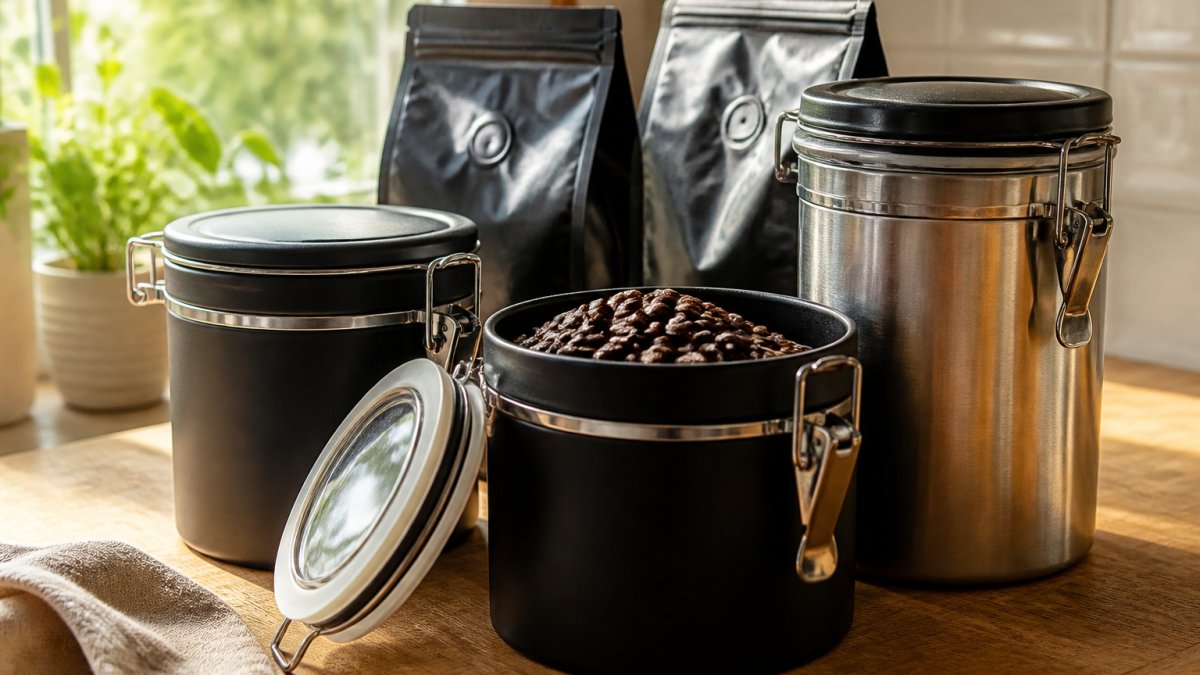
Opaque vs. Clear Containers
Opaque containers are always the right choice. Dark ceramic, stainless steel, or opaque plastic all work. The color doesn't matter, what matters is that light cannot pass through.
Clear glass jars look beautiful on a shelf. They're terrible for coffee storage. Even if they're kept in a cabinet, any light exposure degrades the beans. The same goes for clear plastic containers.
Opaque containers keep 100% of light out. This is non-negotiable if you want fresh coffee. Tinto Coffee Roasters' Tinto Coffee Bag uses opaque packaging specifically to preserve the flavor from roast day to brew day. The sealed bag blocks light completely, maintaining maximum freshness.

Valve Bags and Specialty Storage Solutions
One-way valve bags are popular for good reason. The valve lets carbon dioxide escape after roasting without letting oxygen back in.
Valve bags work best when stored in a cool, dark place. Even with the valve, light exposure will still degrade the beans. The valve solves the oxygen problem, not the light problem.
Vacuum-sealed containers remove most air, which removes oxygen. This is excellent for long-term storage. However, once opened, the seal breaks and oxygen rushes back in.
For daily use, an airtight opaque container is ideal. It's reusable, easy to open and close, and keeps light and oxygen out effectively. Ceramic containers with rubber-gasket lids work particularly well.
How Long Do Coffee Beans Stay Fresh After Roasting
Freshness is a moving target. Coffee is freshest within the first two weeks after roasting. After that, quality declines gradually. Understanding this timeline helps you buy the right amount and store it properly.
Peak Freshness Window and Flavor Changes
The first 5-7 days after roasting is when coffee tastes its absolute best. The aromatic compounds are at their peak. The flavor is bright and complex.
Days 7-14 represent the sweet spot for most coffee drinkers. The flavor is still excellent. The beans have "settled" slightly, making them easier to extract with standard brewing methods.
Days 14-21 are still acceptable. The flavor is noticeably less vibrant than the first week, but still enjoyable. Oxidation has begun degrading some aromatic compounds, but the core flavor remains intact.
After 3-4 weeks, the decline accelerates. Flavor becomes flat and one-dimensional. The brightness fades. Bitterness can emerge as the oils oxidize.
Signs Your Beans Have Lost Freshness
Stale beans taste flat and dull. There's no complexity or brightness. If your coffee tastes like cardboard or tastes excessively bitter, the beans have lost freshness.
Look at the color. Fresh roasted beans have a matte finish and even color. Very shiny, oily-looking beans might indicate over-extraction or age. Pale or discolored spots can indicate light damage or moisture exposure.
Smell matters too. Fresh beans smell aromatic and inviting. Stale beans smell flat or musty. If you notice a sour or vinegar-like smell, the beans have oxidized significantly.
The easiest test is brewing. Fresh beans produce a vibrant, aromatic cup with clear flavor notes. Stale beans produce a thin, flat cup with little aroma.
Roast Level, Origin, and How Light Affects Different Beans
Not all coffee beans respond the same way to light exposure. Roast level and origin both influence how quickly beans degrade in light.
Light Roast vs. Dark Roast Sensitivity to Light Damage
Light roasts are more sensitive to light damage. They contain more delicate, aromatic compounds that break down quickly under UV exposure. A light roast stored in sunlight will taste noticeably flat within a week.
Dark roasts are slightly more resilient. The extended roasting time has already broken down some of the more volatile compounds. However, this doesn't mean dark roasts are immune to light damage.
The key difference is what you lose. With a light roast, you lose the bright, floral, or fruity notes that define the roast.
Medium roasts fall in between. They have moderate complexity and moderate sensitivity to light. Proper storage preserves their balanced flavor profile.
Delicate Flavors and Terroir: What Light Exposure Steals
Terroir, the unique flavor characteristics that come from the bean's origin, altitude, and climate, is what separates specialty coffee from commodity coffee. Light exposure destroys terroir.
A Colombian bean grown at high altitude in rich soil develops delicate sweetness and balanced acidity. Light exposure flattens these characteristics. The complexity disappears. What remains is generic coffee flavor.
The same happens with Ethiopian beans' floral and fruity notes, or Central American beans' nutty sweetness. Light breaks down the specific compounds that express origin.
This is why specialty roasters like Tinto Coffee Roasters emphasize freshness and proper storage. The entire point of sourcing premium beans is to experience their unique flavor profile. Light exposure negates that investment.
A Simple Test: Light-Exposed vs. Protected Beans
If you want to see light exposure in action, run a simple experiment. Divide a batch of fresh beans into two groups.
After one week, brew both samples using the same method. The difference will be obvious. The light-exposed beans will taste flat and dull.
This experiment proves that light exposure matters. It's not theory, it's visible in the cup. Once you've tasted the difference, proper storage becomes obvious.
Try this with beans you've purchased from different sources. Compare beans stored in clear containers versus opaque ones. The pattern is consistent: light exposure degrades coffee flavor. Darkness preserves it.
Keeping roasted coffee fresh requires attention to detail, but the effort pays off immediately in your cup.
When you order from Tinto Coffee Roasters, your beans arrive fresh because we roast to order within 48 hours. Our Tinto Coffee Bag uses opaque, sealed packaging specifically designed to preserve maximum flavor and aroma from roast day to brew day. Store them in a dark cabinet, and you'll taste the difference every morning. Shop Now and experience coffee the way it's meant to taste.
Frequently Asked Questions
Does light exposure affect coffee bean flavor?
Yes. UV light and visible light trigger oxidation in roasted coffee beans, breaking down aromatic compounds and delicate flavors. Beans exposed to direct sunlight or bright indoor light lose complexity and develop stale, flat tastes within days. This damage compounds when light combines with heat, oxygen, and moisture. Protecting beans in opaque, sealed containers preserves the full flavor profile from roast day through the peak freshness window.
What is the best way to store roasted coffee beans?
Store beans in an opaque, airtight container kept in a cool, dark, dry place away from direct sunlight, heat sources, and moisture. A pantry or kitchen cabinet away from windows works well. Avoid clear jars or bags, even if they look nice on the counter. If your Tinto Coffee Bag is opened, transfer remaining beans to an airtight container with a one-way valve to release CO2 while blocking oxygen and light. Keep the temperature stable between 60-70°F.
How long do coffee beans stay fresh after roasting?
Roasted coffee beans peak in flavor 3-10 days after roasting and remain fresh for 2-4 weeks when stored properly in an airtight, opaque container. Tinto Coffee Roasters roasts to order within 48 hours of shipment, so your beans arrive near peak freshness. After opening, consume within 1-2 weeks for optimal taste. Once flavor begins to fade, the beans are still safe to brew but lack the complexity and aroma of fresh roasts.
Should coffee beans be stored in a clear container?
No. Clear containers expose beans to light, which accelerates oxidation and flavor loss even in indirect indoor light. UV light is especially damaging but visible light also degrades aromatic compounds. Opaque containers, ceramic, metal, or dark glass with an airtight seal, protect beans from light while blocking oxygen and moisture. If you want to see your beans, use an opaque container with a small window or keep a small amount in a clear jar for display and store the rest in sealed, dark storage.