

Table of Contents
- Colombian vs Ethiopian Coffee: A Flavor Comparison at a Glance
- Colombian Coffee Flavor Profile Explained
- Ethiopian Coffee Flavor Profile Explained
- Colombian vs Ethiopian Coffee Acidity: What You'll Taste
- How Origin, Terroir, and Processing Shape the Difference
- Best Coffee for Pour Over: Which Origin Shines
- How to Taste the Difference: A Guided Approach
- Which Should You Choose?
- Frequently Asked Questions
Last Updated: October 17, 2026
Colombian vs Ethiopian Coffee: A Flavor Comparison at a Glance
Choosing between a Colombian and an Ethiopian single-origin means choosing between two fundamentally different flavor worlds. Colombian coffee tends toward smoothness, sweetness, and balance, think caramel, nuts, and chocolate. Ethiopian coffee leans into brightness, floral complexity, and fruit-forward notes like bergamot and blueberry.
Both are Arabica beans grown at altitude in ideal coffee-growing climates, but terroir, processing method, and varietal selection push them in completely different directions. Understanding those differences transforms how you choose coffee and what you taste in your cup.
Quick Comparison Table
| Aspect | Colombian Coffee | Ethiopian Coffee |
|---|---|---|
| Flavor Profile | Smooth, sweet, balanced | Bright, floral, fruit-forward |
| Tasting Notes | Caramel, chocolate, nuts | Bergamot, blueberry, citrus |
| Acidity | Moderate, clean | High, vibrant |
| Body | Medium to full | Light to medium |
| Aroma | Nutty, cocoa-like | Floral, fragrant |
| Best Brewing Method | Pour over, drip, espresso | Pour over, AeroPress, cold brew |
Colombian Coffee Flavor Profile Explained
Colombian coffee occupies a sweet spot in the specialty coffee world: sophisticated enough to impress but approachable enough for everyday drinking. That balance comes from how it's grown, processed, and roasted.
Colombia's mountainous terrain, consistent rainfall, and volcanic soil create ideal growing conditions. Most Colombian coffee grows at 4,000 to 6,000 feet, where slower ripening concentrates sugars in the bean, which is where the sweetness comes from. The dominant washed processing method strips away the fruit layer during fermentation, leaving a cleaner, more refined flavor profile than natural-process coffees.
Sweetness and Tasting Notes
Colombian coffee's sweetness isn't added, it's inherent to the bean. You'll find notes of caramel, brown sugar, and sometimes honey, pairing naturally with chocolate and nutty undertones for a flavor that feels complete without being heavy.
The most common tasting notes are caramel, chocolate, hazelnut, and almond. Some microlots from Huila or Nariño develop subtle plum or red apple notes, but these sit in the background. The sweetness is what most people notice first and remember longest.
This is why Colombian coffee works beautifully as an everyday brew. Drink it black and the sweetness carries you through; add milk and it becomes creamy and rounded. The flavor profile doesn't demand attention; it invites it.
Body and Mouthfeel
Colombian coffee typically has a medium to full body, feeling substantial on your tongue without being syrupy. The mouthfeel is smooth and balanced, not thin, not heavy, but just right for most brewing methods.
This body comes partly from altitude and processing, but also from roast: most Colombian coffee reaches a medium roast, preserving natural sweetness while developing enough caramelization to add body and depth.
Brewed well, Colombian coffee coats your mouth evenly with a clean finish, with no lingering bitterness unless it's over-extracted or roasted too dark. The smoothness is the signature.
Ethiopian Coffee Flavor Profile Explained
Ethiopian coffee is where coffee gets interesting, the origin that makes people pause mid-sip and say, "Wait, what was that?" Ethiopian coffees are known for complexity, brightness, and distinctive floral and fruity character.
Ethiopia is coffee's birthplace, and the diversity is staggering: dozens of varieties across regions like Yirgacheffe, Sidamo, Harrar, and Guji, each with its own personality. What ties them together is a brightness and complexity rare in coffee, driven by both terroir and processing methods.
Brightness and Floral Notes
The signature of Ethiopian coffee is brightness, a lively acidity that makes the cup feel alive. This brightness carries floral notes of jasmine, bergamot, or rose, subtle and sophisticated rather than perfume-like.
The floral character comes from origin and the natural processing used on many Ethiopian coffees. When cherries dry whole, the fruit stays in contact with the bean longer, imparting fruity and floral compounds.
Floral notes pair naturally with bright citrus and berry flavors, so you might taste lemon zest, bergamot, or blueberry in a single cup. The brightness makes these flavors pop instead of blending together, which is why Ethiopian coffee suits those who want complexity and nuance.
Aroma and Complexity
Before you even taste Ethiopian coffee, the aroma tells you something is different: floral and fragrant, sometimes with hints of jasmine or a subtle spice note. It's more pronounced than in most Colombian coffees, which tend to smell like cocoa and nuts.
This complexity extends into the cup: Ethiopian coffee reveals different flavors as it cools, so what tastes bright and citrusy when hot might show blueberry or stone fruit later. That evolution is part of the appeal.
The complexity also comes from the bean: Ethiopian heirloom varieties have more genetic diversity than the standardized Bourbon and Typica grown elsewhere, translating to more flavor compounds and more interesting cups.
Colombian vs Ethiopian Coffee Acidity: What You'll Taste
Acidity in coffee doesn't mean sour, it means brightness, liveliness, and flavor intensity. Both origins are acidic in this sense, but express it differently.
Colombian coffee has moderate acidity that feels clean and crisp, brightening the cup without overwhelming the sweetness. It's well-balanced with body and sweetness, which is partly why Colombian coffee is so approachable.
Ethiopian coffee has higher, more vibrant acidity that carries the floral and fruity notes and makes the cup feel alive.
Acidity also depends on roast level: a light roast of either origin has higher acidity than a dark roast. To reduce acidity in an Ethiopian coffee, a medium or medium-dark roast mellows the brightness while preserving complexity.
How Origin, Terroir, and Processing Shape the Difference
The flavor differences between Colombian and Ethiopian coffee come down to three things: where they're grown, how they're processed, and what varieties are planted.
Growing Region and Altitude
Colombian coffee grows in the Andes at 4,000 to 6,000 feet, where slower ripening concentrates sugars and creates sweetness. Volcanic soil rich in minerals and a stable climate with consistent temperature and rainfall favor balanced, sweet flavors.
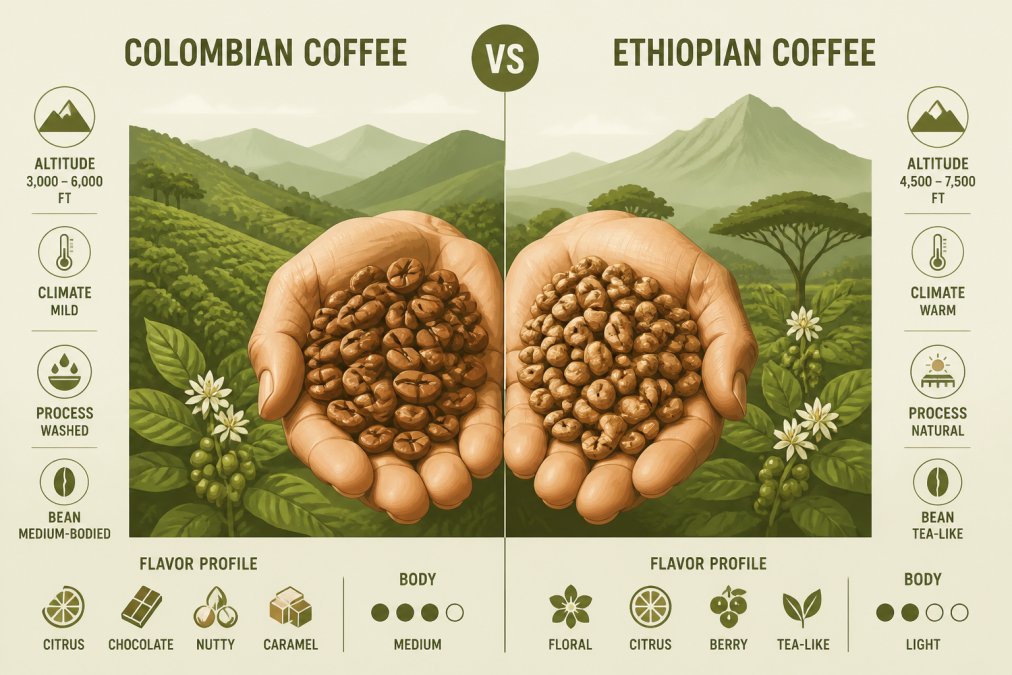
Ethiopian coffee grows even higher, often between 6,000 and 7,000 feet, in regions like the Ethiopian Highlands. The higher altitude, cooler temperatures, and heirloom varieties create conditions for more complex, floral, and fruity flavors.
Processing Method and Its Impact
Processing method is where the real flavor divergence happens. Colombian coffee is almost always washed (wet) processed. The cherry is removed, the bean is fermented in water for 12-48 hours, then dried. This method removes the fruit layer and creates a cleaner, more refined flavor. Sweetness and balance emerge.
K-Cups Coffee Flavored & Nonflavored Organic Supreme Finest Premium American →
Ethiopian coffee is often naturally (dry) processed, especially in regions like Yirgacheffe and Harrar. The whole cherry dries with the bean inside, sometimes for weeks. This extended contact between fruit and bean creates fruity, floral, and sometimes wine-like flavors.
Some Ethiopian coffees are washed processed, and they taste noticeably different from their naturally processed counterparts, cleaner, brighter, more tea-like. Processing method matters more than origin in some cases.
Roast Level, Freshness, and Brewing
Don't underestimate roast level. A dark roast Colombian coffee will taste more like chocolate and less like caramel. A light roast will emphasize brightness over sweetness.
Freshness also changes everything. Coffee is at its peak flavor 7-14 days after roasting. Before that, the flavors are still settling. After 30 days, the coffee starts to fade. If you're comparing Colombian and Ethiopian coffee, make sure both are fresh. Stale Ethiopian coffee loses its brightness and complexity.
Brewing method matters too. Pour over and AeroPress highlight the subtle differences between origins. Espresso can mask them. French press amplifies body and mutes acidity.
Best Coffee for Pour Over: Which Origin Shines
Pour over is the best brewing method for tasting the differences between origins. The slow, controlled extraction highlights subtle flavors that other methods might miss.
For pour over, both origins shine, but in different ways. Colombian coffee's smoothness and balance make it forgiving, even if your technique isn't perfect, the coffee will taste good.
Ethiopian coffee rewards technique. A proper pour over will extract the brightness and floral notes beautifully, giving you a cup that tastes complex and alive.
If you're new to pour over, start with Colombian coffee. It's more forgiving and will teach you the basics. Once you're comfortable, move to Ethiopian coffee and experience how technique changes the cup.
How to Taste the Difference: A Guided Approach
Tasting coffee intentionally is a skill, and it transforms how you experience both origins.
Start by smelling the dry grounds. Colombian coffee smells nutty and cocoa-like. Ethiopian coffee smells floral and fragrant. This first impression is real, it's not your imagination.
Brew both coffees the same way, same water temperature (200°F), same brewing time, same ratio (1:16 coffee to water).
Taste the Colombian coffee first. Notice the sweetness. Notice how smooth it is. Notice the aftertaste, it should be clean and slightly sweet.
The difference should be obvious. Colombian coffee feels like a warm hug. Ethiopian coffee feels like waking up. Neither is better. They're different experiences.
If you're struggling to taste the difference, the coffee might be stale, or the brewing might be off.
Which Should You Choose?
This isn't about which origin is "better." It's about which one matches how you want to drink coffee.
Choose Colombian coffee if you want everyday smoothness. It's the coffee you can drink black without thinking about it. It works in any brewing method. It's not challenging, it's comforting.
Choose Ethiopian coffee if you want to taste complexity and brightness. You're willing to pay attention. You have a brewing method you love. You want your coffee to surprise you. Ethiopian coffee rewards curiosity and technique.
Many coffee drinkers rotate between them. Colombian coffee on Monday morning when you need straightforward comfort. Ethiopian coffee on Saturday when you have time to brew carefully and taste intentionally. Both are worth exploring.
At Tinto Coffee Roasters, we offer both origins in multiple formats, whole bean, ground, and single-serve pods. Whether you choose our 12 OZ Coffee Collection for whole bean or our convenient single-serve pods, you're getting coffee roasted fresh and graded for consistency.


The real difference between Colombian and Ethiopian coffee comes down to what you're tasting for. According to Specialty Coffee Association research on coffee origin characteristics, terroir and processing method are the primary drivers of flavor profile variation across origins.
Frequently Asked Questions
What is the difference between Colombian and Ethiopian coffee?
Colombian coffee tends to be smooth, balanced, and sweet with nutty and caramel notes, while Ethiopian coffee is brighter and more fruit-forward with floral and citrus characteristics. Colombian beans grown at altitude produce a fuller body and lower acidity, whereas Ethiopian coffees offer more complexity and pronounced acidity. These differences stem from growing altitude, climate, soil, processing methods, and the Arabica varieties cultivated in each region.
Is Ethiopian coffee more acidic than Colombian coffee?
Yes, Ethiopian coffee generally has more bright acidity than Colombian coffee. Ethiopian beans grown at high altitude in volcanic soil develop higher acidity that creates a crisp, lively mouthfeel. Colombian coffees, while still acidic, tend toward a softer, more balanced acidity that feels smoother on the palate. The acidity difference is influenced by altitude, climate, and the natural or washed processing methods favored in each origin.
Which coffee is better for drinking black?
Colombian coffee is often preferred for drinking black because its smooth body, balanced sweetness, and lower acidity create a clean, approachable cup without bitterness. The caramel and nutty notes are naturally pleasant without added cream or sugar. That said, if you enjoy bright, fruity, and complex flavors, Ethiopian coffee also works beautifully black, it just requires a palate that appreciates higher acidity and floral characteristics.
Does roast level change the flavor of Colombian and Ethiopian coffee?
Yes, roast level significantly alters the flavor of both origins. Light roasts preserve the origin's natural acidity and brightness, Ethiopian coffees shine here, showing their fruity and floral notes. Medium roasts balance origin character with roasted sweetness, ideal for both Colombian and Ethiopian beans. Dark roasts emphasize body and reduce acidity, sometimes masking the subtle differences between origins. Freshness and brewing method also matter: coffee roasted to order within 48 hours and brewed correctly will showcase the origin's true flavor better than older beans, regardless of roast level.