

Table of Contents
- Small Batch vs Mass Produced Coffee: The Quick Comparison
- Specialty Coffee vs Commercial Coffee: What the Labels Actually Mean
- Why Freshly Roasted Coffee Tastes Different
- How to Choose Coffee Beans Without Overpaying
- Where Small Batch Coffee Wins and Where Mass Produced Wins
- Brewing Small Batch Coffee at Home: Drip, Pods, and Travel
- Conclusion: Picking the Right Coffee for Your Routine
- Frequently Asked Questions
Last Updated: October 13, 2026
Small Batch vs Mass Produced Coffee: The Quick Comparison
The small batch vs mass produced coffee debate comes down to freshness, traceability, and how much control the roaster has over each bag. Small batch coffee is roasted in limited quantities to order, often within days of shipping, while mass produced coffee is roasted in large volumes for shelf stability and nationwide distribution. At Tinto Coffee Roasters, we roast to order because freshness is the one variable you can actually taste in the cup.

Here is the short version: small batch wins on flavor, aroma, and transparency. Mass produced wins on price per pound and convenience at scale.
| Factor | Small Batch | Mass Produced |
|---|---|---|
| Roast timing | To order, days before shipping | Weeks to months before purchase |
| Batch size | Limited, closely monitored | Large, standardized |
| Origin transparency | Often single-origin, traceable | Usually blended, less specific |
| Price per bag | Higher | Lower |
| Consistency | Varies slightly by roast | Highly uniform |
| Best for | Flavor-focused daily drinkers | High-volume, budget-first buyers |
Neither option is wrong. The question is what you want from your morning cup.
Specialty Coffee vs Commercial Coffee: What the Labels Actually Mean
Specialty coffee is coffee that has been graded for quality and scores high on standardized evaluation scales, while commercial coffee is graded for volume and consistency rather than cup quality. The term "specialty" is not a marketing invention. It reflects how the beans were grown, processed, sorted, and roasted.
Commercial coffee is built around predictability. A large roaster needs every bag to taste the same in every state, every month of the year. That means blending beans from multiple regions and roasting to a profile that hides variation.
Specialty coffee works the opposite way. A single-origin Colombian lot is roasted to highlight what makes that lot distinct. The Specialty Coffee Association's grading standards define the cupping protocols and defect thresholds that separate specialty from commodity grade.
The trade-off is real: specialty coffee demands more attention from the roaster and costs more per pound. In return, you get a cup that reflects a specific place and harvest rather than a formula.
Why Freshly Roasted Coffee Tastes Different
Freshly roasted coffee tastes different because roast date, not just bean quality, determines how much aroma and flavor survive to your cup. Coffee begins losing volatile compounds the moment it leaves the roaster. Within the first week or two, those compounds are at their peak.
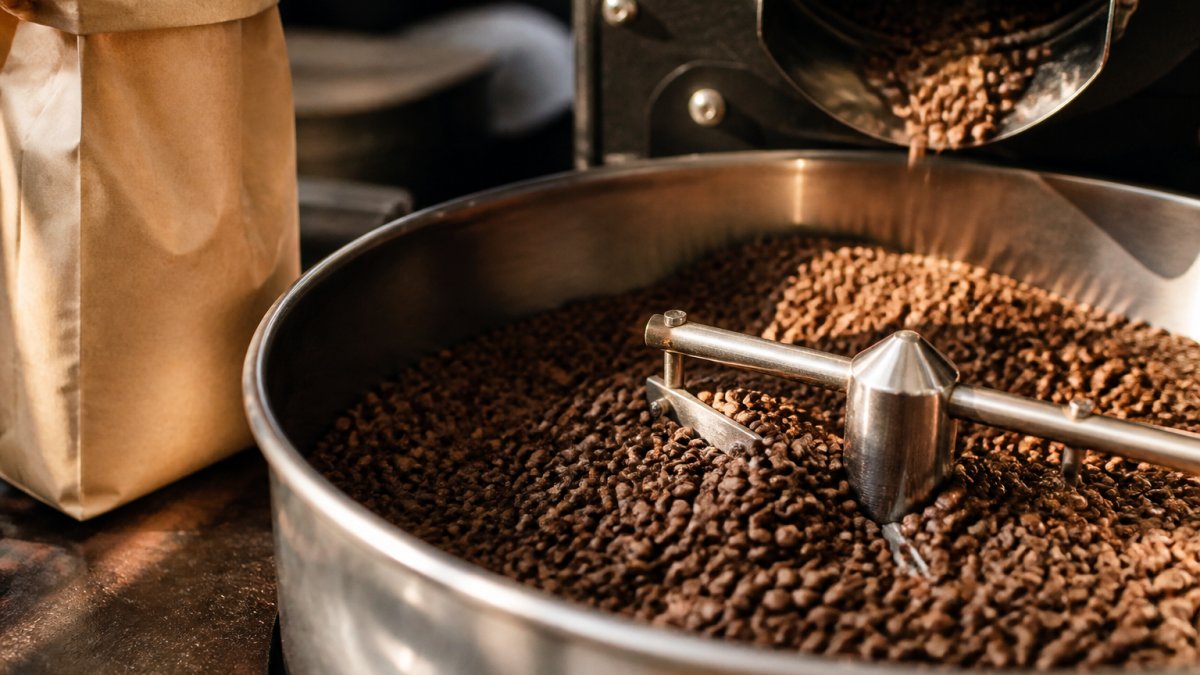
Mass produced bags rarely carry a roast date. They carry a "best by" date, which tells you when the coffee stops being acceptable, not when it was roasted. That distinction matters more than most shoppers realize.
Small batch roasters typically ship within days of roasting. That gap between roast day and brew day is the single biggest flavor variable you control as a buyer.
How to Choose Coffee Beans Without Overpaying
Choosing coffee beans without overpaying means matching the format to your routine and ignoring labels that do not affect what is in the cup. Price per pound rises with rarity and story, not always with quality.
A practical checklist:
- Look for a roast date, not just a best-by date
- Confirm the origin is specific enough to be verifiable
- Match the grind to your brewer before you buy
- Decide whether you want whole bean or pre-ground
- Check the bag size against how fast you actually drink coffee
- Compare price per ounce, not price per bag
Whole bean coffee stays fresh longer because the bean protects the oils inside. Pre-ground coffee exposes more surface area to oxygen and gives up its aroma faster. If you brew with a standard drip machine and want simplicity, pre-ground is fine as long as it was ground close to the roast date.
Our Tinto Coffee Bag is filled to order in either ground or whole bean, sealed for freshness from roast day to brew day. At $24.99, it sits in the middle of the specialty range, and it works in a standard drip machine without any special equipment.
Where Small Batch Coffee Wins and Where Mass Produced Wins
Small batch coffee wins on flavor, aroma, and origin transparency. Mass produced coffee wins on shelf life, uniformity, and price at volume. Being honest about both sides is the only way to choose well.
Where small batch wins:
- Fresher roast dates and better aroma retention
- Traceable single-origin sourcing
- Roast profiles built around flavor rather than shelf stability
- Smaller batches mean more attention per roast
Where mass produced wins:
- Lower cost per pound at high volume
- Consistent taste regardless of when or where you buy
- Wider availability in grocery and big-box stores
- Longer shelf life for stockpiling
The honest answer for most households: small batch for the coffee you drink daily, mass produced only when budget or availability forces the trade.
Brewing Small Batch Coffee at Home: Drip, Pods, and Travel
Brewing small batch coffee at home does not require specialty equipment. A standard drip machine, a pour-over cone, or a single-serve brewer all work if the grind matches the method.
For drip, use a standard grind at 1 to 2 tablespoons per 6 ounces of water, brewed between 195 and 205 degrees Fahrenheit. For pour over, bloom for 30 seconds and finish the brew in 3 to 4 minutes. For a French press, use a coarse grind and steep for 4 minutes.
If you travel or commute, the Tinto Tube packs 54 grams of ground coffee into an airtight tube, roughly 4 to 5 cups, ground for drip, pour over, and AeroPress. It fits in a gym bag or carry-on without the bulk of a full bag.

For single-serve machines, "The Sophia" Colombian Pods use single-origin Colombian beans, oxygen-sealed for freshness and engineered for even extraction. Ready in under a minute, which matters on a weekday morning.

| Brew Method | Grind | Ratio | Time |
|---|---|---|---|
| Drip / Auto-Brew | Standard | 1-2 tbsp per 6 oz | Standard cycle |
| Pour Over | Standard or Coarse | To taste | 3-4 min total |
| French Press | Coarse | To taste | 4 min steep |
| AeroPress | Standard | 15g per 250ml | 1:30-2 min |
| Cold Brew | Coarse | 1:4 | 12-24 hrs |
Conclusion: Picking the Right Coffee for Your Routine
The small batch vs mass produced coffee choice is really a choice about priorities: flavor and freshness, or price and shelf life. Most people who drink coffee daily land on small batch once they taste the difference a recent roast date makes.
If you want roast-to-order coffee without a complicated setup, Tinto Coffee Roasters roasts within 48 hours of shipping, grades every lot for quality and flavor consistency, and backs each order with a satisfaction guarantee. Choose whole bean, ground, or single-serve pods and brew it however you already brew.
Frequently Asked Questions
What is the difference between small batch and mass produced coffee?
Small batch coffee is roasted in limited quantities, often to order, so it reaches you within days of roasting. Mass produced coffee is roasted in huge volumes, packaged, and distributed through warehouses and stores, which can take weeks or months. The practical difference shows up in aroma, flavor clarity, and how much you can trace about where the beans came from.
Does small batch coffee actually taste better?
It often tastes fresher, and freshness drives most of what you notice in a cup. Small batch roasters can adjust roast profiles for a specific lot of beans, which protects sweetness and acidity. Mass produced coffee is built for consistency across millions of bags, so it tends to favor a darker, more uniform roast that hides origin character.
Is small batch coffee worth the higher price?
It depends on how you drink coffee. If you brew daily, the cost per cup usually lands between $0.60 and $1.00 for small batch beans, which is still far below a cafe drink. You are paying for fresher roast dates, better grading, and traceable sourcing. If coffee is an occasional habit, mass produced bags may be enough.
How can you tell if coffee is small batch or mass produced?
Check the bag for a roast date, not just a best-by date. Small batch roasters print the day the beans were roasted, name the farm or region, and often list the processing method. Mass produced coffee usually shows only a best-by date, a generic origin like "Colombia blend," and no roast date at all.
How should you store coffee to keep it fresh?
Keep beans in an airtight container away from light, heat, and moisture. A cupboard near the stove is a bad spot. Buy amounts you will finish in two to four weeks, and grind right before brewing if you can. Whole bean holds its aroma longer than ground, and single-serve pods stay sealed until you use them.
The hardest part of switching to small batch coffee is not the brewing, it is finding a roaster you can trust to ship fresh every time. Tinto Coffee Roasters roasts to order within 48 hours, sources small-batch Colombian arabica graded for quality and flavor consistency, and stands behind every bag with a satisfaction guarantee. Get started with Tinto Coffee Roasters and make your everyday cup a moment worth having.