

Table of Contents
- What Actually Changes When Coffee Is Roasted in Small Batches
- The Roast Date Is the Real Flavor Difference
- Why Small Batch Roasting Produces Better Flavor Clarity
- The Impact of Roast Date on Coffee Flavor: A Simple Timeline
- Best Coffee Beans for Drip Machines: What to Look For
- Roast Consistency and Quality Control in Small-Lot Production
- The Verdict: Is Small Batch Coffee Worth the Higher Price?
- Frequently Asked Questions
Last Updated: September 8, 2026
What Actually Changes When Coffee Is Roasted in Small Batches
The real reason why small batch coffee tastes better comes down to control: control over heat, airflow, and timing at a scale where every bean responds predictably. Small batch coffee is roasted in limited quantities, often 5 to 30 pounds at a time, allowing the roaster to monitor the entire process closely. In large commercial operations, thousands of pounds move through the drum at once, making it nearly impossible to adjust for variations in moisture content or bean density.
At Tinto Coffee Roasters, we roast to order within 48 hours because freshness and precision go hand in hand. A smaller batch size means the roaster can react to what the beans are doing in real time. The difference is measurable in the cup: cleaner acidity, more defined body, and aromatics that survive the journey from roaster to brewer.

The Roast Date Is the Real Flavor Difference
If you buy coffee without a roast date, you are already guessing. Coffee is a perishable agricultural product, not a shelf-stable commodity. The Specialty Coffee Association's freshness guidance emphasizes that roasted coffee begins losing volatile aroma compounds almost immediately after the roasting cycle ends.
The freshness window for optimal flavor typically spans 4 to 14 days after roasting (sca.coffee). During the first few days, beans undergo degassing, releasing carbon dioxide that can interfere with extraction (peer-reviewed research). This chemistry matters because CO2 escaping during brewing blocks water from reaching the coffee grounds evenly. Many drinkers who try coffee too early find it flat, then blame the roast when the real issue is timing.
Why Small Batch Roasting Produces Better Flavor Clarity
Flavor clarity is the direct result of a roast profile that matches the bean's origin characteristics. When roasters work with small lots, they can develop each batch according to its specific bean density, moisture content, and varietal. This precision allows the maillard reaction and caramelization to progress evenly, preserving the clean finish and distinct notes that define specialty coffee.
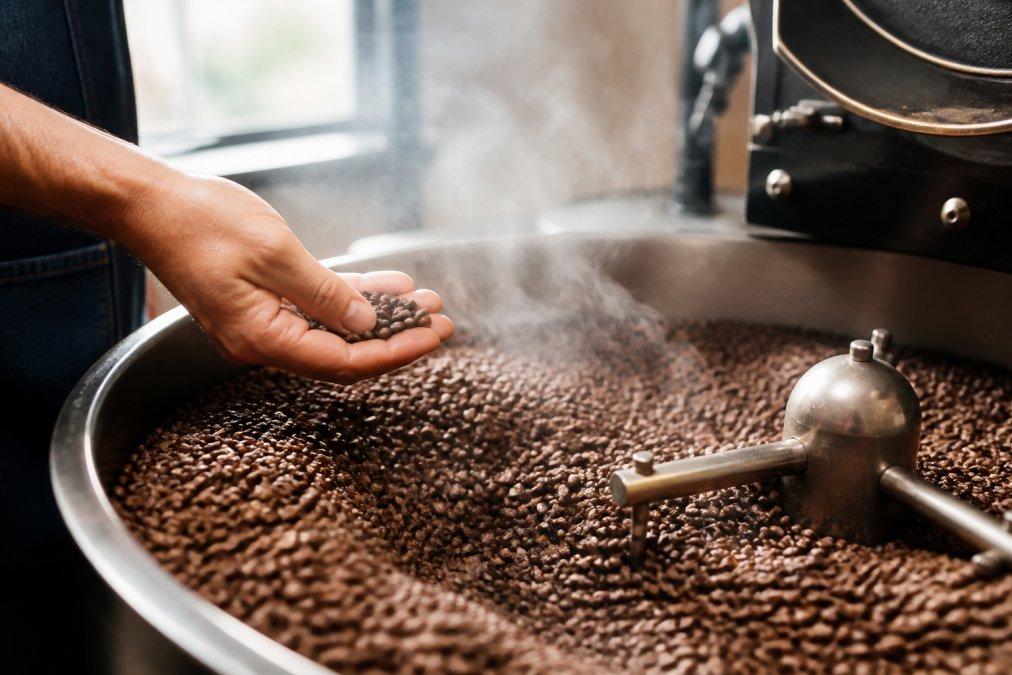
Large-scale producers often prioritize roast consistency across millions of pounds, which pushes them toward darker, more uniform roasts that mask defects. Small-lot production flips that priority: the goal is to highlight what makes each harvest unique. The result is coffee with a brighter acidity, a more defined mouthfeel, and aromatics that taste like the region rather than like generic "coffee flavor."
The Impact of Roast Date on Coffee Flavor: A Simple Timeline
Understanding the impact of roast date on coffee flavor helps you buy smarter and brew better. The timeline below shows what happens inside the bag after roasting:
| Days After Roast | What Is Happening | Best Use |
|---|---|---|
| 1-3 days | Rapid degassing, CO2 release | Skip brewing, beans still settling |
| 4-7 days | Peak flavor development | Ideal for pour-over and drip |
| 8-14 days | Flavor plateau, aromatics stable | Best window for most brewing methods |
| 15-21 days | Noticeable flavor decline | Acceptable, but muted aromatics |
| 22+ days | Stale, flat, cardboard-like notes | Time to buy fresh |
For the best coffee beans for drip machines, aim to brew within that 4 to 14 day window. Drip brewers extract more slowly than espresso, so they benefit from beans that have finished the bulk of their degassing. Grinding right before brewing matters just as much as the roast date itself.
Best Coffee Beans for Drip Machines: What to Look For
A common mistake is assuming a fancy brewer fixes stale beans. It does not. For drip machines, look for a medium roast that balances body and acidity, since the longer extraction can amplify bitter notes in dark roasts. A clean, smooth cup with chocolate or nutty undertones usually performs best in automatic brewers.
Single-origin Colombian beans are an excellent match for drip because their balanced acidity and medium body translate well through paper filters. The Tinto Coffee Bag offers whole bean or ground options roasted to order, making it straightforward to dial in your morning routine. If you want to control grind size yourself, whole bean is the better route; if convenience wins, ground coffee from a roaster who ships within days of roasting still beats supermarket bags that sat on shelves for months.
Roast Consistency and Quality Control in Small-Lot Production
Consistency in small-batch roasting comes from documentation, not luck. Each batch is cupped, evaluated for roast consistency, and graded for flavor before it ships. This quality control loop is impossible at industrial scale, where a single defect lot can be blended away and hidden.
For consumers, this means every bag should taste like the last one you bought from the same roaster. When a roaster works in small lots, they can trace each batch back to the farm and the specific harvest. This transparency supports sustainable sourcing and ethical farming practices, because roasters who buy direct-trade beans have a financial incentive to maintain long-term relationships with growers.
The Verdict: Is Small Batch Coffee Worth the Higher Price?
Yes, for most drinkers, the higher price reflects real costs: premium green coffee, careful sourcing, and the labor of roasting in small lots. You are paying for a product roasted days ago, not months ago, and for beans that were graded rather than blended into anonymity. The difference between commodity coffee and specialty small-batch coffee is not marketing spin, it is measurable in extraction quality and flavor clarity.
That said, small batch coffee only wins if you brew it well. Pair it with a clean brewer, fresh water, and a grind size matched to your method. If you drink black coffee, the improvement is most obvious: smoother mouthfeel, brighter acidity, and a clean finish that needs no milk or sugar to taste good.
Choosing between a $12 grocery bag and a premium small-batch roast is really a choice about what you want from your morning ritual. At Tinto Coffee Roasters, we roast to order within 48 hours, grade every lot for quality and flavor consistency, and back every purchase with a satisfaction guarantee. Whether you need whole bean, ground coffee for your drip machine, or portable single-serve options like the Tinto Tube, we make fresh, smooth Colombian coffee simple enough to enjoy every day. Get started with Tinto Coffee Roasters and taste what roast-to-order coffee actually delivers.

Frequently Asked Questions
Is small batch coffee actually better than mass-produced coffee?
Yes, for measurable reasons. Small batch coffee is roasted to order, so you receive it within days of roasting rather than months. That freshness window directly affects flavor: coffee starts losing its aromatic compounds and complexity shortly after roasting. Small batches also allow the roaster to adjust the roast profile for each specific bean, which means better flavor clarity and fewer defects in your cup. Mass production prioritizes shelf stability and uniformity, not peak flavor.
What is the impact of roast date on coffee flavor?
The roast date tells you when the coffee's flavor is at its peak. Coffee needs 3 to 7 days after roasting to degas before it brews optimally. After about 3 to 4 weeks, the delicate aromatics fade noticeably, and the cup tastes flat or stale. Roast-to-order coffee, like Tinto's 48-hour roasting promise, arrives inside that ideal window. Always check the roast date on the bag, not the best-by date, to know what you are actually buying.
What are the best coffee beans for drip machines?
Look for a medium roast with a clean, balanced profile. Drip brewers extract coffee evenly, so beans with pronounced acidity or delicate floral notes shine without becoming bitter. A smooth, medium roast Colombian arabica is a reliable choice. Whole beans ground just before brewing give the best results. Tinto's small batch coffee is roasted to order and graded for consistency, making it a strong option for a standard drip machine without any special equipment.
How does roast size affect the flavor profile of coffee beans?
Roast size, or batch size, changes how heat and airflow move through the beans. In a large batch, beans near the center of the drum roast differently than those near the edges, creating an inconsistent roast. A small batch gives the roaster precise control over the roast curve, so each bean develops evenly. This consistency preserves the bean's origin characteristics and produces a cleaner cup with distinct notes rather than a muddled, one-dimensional flavor.