

Table of Contents
- Why Sustainable Coffee Brewing Methods Matter
- Manual Brewing: French Press and Pour-Over Techniques
- AeroPress and Stovetop Moka Pot: Durable, Reusable Brewers
- Cold Brew: Energy-Efficient Coffee Extraction
- Eco-Friendly Coffee Filters: Reusable vs. Paper
- Composting Coffee Grounds: End-of-Life Waste Reduction
- Zero Waste Coffee Brewing: Complete Sustainability Checklist
- Comparison Table: Sustainable Brewing Methods at a Glance
- Frequently Asked Questions
Last Updated: September 20, 2026
Why Sustainable Coffee Brewing Methods Matter
Sustainable coffee brewing is a practical response to how our daily habits affect the planet. Every cup involves choices: equipment, filters, water consumption, and waste. Conscious consumers are rethinking their morning ritual, moving away from single-use convenience toward methods that align with their values.
Traditional brewing carries a hidden footprint: energy to heat water, waste from disposable filters. But sustainable coffee brewing doesn't require sacrifice, many eco-friendly methods produce better-tasting coffee while costing less over time.
This guide covers proven sustainable brewing approaches, from zero-electricity manual methods to energy-efficient cold brew. We'll examine equipment lifecycle impact, filter choices, and waste elimination at every stage.
Manual Brewing: French Press and Pour-Over Techniques
Manual brewing methods eliminate electricity entirely. Both French press and pour-over require only hot water, gravity, and your attention.
French Press: Low-Tech, Zero-Waste Brewing
A quality French press lasts decades. Fill with coarse-ground coffee, pour hot water, wait four minutes, and press. The permanent mesh filter requires only a rinse after each use.
No paper filters, no electricity, no plastic pods. Made from durable, recyclable borosilicate glass and stainless steel, a single French press brews thousands of cups.
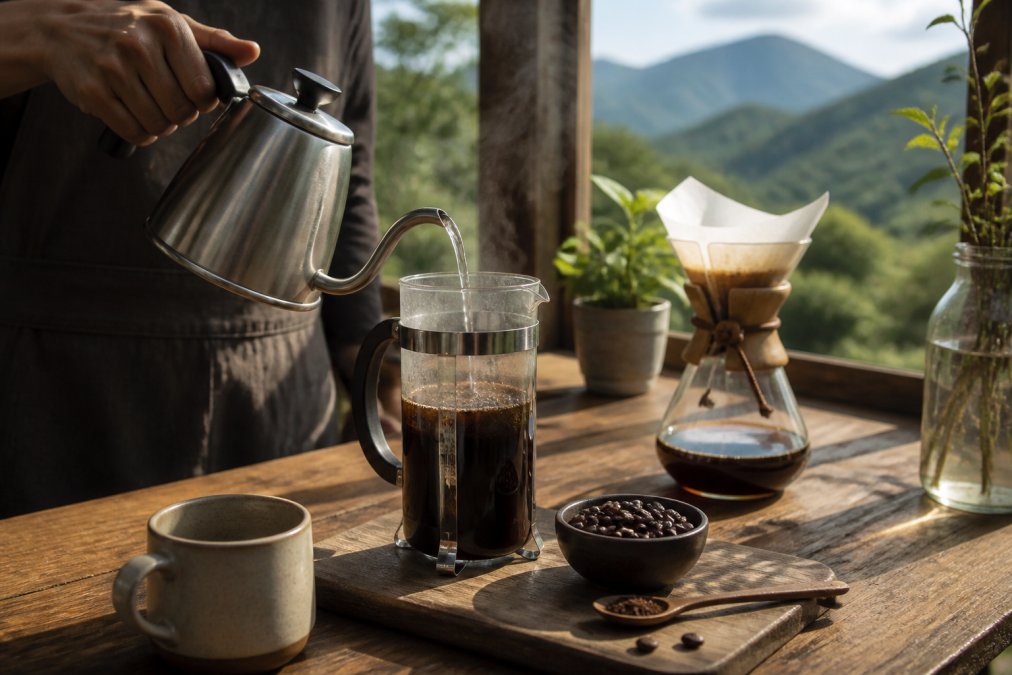
The tradeoff: French press coffee contains more sediment because the mesh allows fine particles through. Some prefer the fuller body; others find it gritty. Cleanup is simple, empty grounds into compost, rinse, done.
Tinto Coffee Bag works beautifully in a French press when ground coarse. The small-batch roast brings out the full body that this brewing method highlights, and the sealed packaging preserves freshness until you're ready to brew.

Pour-Over: Minimal Equipment, Maximum Control
Pour-over gives direct control over water temperature, pour rate, and contact time. Place a dripper over your cup, add filter and grounds, bloom 30 seconds, then pour in circular motions for three to four minutes.
A ceramic or glass dripper costs under $15 and lasts indefinitely. Filters are the only consumable. Pour-over produces a cleaner cup than French press because filters trap fine particles.
Pour-over's precision, water temperature (195-205°F), pour rate, brew time, enables better extraction and more flavor from less coffee.
Pour-over requires presence and intentionality, encouraging mindfulness about coffee sourcing and consumption.
AeroPress and Stovetop Moka Pot: Durable, Reusable Brewers
Both AeroPress and Moka pot are durable, electricity-free, and produce excellent coffee with minimal ongoing waste.
An AeroPress uses air pressure to brew in 90 seconds. Nearly indestructible and lightweight, it has a permanent metal filter or optional compostable paper filters. One unit brews hundreds of cups yearly for a decade or more.
A Moka pot uses steam pressure to brew on any heat source. Made from durable aluminum or stainless steel with a permanent metal filter basket, it requires no electricity or pods.
Both deliver concentrated, flavorful coffee and spread manufacturing costs across thousands of cups, fitting naturally into zero-waste routines.
| Method | Equipment Cost | Lifespan | Electricity | Best For |
|---|---|---|---|---|
| AeroPress | $30-40 | 10+ years | None | Travel, precision brewing, quick cups |
| Moka Pot | $25-50 | 15+ years | None | Strong coffee, stovetop brewing, camping |
| French Press | $20-40 | 15+ years | None | Full-bodied coffee, simplicity |
| Pour-Over | $10-30 | Indefinite | None | Clean cup, control, ritual |
Cold Brew: Energy-Efficient Coffee Extraction
Cold brew eliminates heating energy. Combine coarse-ground coffee with cold water in a 1:4 ratio, seal, and steep 12 to 24 hours for full extraction without heat.
Heating water to 195-205°F requires significant energy; cold brew uses none. Weekly brewing saves measurable electricity or gas annually.
Cold brew concentrate keeps two weeks in the refrigerator, ready in seconds, ideal for busy professionals wanting sustainability without daily ritual.
Equipment is minimal: a jar and mesh strainer or cheesecloth. A permanent metal strainer works indefinitely.
Cold brew requires more coffee than hot brewing (roughly 30 grams per liter versus 20 grams) because cold water extracts less efficiently, though energy savings still offset the difference.
Eco-Friendly Coffee Filters: Reusable vs. Paper
The filter choice matters more than many people realize. It's a daily decision that compounds across weeks and years.
Reusable Mesh Filters and Their Lifecycle Impact
Metal mesh filters are permanent. A single filter lasts five to ten years and handles thousands of cups, with minimal environmental cost.
Mesh filters allow fine particles through, creating fuller body but more sediment. They're ideal for French press and AeroPress; pour-over drinkers often prefer paper's cleaner cup.
Daily brewing with a mesh filter for five years eliminates roughly 1,825 disposable filters from the waste stream.
Compostable Paper Filters: A Biodegradable Alternative
Paper filters produce a cleaner cup by trapping fine particles. They're single-use, but they're compostable. If you have a compost system, paper filters break down completely within weeks, returning to soil without environmental residue.
The lifecycle question is whether the convenience of a clean cup justifies the ongoing consumption. A household brewing daily uses roughly 365 filters per year. Over ten years, that's 3,650 filters.
Composting Coffee Grounds: End-of-Life Waste Reduction
Coffee grounds are organic matter. They belong in soil, not landfills. If you have access to composting, whether a backyard pile, a municipal program, or a community garden, composting grounds is the final step in a sustainable routine.
Zero Waste Coffee Brewing: Complete Sustainability Checklist
Building a zero-waste coffee routine involves choices across every stage. Here's what actually matters.
Choosing Sustainable Sourcing and Packaging
The beans themselves matter most. Coffee farming can deplete soil, require heavy pesticide use, and displace wildlife. Sustainable sourcing means shade-grown coffee (which preserves forest canopy), organic certification (which eliminates synthetic pesticides), and direct trade relationships (which ensure farmers are paid fairly).
Water Conservation and Cleaning Practices
Water use in brewing is often overlooked. A single cup of coffee requires roughly 140 liters of water when you account for farming, processing, and roasting. The water you use in your home to brew is a small fraction of that, but it still matters.
Comparison Table: Sustainable Brewing Methods at a Glance
| Method | Equipment Cost | Lifespan | Electricity | Filters | Best For | Sustainability Score |
|---|---|---|---|---|---|---|
| French Press | $20-40 | 15+ years | None | Permanent mesh | Full-bodied coffee, zero consumables | Excellent |
| Pour-Over | $10-30 | Indefinite | None | Paper or mesh | Clean cup, precision, ritual | Excellent |
| AeroPress | $30-40 | 10+ years | None | Metal or paper | Travel, speed, versatility | Excellent |
| Moka Pot | $25-50 | 15+ years | None | Permanent metal | Strong coffee, stovetop brewing | Excellent |
| Cold Brew | $5-20 | Indefinite | None | Mesh or cheesecloth | Convenience, zero heating | Excellent |
Sustainable coffee brewing methods work because they align with how good coffee is actually made. Manual methods, durable equipment, and thoughtful sourcing aren't sacrifices, they're improvements. You get better flavor, lower cost over time, and the satisfaction of knowing your daily ritual isn't generating unnecessary waste.
Frequently Asked Questions
What is the most environmentally friendly coffee brewing method?
Manual brewing methods like French press and pour-over rank highest for sustainability because they require no electricity, last for years, and produce minimal waste. A French press uses coarse grounds that can be composted, while pour-over brewers work with reusable mesh filters or compostable paper filters. Cold brew is equally eco-friendly, using only gravity and time. The key advantage: these methods eliminate the single-use waste and energy consumption of electric drip machines and single-serve pods.
How should I compost coffee grounds sustainably?
Coffee grounds are nitrogen-rich and excellent for composting. Mix them directly into your compost pile or bin at a ratio of about 1 part grounds to 2 parts brown materials like leaves or cardboard. They break down quickly (2-6 months) and don't require special treatment. If you don't have a compost bin, many local gardening programs or waste facilities accept grounds. You can also use them as a free soil amendment for houseplants or garden beds. Filters matter: use unbleached paper or mesh filters, which are also compostable or reusable.
Are reusable coffee filters better than paper filters?
Reusable mesh or cloth filters win on long-term sustainability because they last 2-5 years with proper care, eliminating ongoing waste. However, they require more water and energy to clean after each use. Compostable paper filters offer a middle ground: they're single-use but fully biodegradable and require minimal water for washing. The lifecycle depends on how often you brew. For daily coffee drinkers, reusable filters pay off environmentally within months. For occasional brewers, compostable paper filters may have a lower overall footprint.
How can I reduce waste when brewing coffee at home?
Start with sustainable brewing methods like French press, pour-over, or AeroPress, then focus on five areas: use reusable or compostable filters, compost all grounds, buy whole beans in minimal packaging (like Tinto Coffee Bag's sealed format), store coffee in airtight containers to extend freshness, and clean your equipment with minimal water. Consider a stainless steel travel mug instead of disposable cups. If you use single-serve pods, choose brands that offer compostable or recyclable options. These steps together can reduce your coffee routine's waste by 80-90%.