

Last Updated: October 22, 2026
Quick Summary
Vacuum sealed coffee stays fresher longer because the process removes oxygen that degrades flavor and aroma. Vacuum sealed coffee beans typically stay fresh for 3 to 4 weeks when stored in a cool, dark place, while ground coffee lasts 1 to 2 weeks.
- Oxygen breaks down the oils and compounds that make coffee taste good, so vacuum sealing slows oxidation significantly.
- Whole beans keep 3 to 4 weeks in a vacuum-sealed bag; ground coffee lasts 1 to 2 weeks due to increased surface area.
- For bulk purchases, split coffee into smaller vacuum-sealed portions on arrival, keeping one in your daily canister and freezing the rest.
- Coffee tastes best from day 3 through day 21 after roasting; vacuum sealing extends freshness but doesn't create indefinite storage.
- Never vacuum-seal coffee until at least 12 hours after roasting, as sealing too early traps excess CO₂ and can burst the bag.
Table of Contents
- How Vacuum Sealing Protects Coffee Freshness
- How Long Do Vacuum-Sealed Coffee Beans Last
- The Best Way to Store Coffee Beans at Home
- Choosing the Right Airtight Coffee Storage Container
- Vacuum Sealing vs. Freezing Coffee Beans
- Practical Tips for Maintaining Coffee Quality
- Frequently Asked Questions
How Vacuum Sealing Protects Coffee Freshness
Vacuum sealed coffee stays fresher longer because the process removes oxygen that degrades flavor and aroma. Less air means slower oxidation.
Oxygen is the enemy of fresh coffee. Research on packaging methods shows that vacuum-sealed bags and nitrogen flushing reduce oxygen exposure significantly compared to standard storage The Impact of Packaging and Storage on Coffee Quality.
Here's what happens in a vacuum-sealed container:
- Oxygen levels drop dramatically, slowing flavor degradation
- Moisture stays controlled, preventing staleness
- Aroma compounds remain locked inside the beans
- Light can't penetrate most vacuum bags, protecting delicate flavors
The benefit is physics: less oxygen means slower chemical reactions that make coffee taste flat, and a vacuum seal creates a barrier standard bags can't match.
At Tinto Coffee Roasters, our beans are roasted to order and sealed at peak freshness, but what happens next depends on your storage method. Vacuum sealing extends that window significantly.
How Long Do Vacuum-Sealed Coffee Beans Last
Vacuum sealed coffee beans typically stay fresh for 3 to 4 weeks when stored in a cool, dark place. Ground coffee lasts 1 to 2 weeks under the same conditions, since grinding increases surface area exposed to oxygen.
This assumes the seal stays intact and storage stays stable. Temperature swings and humidity shorten these windows, so a bag on a sunny counter degrades faster than one in a pantry.
The research comparing vacuum-sealed storage to standard methods shows meaningful differences Manchester Coffee Archive - Experiment. Vacuum sealing adds measurable freshness protection over knotted plastic bags, though the exact extension depends on your specific conditions.
Factors that affect freshness duration:
- Roast date: Fresher beans at purchase means longer usable life
- Bean density: Denser beans from high-altitude farms hold flavor longer
- Seal quality: Weak seals let oxygen back in gradually
- Storage temperature: Cool environments slow oxidation
- Humidity levels: Dry storage prevents moisture absorption
Most drinkers notice a flavor difference within two weeks, and by week four even vacuum-sealed beans taste noticeably flatter, meaning you're past peak freshness.
The Best Way to Store Coffee Beans at Home
The best storage combines an airtight container, a cool dark location, and minimal air exposure. Vacuum-sealed bags work well, as do quality airtight canisters sealed properly.
Choose opaque glass or plastic canisters with tight lids, since light degrades coffee. If using vacuum bags, pick thick-walled bags designed for coffee, as thin bags tear and let air back in.
Your storage setup should include:
- Airtight container or vacuum-sealed bag (not knotted plastic bags)
- Cool, dark location away from direct sunlight
- Stable temperature (avoid kitchen counters above appliances)
- Low humidity (pantries work better than under-sink cabinets)
- Away from strong odors (coffee absorbs smells easily)
Location matters as much as the container: a perfectly sealed bag next to your stove loses freshness faster than a loosely sealed bag in a cool pantry.
Whole Beans vs. Ground Coffee Storage
Whole beans stay fresh longer than ground coffee because grinding multiplies the exposed surface area, and more surface means faster oxidation.
Whole beans keep 3 to 4 weeks in a vacuum-sealed bag; ground coffee lasts 1 to 2 weeks. Vacuum sealing helps ground coffee too, but the clock ticks faster.
Grind only what you'll brew within a few days. If you buy pre-ground, use it quickly and store it in the coldest part of your refrigerator (not the freezer, where moisture damages grounds). Better yet, buy whole beans and grind fresh.
Choosing the Right Airtight Coffee Storage Container
Airtight containers fall into two categories: flexible vacuum bags and rigid canisters. Bags take less space and remove more air; canisters reseal easily and protect beans from crushing. The right choice depends on how often you open it, how much you store, and how long you keep it.
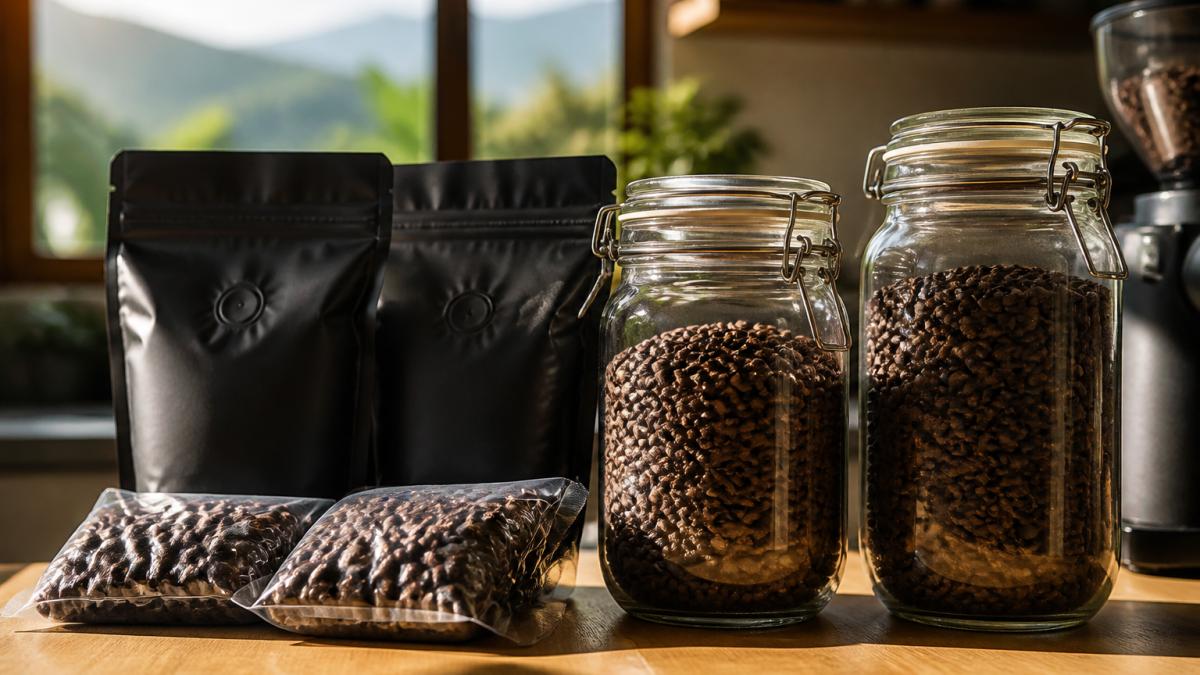
Weekly or biweekly portion (opened a few times a week): A vacuum bag or vacuum canister works well, giving oxygen-removal benefits without the repeated-opening penalty.
Long-term storage (months): Vacuum-sealed bags, ideally portioned and then frozen, are the better fit. See the freezing section below for the handling steps that make this work.
Compare your options:
| Storage Type | Best For | Resealing Ease | Space Required | Relative Cost |
|---|---|---|---|---|
| Vacuum bag | Long-term and bulk storage | Difficult after opening | Minimal | Low |
| Airtight canister | Daily use | Easy, multiple times | Moderate | Moderate |
| Glass container | Pantry display | Good, if sealed tight | Moderate | Moderate |
| Vacuum canister | Weekly use | Easy, with a pump or valve | Moderate | Higher |
| Freezer bag (not vacuum) | Emergency only | One-time use | Minimal | Very low |
Opaque containers (stainless steel, dark glass, ceramic) protect beans from light better than clear glass.
Avoid one-way degassing valves as your primary long-term container.
Clean and dry the container between refills. Old coffee oils go rancid and taint new beans, and moisture encourages clumping and stale flavors.
Vacuum Sealing vs. Freezing Coffee Beans
Freezing coffee is easy to do badly.
When freezing is the better fit: If you bought in bulk or want to keep coffee more than a month, portioning and freezing preserves more original flavor than room-temperature storage.
How to freeze coffee without ruining it:
- Vacuum-seal the beans in small portions first. A vacuum bag removes the air that carries moisture and odors, and it protects the beans from freezer burn.
- Label each portion with the roast date and the date you froze it.
- Freeze at a stable temperature and keep the portions toward the back of the freezer, away from the door where temperature swings are largest.
- Thaw a portion in its sealed bag at room temperature before opening. Opening the bag while the beans are still cold lets condensation form on the bean surfaces.
- Grind and brew the thawed portion within a few days. Do not refreeze thawed beans.
Why the thaw step matters: Moisture condenses on cold bean surfaces as they warm, damaging beans and speeding staling, so keep the bag sealed until they reach room temperature.
What freezing does and does not do: A home freezer slows oxidation and moisture loss but doesn't stop them, so it isn't indefinite storage.
A simple decision rule:
- Finishing within three to four weeks: vacuum seal and store in a cool, dark pantry.
- Finishing within one to three months: vacuum seal, portion, and freeze.
- Buying in bulk: split into weekly portions, vacuum seal, and freeze all but the portion you are using now.
Practical Tips for Maintaining Coffee Quality
Small habits protect freshness more than any single storage method.
Buy from roasters who list the roast date on the bag. Tinto Coffee Roasters roasts to order within 48 hours and ships immediately, so beans arrive at peak freshness.
Grind immediately before brewing; even 30 minutes after grinding noticeably dulls flavor. Use a burr grinder for consistent particle size without overheating the grounds.
Keep your grinder clean, since old residue goes rancid and taints new beans. Wipe it out between uses or run a few beans through.
Store in small quantities: buy only what you'll drink in 3 to 4 weeks, so the container sits open less and your next batch is fresher.
The Degassing Window and Roast Date
Freshly roasted coffee releases carbon dioxide for 24 to 48 hours, which is why vacuum-sealed bags sometimes puff up as CO₂ escapes.
Don't vacuum-seal coffee until at least 12 hours after roasting; sealing too early traps excess gas and can burst the bag. Wait until degassing has mostly finished (24 to 48 hours post-roast).
Coffee tastes best from day 3 through day 21 after roasting. The first few days it's still degassing heavily, and after three weeks oxidation has noticeably degraded flavor, even in vacuum-sealed storage.
This is why roast-to-order matters: beans roasted within 48 hours of shipping arrive in their optimal window, while grocery store coffee was often roasted weeks or months earlier.
Testing Freshness at Home
You don't need equipment to test freshness, just your senses.
Smell test: Fresh coffee has a strong, complex aroma; stale coffee smells flat and muted. If you barely notice a smell, the beans are past their peak.
Visual test: Fresh beans look oily and vibrant; stale beans look dull and dry. This works best with darker roasts.
Taste test: Brew a small cup your usual way. Fresh coffee tastes bright and complex; stale coffee tastes flat, thin, or one-dimensional.
Bubble test: Pour hot water over the grounds.
These tests take 30 seconds. If your coffee fails the smell or taste test, buy a fresh batch.
Keeping your coffee fresh starts with the right storage, but it ends with buying fresher beans more often. Our roast-to-order approach at Tinto Coffee Roasters means your beans arrive at peak freshness, sealed and ready to brew. Shop Now and taste the difference that true freshness makes.

Frequently Asked Questions
Is vacuum sealing coffee worth it?
Vacuum sealing removes oxygen that causes oxidation and flavor degradation, slowing the staling process compared to standard storage. Research shows vacuum-sealed bags and nitrogen flushing reduce oxygen exposure and help preserve coffee flavor. However, the benefit is modest if the package remains sealed; once opened, the advantage diminishes. For daily drinkers, a quality airtight container may offer similar convenience with less hassle. Vacuum sealing works best for long-term storage or if you buy coffee in bulk and want to preserve multiple bags.
How long do vacuum-sealed coffee beans last?
Vacuum-sealed whole beans typically stay fresh for 2-4 weeks after opening, though some sources suggest vacuum sealing may extend freshness by a few additional days if the package remains sealed. Ground coffee in a vacuum-sealed bag lasts 1-2 weeks after opening. The exact duration depends on roast date, bean origin, and whether the bag is repeatedly opened. Always check the roast date on your coffee; beans roasted within the past 2 weeks will taste noticeably better than older stock, regardless of storage method.
What's the best way to store coffee beans after I open the bag?
Transfer opened coffee to an airtight container away from light, heat, and moisture. A vacuum canister is easier to use daily than vacuum-sealing bags, and a good airtight or vacuum canister is sufficient for everyday storage. Store the container in a cool, dark cupboard, not the refrigerator or freezer unless you're planning long-term storage. Buy only the amount of coffee you'll consume within a few weeks. For roast-to-order coffee like Tinto Coffee Roasters, which ships within 48 hours of roasting, proper airtight storage will maintain peak flavor throughout your brewing week.
Can you freeze vacuum-sealed coffee beans?
Yes, freezing vacuum-sealed coffee beans is an effective long-term storage method. Freezing slows oxidation and degradation far more than room-temperature storage. Keep beans in the freezer in a vacuum-sealed bag or airtight container, and thaw only the portion you plan to brew. Avoid repeated thawing and refreezing, which introduces moisture. For most home brewers, room-temperature storage in an airtight container is simpler and sufficient if you're drinking coffee within 2-4 weeks. Freezing is best reserved for bulk purchases or beans you want to preserve for several months.
