

Table of Contents
- How to Tell if Coffee Beans Are Fresh: A Quick Checklist
- Understanding Roast Dates and the Freshness Window
- Visual Inspection: What Fresh Coffee Beans Look Like
- The Aroma Test: What Fresh Coffee Smells Like
- The Bloom Test During Brewing
- Taste Profile Indicators: Stale vs. Fresh
- How to Store Coffee Beans Fresh
- Coffee Bean Shelf Life and Degassing
- Putting It All Together: Your Freshness Checklist
- Frequently Asked Questions
Last Updated: September 26, 2026
How to Tell if Coffee Beans Are Fresh: A Quick Checklist
Freshness makes the difference between a cup worth savoring and one you choke down. How to tell if coffee beans are fresh isn't complicated, but it does require you to know what to look for. At Tinto Coffee Roasters, we roast to order within 48 hours because we know that freshness window matters. The moment beans leave the roaster, they begin their journey toward stale. Your job is simple: catch them while they're still vibrant.
This guide walks you through five reliable methods to check freshness before you brew. You'll learn what fresh beans look like, smell like, and taste like. You'll also understand why roast dates matter more than expiration dates, and how proper storage keeps beans fresh longer.
Here's what you need to check:
- Roast date on the bag (most critical signal)
- Visual appearance (color, oil, surface texture)
- Aroma (fragrant vs. flat)
- Bloom test during brewing (CO2 release)
- Taste (bright vs. hollow or bitter)
Understanding Roast Dates and the Freshness Window
The roast date is your north star. It tells you exactly when the beans were roasted, not when they were packaged or when they'll expire. Fresh coffee beans have a short window of peak flavor: roughly 2 to 4 weeks after roasting.
Here's why timing matters. Immediately after roasting, coffee beans release carbon dioxide through a process called degassing. This is normal and expected. During the first 24 to 48 hours, the beans are still off-gassing heavily, which is why they're not ideal for brewing right away. By day 3 or 4, the degassing slows, and the beans hit their sweet spot for flavor extraction. This peak window lasts until around week 4, when oxidation begins to flatten the aroma and taste profile.
Look for the roast date printed on the bag. It should be recent, ideally within the last 2 to 3 weeks. If a bag has no roast date, that's a red flag. You're buying blind, and the beans could be months old.
Visual Inspection: What Fresh Coffee Beans Look Like
Your eyes tell you a lot. Fresh coffee beans have a specific appearance that changes noticeably as they age.
Color and Oil Residue
Fresh beans display vibrant, uniform color. Light roasts are bright brown with little surface oil. Medium roasts show deeper brown tones with light oil sheen. Dark roasts are nearly black with visible oily coating. The key is consistency: all beans in the bag should look similar in color and sheen.
As beans age, two things happen. First, the color becomes dull and flat. Second, the oils oxidize, which darkens the surface and can create a waxy or gummy appearance. Older beans may also show uneven coloring, with some beans darker than others, indicating uneven oxidation.
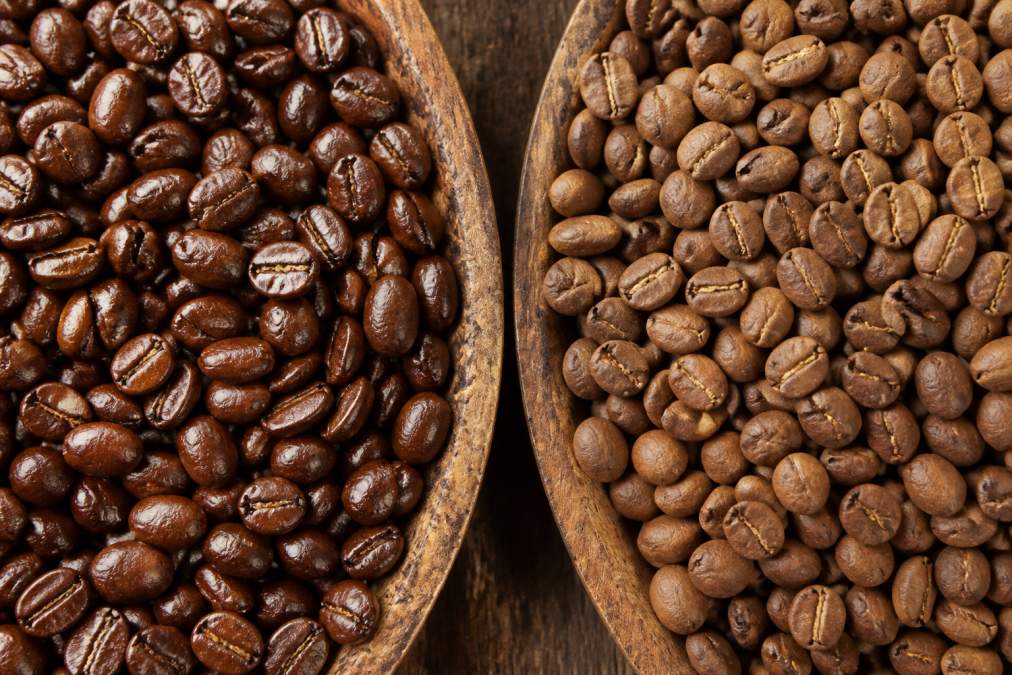
Fresh beans feel slightly oily to the touch. This is normal. The oils contain flavor compounds and aromatics that make coffee taste good. Rancid or extremely old beans feel dry or sticky, depending on how moisture has interacted with oxidized oils.
Spotting Rancidity and Spoilage
Rancid coffee beans smell and taste sour or musty, like old nuts or wet cardboard. This happens when oils oxidize over time or when beans are stored in humid conditions. Mold or visible discoloration are also signs of spoilage, though this is rare in properly packaged beans.
Check for:
- Musty or sour smell (oxidized oils)
- White or gray coating (mold, discard immediately)
- Visible cracks or splits (age-related, less flavor)
- Papery or hollow appearance (dried out, lost aromatics)
If beans smell rancid or show mold, they're no longer safe to brew. Trust your nose and eyes. Fresh beans should never smell off.
The Aroma Test: What Fresh Coffee Smells Like
Aroma is one of the most honest freshness indicators. Open the bag and take a deep breath. Fresh beans smell fragrant, complex, and alive. You'll detect notes of chocolate, nuts, fruit, or flowers depending on the origin and roast.
Stale beans smell flat, muted, or one-dimensional. The complexity fades. You might smell cardboard, dust, or nothing at all. This happens because volatile aromatic compounds escape over time, and oxidation dulls what remains.
The bloom test during brewing amplifies this.
The Bloom Test During Brewing
The bloom is a simple test that works every time. When you pour hot water over fresh coffee grounds, the grounds puff up and release CO2 in visible bubbles. This is degassing. Fresh beans bloom dramatically. Stale beans barely bloom at all.
Here's how to test it:
- Grind your beans to a medium-coarse consistency
- Pour hot water (just off boiling, around 195-205°F) over the grounds
- Watch for 30 seconds as the grounds rise and bubble
- Observe the intensity of the bloom
Taste Profile Indicators: Stale vs. Fresh
Taste is the final verdict. Fresh coffee tastes bright, complex, and balanced. You notice acidity as liveliness, not harshness. The flavor profile is vibrant and evolves as the cup cools.
Here's what to listen for:
- Fresh: bright, complex, balanced acidity, full body, evolving flavors
- Stale: flat, hollow, thin body, one-dimensional, sour or musty undertones
How to Store Coffee Beans Fresh
Storage is where most people fail. Beans are organic material constantly exposed to oxygen, moisture, light, and heat. Each one degrades freshness.
Best Storage Containers and Conditions
The ideal storage container is airtight, opaque, and kept at room temperature. Glass jars with tight seals work. Ceramic containers with airtight lids work. The key is eliminating oxygen exposure and light.
Avoid these:
- Clear containers (light degrades beans)
- Paper bags without a seal (oxygen exposure)
- Mason jars with cloth or rubber seals (not truly airtight)
- The freezer (more on this below)
- The refrigerator (temperature fluctuations cause condensation)
- Above the stove (heat accelerates oxidation)
- Near windows (light exposure)
Freezer Storage Myths
Many guides recommend freezing beans to extend shelf life. This is misleading. Freezing doesn't preserve flavor; it pauses degradation. When you thaw frozen beans, they warm up, and condensation forms on the surface. This moisture accelerates oxidation and can introduce mold risk.
Coffee Bean Shelf Life and Degassing
Coffee bean shelf life depends on roast date, storage conditions, and how the beans were processed. The general timeline is:
| Timeframe | Condition | Taste Profile |
|---|---|---|
| Days 1-2 post-roast | Still degassing heavily | Too much CO2, unbalanced |
| Days 3-7 | Peak flavor window begins | Bright, complex, full body |
| Weeks 2-4 | Optimal freshness | Best extraction, vibrant taste |
| Weeks 5-8 | Flavor fades gradually | Flattening, less acidity |
| Weeks 8+ | Noticeably stale | Hollow, thin, one-dimensional |
| Months 3+ | Significantly degraded | Rancid or musty undertones possible |
Putting It All Together: Your Freshness Checklist
Before you brew, run through this quick check:
- Roast date is within 2-3 weeks (most important)
- Beans are vibrant in color with appropriate oil sheen
- Aroma is fragrant and complex, not flat or musty
- No visible mold, cracks, or discoloration
- Bloom test shows vigorous CO2 release in first 30 seconds
- Taste is bright and balanced, not hollow or sour
If all six check out, your beans are fresh. If any fail, consider brewing anyway if the beans are only slightly past peak, or replace them if they're clearly stale.
The Specialty Coffee Association's guide to coffee freshness
Research on coffee bean oxidation and storage
USDA guidelines on proper food storage and shelf life
Frequently Asked Questions
How do you know if coffee beans have gone stale?
Stale coffee beans lose their vibrant color, becoming dull and papery-looking. The aroma fades significantly, fresh beans smell fragrant and rich, while stale ones smell hollow or flat. During brewing, stale beans produce minimal bloom and weak extraction. Taste is the final indicator: stale coffee tastes thin, bitter, or flat instead of showing balanced acidity and body. Oxidation and moisture exposure are the main culprits.
What is the freshness window for roasted coffee beans?
The optimal freshness window is 2-4 weeks after the roast date. During the first 3-5 days, beans undergo degassing as they release carbon dioxide, making them less ideal for brewing. After 4 weeks, oxidation accelerates and flavor degrades noticeably. Whole beans stay fresher longer than ground coffee. Check the roast date on your bag, Tinto Coffee Roasters roasts to order within 48 hours, so you start with maximum freshness from day one.
Does the roast date on a bag really matter?
Yes, the roast date is critical. It tells you exactly when the beans were roasted and helps you identify the optimal brewing window. Beans roasted 1-2 weeks ago are ideal; those older than 4 weeks have begun losing flavor through oxidation and moisture exposure. Without a roast date, you cannot assess freshness. Always buy from roasters who print this date prominently. It's the most reliable single indicator of whether you're getting fresh coffee beans.
How long do coffee beans stay fresh after opening the bag?
Once opened, whole beans stay fresh for 1-2 weeks if stored in an airtight container away from light, heat, and moisture. Ground coffee degrades faster, use it within 3-5 days for best flavor. Oxygen exposure accelerates oxidation, so seal the bag or transfer beans to an airtight container immediately after opening. One-way valve packaging helps slow degassing, but cannot prevent oxidation once exposed to air. Store in a cool, dry place, never in the freezer or refrigerator.