

Last Updated: October 24, 2026
Quick Summary
To store whole bean coffee for maximum freshness, keep beans in an airtight container in a cool, dark place between 60 and 70 degrees Fahrenheit. Whole beans stay fresh for two to four weeks when stored properly, or two to three months if frozen in sealed portions.
- Unopened bags with one-way valves last three to four weeks, while opened bags last two to three weeks
- Store beans in a pantry, cupboard, or drawer away from sunlight, heat sources, and moisture
- Freeze beans in smaller airtight portions and let them reach room temperature before opening to prevent condensation damage
- Fresh beans smell strong and look glossy with rich color, while stale beans smell faint and appear dull and dry
Table of Contents
- Why Proper Coffee Storage Matters
- How Long Do Whole Coffee Beans Last
- Best Container for Coffee Beans
- How to Store Whole Bean Coffee at Room Temperature
- Can You Freeze Coffee Beans
- How to Tell If Coffee Beans Are Stale
- Storage Tips for Bulk Purchases and Long-Term Reserves
- Start Your Fresh Coffee Journey with Tinto
- Frequently Asked Questions
Why Proper Coffee Storage Matters
How you store whole bean coffee determines whether your next cup tastes vibrant and fresh or flat and stale. The moment beans are roasted, they begin losing flavor compounds and aroma.
At Tinto Coffee Roasters, we roast small batches to order and seal them fresh for delivery to your door.
Whole beans stay fresher longer than ground coffee because they have less surface area exposed to air. But they're still vulnerable.
The good news: protecting whole bean coffee is simple. It requires just a few rules about containers, location, and temperature. Follow them, and your beans will taste great for weeks.
How Long Do Whole Coffee Beans Last
Whole beans stay fresh for about two to four weeks after roasting when stored properly. This timeline assumes an airtight container in a cool, dark place. After that window, the flavor begins to fade noticeably.
The roast date matters. If you buy beans without a roast date printed on the bag, you have no way to know how old they are. Fresh roasted beans taste brighter and more complex.
Check the bag for the roast date before you buy. If the roaster won't print it, that's a red flag. You deserve to know how fresh your coffee actually is.
Once opened, beans decline faster than unopened ones. An unopened bag with a one-way valve can last three to four weeks.
Whole bean coffee freshness depends on whether the bag remains sealed and how it is stored.
| Storage Condition | Freshness Duration | Key Factor |
|---|---|---|
| Unopened bag with one-way valve | Three to four weeks | Valve prevents oxygen entry |
| Opened bag in ideal storage | Two to three weeks | Seal protection is compromised |
| Properly stored whole beans | Two to four weeks | Airtight container in cool, dark place |
| Frozen beans | Two to three months | Temperature slows flavor loss |
Best Container for Coffee Beans
The container you choose makes the biggest difference in how long your beans stay fresh. You need something that blocks light, seals out air, and keeps moisture away.
Airtight containers and one-way valves
An airtight container is non-negotiable. Glass or ceramic works best because neither absorbs odors or oils.
Look for containers with a tight-sealing lid. Press down and listen for a click or feel resistance. A loose lid won't protect your beans.
One-way valves are a smart feature if you're buying beans in their original packaging. This is why many quality roasters package beans in bags with these valves. Starbucks guidance on storing coffee beans recommends keeping beans in their original packaging when possible because the valve does this work for you.
If you transfer beans to a container, choose one without a valve, a simple airtight seal is enough. You can learn more about vacuum sealed coffee storage and how it preserves freshness even longer.
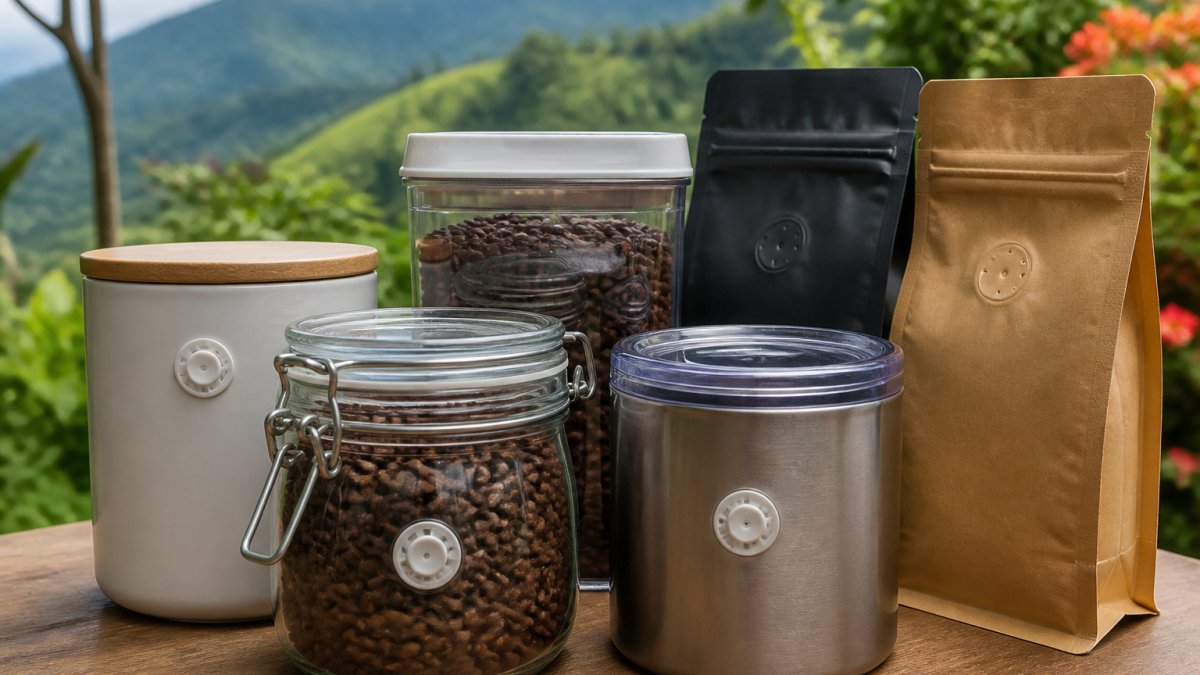
Original packaging and resealable bags
The bag your beans arrive in is often the best container. Quality roasters use resealable bags with one-way valves and thick, opaque material that blocks light.
If your roaster uses these bags, keep the beans in them. Fold the top down tightly after each use or use a clip to seal it.
Resealable bags work because they're designed specifically for this job.
If you do transfer beans to another container, use an airtight glass or ceramic option. Make sure the lid seals completely. Avoid containers with loose-fitting lids or those made from thin plastic.
How to Store Whole Bean Coffee at Room Temperature
Room temperature storage is the simplest and most practical approach for most people. You don't need a freezer or refrigerator. You just need the right location.
Protecting beans from light, heat, and moisture
Light breaks down the oils and compounds that make coffee taste good. Direct sunlight is the enemy. UV rays accelerate staling faster than almost anything else.
Heat speeds up the chemical reactions that cause beans to lose flavor. The ideal temperature is between 60 and 70 degrees Fahrenheit. Anywhere cooler than room temperature is fine. Anywhere warmer than 75 degrees will age your beans faster.
Moisture causes beans to absorb water and lose their crispy texture. It also creates an environment where mold can grow. Keep beans away from steam, humidity, and damp areas.
Avoid storing beans:
- Above or next to the stove
- Near the dishwasher or sink
- On a sunny windowsill
- In the refrigerator (condensation is the problem here)
- In basements or bathrooms where humidity is high
Ideal storage locations: pantry, cupboard, and drawer
A kitchen pantry is ideal. It's usually dark, cool, and away from appliances that generate heat. A cupboard or cabinet works just as well, especially one that doesn't get direct sunlight.
A kitchen drawer is acceptable if it's not near heat sources. The drawer keeps beans dark and protected from light. Just make sure the container is airtight so the drawer doesn't trap moisture.
The back of a cupboard is better than the front because it stays cooler and darker.
Think about what happens in that location throughout the day. Does sunlight hit it? Does heat from the oven reach it? Is there moisture from cooking? Choose the spot that avoids all three.
Can You Freeze Coffee Beans
Freezing is a legitimate option if you want to extend freshness beyond four weeks. It works, but it comes with a tradeoff: you have to manage condensation carefully, or you'll damage the beans.
Freezing versus room temperature storage
Freezing slows down the chemical reactions that cause beans to lose flavor. A frozen bean will stay fresher longer than a room-temperature bean. But freezing isn't magic. Beans don't improve in the freezer, they just age more slowly.
Use freezing only if you buy in bulk or plan to store beans for longer than a month. For weekly purchases that you use within two to three weeks, room temperature storage is simpler and delivers just as good results.
When you freeze beans, they can last two to three months. That's useful if you buy several pounds at once or want to stock up on a roast you love. But it's only worth the effort if you're actually keeping beans that long.
Managing condensation and moisture when thawing
This is where most people make a mistake. When you pull frozen beans out of the freezer, they're cold. The warm air around them contains moisture.
The fix is simple: don't open the container until the beans reach room temperature. Leave the sealed container on the counter for 30 minutes to an hour.
Use an airtight container for freezing. Divide your beans into smaller portions so you're not thawing an entire bag every time you want coffee. Freeze each portion in its own container.
Only thaw the amount you'll use in the next week or two. Once beans thaw, don't refreeze them. The repeated temperature changes will damage them.
How to Tell If Coffee Beans Are Stale
Stale beans look, smell, and taste different from fresh ones.
Fresh beans have a strong aroma. Stale beans smell muted or flat. Open your container and take a deep breath.
Look at the color. Fresh roasted beans have a rich, even color with some shine from the oils.
Feel the beans. Fresh beans are slightly oily to the touch, especially in the first week or two after roasting.
Taste is the final test. Brew a cup and pay attention. Fresh beans taste bright, complex, and clean.
Check the roast date on the bag.
For more detail on how to identify fresh coffee beans, check our full guide on recognizing quality and freshness indicators.
Storage Tips for Bulk Purchases and Long-Term Reserves
Buying whole bean coffee in bulk saves money, but it only works if you store the beans properly. Here's how to do it.
Divide bulk purchases into smaller portions immediately. Learn practical methods to keep coffee beans fresh longer with proper storage techniques for your bulk supply.
Store most of your bulk supply in the freezer. Keep one week's worth at room temperature in your pantry or cupboard. When that runs out, thaw another frozen portion.
Label each container with the roast date and the coffee variety. Use a permanent marker on masking tape.
Use an inventory system. Keep the oldest beans in front and the newest in back, like a grocery store.
Consider buying from a roaster that ships fresh. Coffee freshness research from specialty coffee associations emphasizes that beans roasted within the last two weeks deliver the best flavor. Rather than buying large quantities at once, smaller frequent purchases of fresher beans often taste better than bulk quantities of older beans.
For bulk storage longer than three months, freezing is essential. Room temperature storage beyond four weeks will result in noticeable flavor loss. If you're planning to store beans for a season or longer, divide them into monthly portions, seal each in an airtight container, and freeze everything except the current month's supply.
Start Your Fresh Coffee Journey with Tinto
Storing whole bean coffee correctly is simple once you know the rules. An airtight container in a cool, dark place keeps beans fresh for weeks. Freezing extends that timeline if you buy in bulk.
We roast our beans to order and seal them fresh within 48 hours of roasting. That freshness is only the beginning.
Tinto Coffee Bag arrives sealed and ready to store. Use it as-is in your pantry, or transfer it to your favorite airtight container. Either way, you're starting with beans at peak freshness. Store them right, and every cup will taste like what you paid for.

Frequently Asked Questions
How long do whole coffee beans stay fresh after opening?
Whole bean coffee typically stays fresh for 2-4 weeks after opening when stored in an airtight container in a cool, dark place. Unopened bags can last 4-6 weeks. Roast date matters: beans roasted within the last 1-2 weeks will taste noticeably better than older stock. For maximum freshness, buy smaller quantities more frequently rather than stockpiling.
What is the best container for storing coffee beans?
An airtight container is essential, it prevents oxygen exposure and protects beans from moisture and odors. Look for food-safe options like glass or ceramic with a tight-sealing lid, or resealable bags with a one-way degassing valve. Opaque containers are better than clear ones because they block light. Avoid paper bags or containers that don't seal completely, as these allow air and humidity to degrade flavor quickly.
Can you freeze whole coffee beans?
Yes, freezing works if done correctly. Place beans in an airtight, freezer-safe container to prevent freezer burn and moisture absorption. Frozen beans can last 3-4 months. The key is to avoid condensation: remove only the amount you need and return the rest to the freezer immediately. Don't thaw and refreeze repeatedly. Room-temperature storage in an airtight container is simpler and preserves flavor just as well for shorter periods.
How do I know if my coffee beans are stale?
Stale beans show several signs: they lack the rich aroma of fresh beans, appear dull or faded in color, and may feel slightly oily or brittle. When brewed, stale coffee tastes flat, bitter, or muted instead of vibrant. Check the roast date on your bag, beans older than 6-8 weeks typically show noticeable quality loss. Fresh whole bean coffee from Tinto is roasted to order, so you know exactly when your beans were roasted.
The difference between good coffee and great coffee often comes down to freshness. Choose quality beans, store them properly, and brew them soon. That's the formula we stand behind at Tinto Coffee Roasters. Shop Now and taste the difference fresh, carefully sourced Colombian beans make in your daily cup.
