

Table of Contents
- What Makes the Best Single Serve Coffee Pods
- How to Choose the Best Coffee Pods for Your Needs
- Freshly Roasted Coffee Pods That Deliver Flavor
- Single Serve Coffee Pod Subscriptions vs. One-Time Purchases
- Sustainability and Environmental Impact of Pod Coffee
- Brewing Temperature, Extraction, and Consistency
- Cost Per Cup and Long-Term Value
- Maintenance, Descaling, and Machine Compatibility
- Frequently Asked Questions
Last Updated: September 4, 2026
Single-serve coffee pods deliver convenience, but often sacrifice freshness and flavor quality. The market is shifting toward small-batch roasters who prioritize the coffee inside the pod over the machinery. At Tinto Coffee Roasters, we believe your daily cup should be simple to make and genuinely worth drinking. Below, we'll break down what separates an exceptional pod from the rest and how to choose one that fits your values.

Most guides focus on the machine rather than the coffee, but the pod is where quality lives or dies. The most important factors are freshness, roast date, and extraction engineering.
What Makes the Best Single Serve Coffee Pods
The best single serve coffee pods combine three elements: freshly roasted coffee, oxygen-sealed packaging, and compatibility with your brewer. Coffee loses aromatic compounds within days of roasting, so a pod filled with warehouse-aged commodity beans will produce a flat, bitter cup regardless of machine quality (peer-reviewed research).
Extraction quality matters equally. A well-designed pod allows even water flow, pulling out full flavor without over-extracting bitter compounds. Look for pods that specify grind size and gram weight, as these details directly influence consistency.
How to Choose the Best Coffee Pods for Your Needs
Start by understanding your brewing habits. Ask: Do you drink black or with milk? How much storage space do you have? What is your actual cost per cup, not just price per box?
Black coffee drinkers prioritize flavor clarity and smooth finish; milk drinkers prioritize body and roast depth. Beyond compatibility, consider sourcing practices and roast date transparency, a roaster that discloses both signals confidence in their product.
Avoid buying solely on price per pod. Cheaper pods often mean stale coffee, wasted cups, and more frequent descaling due to poor water flow from inconsistent grind size.
Freshly Roasted Coffee Pods That Deliver Flavor
Freshly roasted coffee pods are the biggest upgrade to your single-serve routine. The difference is immediately noticeable: a vibrant, aromatic cup versus a dull one. Roasting to order and sealing quickly preserves volatile oils, delivering a cup that tastes as the roaster intended.
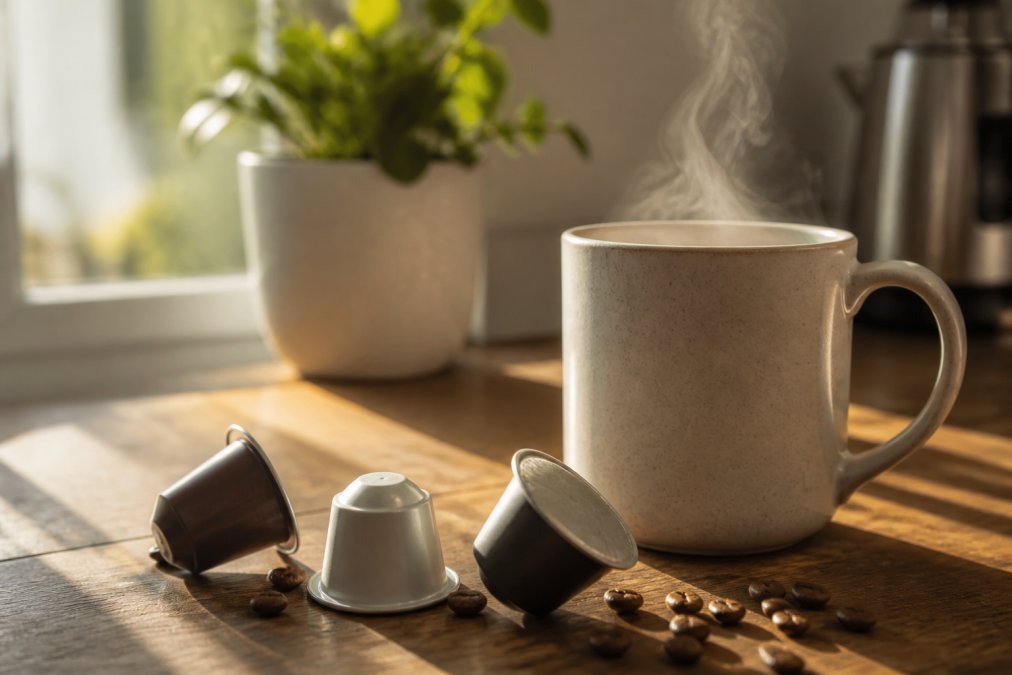
Tinto Coffee Pods: Premium Small-Batch Quality
Tinto Coffee Roasters' single-serve pods are our top pick. Each pod contains premium small-batch ground coffee, roasted to order within 48 hours of shipping, oxygen-sealed for freshness, and engineered for even extraction. Compatible with standard machines, ready in under a minute, at $19.99 per box. This is the option for specialty-grade Colombian coffee without barista complexity.
Dos Orígenes: Dual-Origin Blend with Functional Mushrooms
Dos Orígenes is a dual-origin blend pairing Brazilian Cerrado beans (cocoa, toasted nut, low-acid) with high-altitude Mexican coffee (clean brightness). It includes Lion's Mane and Chaga mushroom extracts for unexpected depth, is lab-tested free of mycotoxins and heavy metals, and costs $19.99.

Single Serve Coffee Pod Subscriptions vs. One-Time Purchases
A subscription is often smarter for regular drinkers because it guarantees freshness and prevents supply gaps. One-time purchases risk gaps followed by frantic local purchases of whatever is available.
Subscriptions solve the boredom problem. If worried about committing to one roast, look for subscriptions that rotate flavors or pause easily. The key advantage is that coffee is roasted to order for each shipment, arriving at peak freshness rather than sitting on shelves.
| Option | Best For | Key Advantage | Potential Drawback |
|---|---|---|---|
| One-Time Purchase | Trying a new brand or flavor | No commitment, easy to sample | Risk of supply gaps |
| Subscription (Monthly) | Consistent daily drinkers | Guaranteed freshness, convenience | Requires flexible scheduling |
| Subscription (Rotating) | Those who want variety | Prevents palate fatigue | May include flavors you like less |
Sustainability and Environmental Impact of Pod Coffee
Environmental concerns about single-serve pods are legitimate, but the landscape is more nuanced than headlines suggest. The conversation centers on pod composition, recycling programs, and realistic alternatives.
Pod Materials and Recyclability
Most pods are plastic (#5 polypropylene), aluminum, or a blend. Aluminum is infinitely recyclable but rare. Plastic pods are hard to recycle due to residual grounds and moisture, contaminating sorting equipment. Most plastic pods end up in landfills even when recycled. Check your local facility's website; most do not accept them.
Compostable Pods: The Catch
Compostable pods require industrial composting (140°F+ for 90-180 days) (the EPA). Household compost bins cannot reach these temperatures, so pods persist for years. Only ~200 industrial facilities exist nationwide. Before choosing compostable pods, verify a facility nearby accepts them; otherwise, they offer no advantage over conventional plastic.
Take-Back and Recycling Programs
Several roasters operate take-back programs: collect used pods in a prepaid envelope and mail them back for recycling or composting. Some are free; others charge $5-$10 per shipment. Before committing to a brand, verify they offer a take-back program and check costs and frequency requirements.
Reusable Pod Alternatives
Reusable pods filled with your own ground coffee eliminate packaging waste entirely. They cost $20-$40 upfront and $5-$10 annually in filters, versus $150-$250 for disposable pods. The trade-off is 2-3 extra minutes per brew. Environmental payoff: zero packaging waste after initial purchase.
Sourcing Practices and Offset Value
Consider the roaster's sourcing practices. Sustainably grown, fairly traded coffee offsets some environmental cost through positive farming impact. Look for third-party certifications like Fair Trade, Rainforest Alliance, or Smithsonian Bird Friendly.
Brewing Temperature, Extraction, and Consistency
Brewing temperature separates great cups from bitter or sour ones. Ideal extraction temperature is 195°F-205°F (peer-reviewed research). Too cool yields sour coffee; too hot yields harsh, bitter compounds. Most machines are calibrated well, but pod quality can compensate for minor variations through grind size and density.
Consistency is the real test of a great pod. A well-engineered pod delivers uniform cups with the same flow rate and extraction quality from first to last. This is achieved through precise grind size and proper compaction. When a pod delivers the same satisfying flavor day after day, you have found a winner.
Cost Per Cup and Long-Term Value
True cost per cup includes machine cost, maintenance, and coffee actually consumed versus wasted. Premium pods at $19.99 cost more upfront than generic brands, but the value improves when you factor in finishing the cup.
Higher-quality grounds reduce buildup of oils and fines that clog internal mechanisms, meaning fewer descaling cycles and longer machine lifespan, a cost saving rarely discussed but significant over multi-year ownership.
Maintenance, Descaling, and Machine Compatibility
Proper maintenance is essential, but most reviews gloss over true ownership costs beyond the first few months. Understanding maintenance helps you avoid surprise repairs and premature failure.
Descaling Frequency and Real-World Costs
Descale every three to six months or when brew time slows (monthly in hard-water regions above 200 ppm). Each cycle requires a descaling solution ($8-$15) and 15-30 minutes. Over three years, this adds $30-$60 in costs plus time.
Water Quality and Machine Longevity
Water quality directly impacts flavor and machine durability. Mineralized or chlorinated tap water imparts off-flavors and accelerates mineral buildup. Filtered water via pitcher ($20-$40 upfront, $5-$10 per replacement) or faucet system ($30-$60) is the cheapest upgrade and extends machine life 12-24 months.
Common Failure Points After 12+ Months
Brewers fail from cumulative wear, not defects. The needle dulls after 500-1,000 uses, the heating element degrades under mineral stress, and the pump weakens, typically between 18-36 months. Machines with stainless steel internals and sealed chambers last longer than those with exposed coils or plastic linings.
Pod Compatibility and Mechanical Fit
Always verify pod compatibility with your specific machine model. While most standard pods are interchangeable across major brands, some brewers have unique puncture mechanisms or brew chamber designs that require a specific pod shape to avoid messes or poor extraction. Using incompatible pods can damage the needle or cause water to bypass the grounds entirely. Check your machine's manual for approved pod types, and if you switch brands, test one pod before committing to a full box.
Maintenance Schedule for Maximum Lifespan
Maintenance schedule: descale every three to six months (monthly in hard-water areas); rinse brew chamber and needle weekly; replace water filter every two to three months; run a monthly water-only cleaning cycle. This takes under five minutes monthly and costs $15-$25 annually.
Frequently Asked Questions
What should I look for when buying single-serve coffee pods?
Focus on roast date and freshness, pods roasted within the past two weeks deliver better flavor and aroma. Check brewing temperature compatibility (ideal range is 195-205°F for optimal extraction quality). Verify pod material and oxygen-sealing to lock in freshness. Look for origin transparency and processing details. Consider reservoir capacity and brew strength settings that match your machine. Finally, calculate cost per cup: premium freshly roasted pods typically range $0.80-$1.50 per serving, compared to mass-market alternatives.
How do freshly roasted coffee pods compare to mass-market brands?
Freshly roasted coffee pods offer superior extraction quality and consistent flavor because they're roasted to order within 48 hours and oxygen-sealed immediately. Mass-market pods often sit in warehouses for months, losing volatile aromatics and brightness. Small-batch roasting allows for precise control over roast development and bean selection. The result is noticeably cleaner flavor, better body, and less bitterness. Cost is higher upfront, but the cup quality justifies the premium for coffee enthusiasts who drink black coffee or want authentic flavor profiles.
Are single-serve coffee pods bad for the environment?
Traditional plastic and aluminum pods create significant waste, billions end up in landfills yearly. However, alternatives exist: compostable pods made from plant-based materials, reusable pod systems you fill yourself, and brands offering take-back recycling programs. Freshly roasted pods in compostable packaging reduce waste while maintaining convenience. Consider your machine's compatibility and local composting access. If environmental impact concerns you, pair pod brewing with a reusable filter system or choose compostable options to align your daily coffee ritual with sustainability values.
Can single-serve pods deliver cafe-quality coffee at home?
Yes, when three conditions are met: freshly roasted beans (roasted within two weeks), proper brewing temperature (195-205°F), and correct extraction time (typically 25-30 seconds). Premium small-batch pods engineered for even extraction achieve this. The key difference from cafe espresso is that pods use lower bar pressure, but modern thermal block technology in quality machines compensates by controlling flow rate and temperature consistency. Tinto Coffee Pods are engineered specifically for full, even extraction, delivering smooth, balanced cups comparable to specialty cafe standards without requiring barista skill.
This article was written using GrandRanker